
SEO Title: Getting Around Portugal: Trains, Buses, Cars & More
Getting around Portugal can appear wonderfully simple when you first look at the map.
Lisbon is down there. Porto is up there. Coimbra sits conveniently between them. The Algarve stretches across the south, and everything else looks close enough to reach before lunch.
Then you begin planning.
The train reaches one destination but not the village you want to visit. The bus leaves from a terminal on the opposite side of town. A beach that looks five minutes away on the map turns out to be separated from you by a motorway, a cliff, and several questionable life choices.
Portugal is relatively compact, but that does not mean every part of the country is equally connected.
Living in Coimbra has allowed me to explore much of Portugal without owning a car. I regularly use trains, buses, local transportation, taxis, and the occasional ride from a friend who knows I am incapable of resisting a mysterious road leading toward an old stone village.
The most important lesson I have learned is that there is no single best way to travel around Portugal.
The right choice depends on where you are going, how quickly you want to move, how much flexibility you need, and whether your itinerary stays near Portugal’s major transportation corridors.
This Portugal transportation guide will help you compare the options and choose the one that makes sense for your trip.
What Is the Best Way to Get Around Portugal?
For most first-time visitors, the best approach is a combination of transportation methods.
Use trains for travel between major cities such as Lisbon, Coimbra, Porto, Aveiro, Braga, and Faro. Use long-distance coaches when the railway does not reach your destination or the bus schedule is more convenient. Rely on metros, trams, buses, walking, and suburban trains within the larger cities.
Rent a car when your trip includes rural villages, national parks, remote beaches, mountain regions, or several smaller destinations in one day.
Here is the uncomplicated version:
| Transportation | Best For | Main Limitation |
|---|---|---|
| Train | Major cities and comfortable intercity travel | Limited access to rural areas |
| Long-distance coach | Smaller cities and destinations without rail service | Terminals and schedules vary |
| Rental car | Villages, mountains, beaches, and road trips | Tolls, parking, and city driving |
| Metro and city bus | Lisbon and Porto | Each city uses its own ticket system |
| Taxi or ride-hailing | Short journeys and awkward connections | Costs increase over long distances |
| Ferry | River crossings and island travel | Routes and schedules can be seasonal |
| Domestic flight | Madeira, the Azores, and longer island connections | Airport time and baggage restrictions |
The best transportation plan is usually the one that uses public transportation for the straightforward parts and saves the rental car for the places where it provides genuine freedom.
Can You Travel Around Portugal Without a Car?
Yes, you can travel around Portugal without a car.
A car-free trip is particularly easy when your itinerary includes Lisbon, Sintra, Cascais, Coimbra, Aveiro, Porto, Braga, Guimarães, or other destinations near the main railway and coach networks.
You can also reach parts of the Algarve, the Douro Valley, Alentejo, and northern Portugal using public transportation. However, reaching a region is not always the same as exploring it.
A train might carry you into the Douro Valley, for example, but visiting several wineries or hilltop villages on the same day becomes much easier with a car, driver, or organized tour.
The same problem appears in parts of central Portugal. Some of my most memorable discoveries outside Coimbra became possible because a friend had a car and wanted to show me places I would not have reached easily on my own.
Portugal without a car works best when you:
- Stay in cities or larger towns.
- Choose accommodation near railway or bus stations.
- Plan one primary destination per day.
- Confirm return schedules before leaving.
- Use occasional tours for remote attractions.
- Accept that public transportation may determine your pace.
That final point is not necessarily negative.
Slower transportation can force you to spend more time in a destination instead of treating Portugal like a checklist that must be completed before your return flight.
Traveling Around Portugal by Train
Train travel is often the most comfortable way to move between Portugal’s major cities.
Comboios de Portugal, usually shortened to CP, operates several types of passenger services, including Alfa Pendular, Intercidades, Regional, InterRegional, and urban trains in Lisbon, Porto, and Coimbra. Regional services connect with the larger intercity and urban networks across much of mainland Portugal.
Alfa Pendular
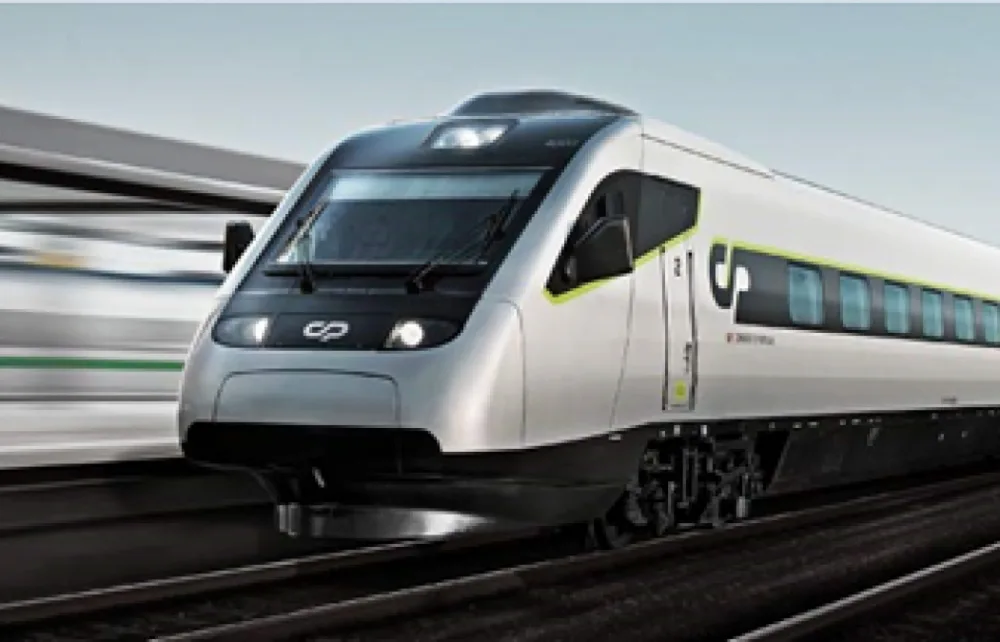
Alfa Pendular is CP’s fastest long-distance service.
It operates along Portugal’s principal north-south railway corridor and is usually the most comfortable option for journeys between cities such as Braga, Porto, Aveiro, Coimbra, Lisbon, and Faro. The trains include assigned seating, electrical outlets, Wi-Fi, and other long-distance amenities.
This is usually my first choice when the schedule and price make sense.
Alfa Pendular works especially well for:
- Lisbon to Porto
- Lisbon to Coimbra
- Porto to Coimbra
- Porto to Aveiro
- Lisbon to Faro
- Longer north-to-south journeys
Because seats are assigned, booking ahead is sensible during summer, holidays, weekends, and major events.
Intercidades
Intercidades trains are Portugal’s intercity services.
They are generally slower than Alfa Pendular but may serve additional stations or provide a better departure time. For many journeys, the time difference is less important than travelers expect.
I would rather take a slightly slower direct train than spend part of my morning racing across a city to catch the “faster” option.
Regional and InterRegional Trains
Regional and InterRegional trains connect smaller cities and towns to the primary railway network.
These services cover areas including the Minho, Douro, Oeste, Beira Baixa, Alentejo, and Algarve lines. They can be extremely useful, although journey times are longer and service may be less frequent than along the Lisbon–Porto corridor.
Regional trains are often part of the adventure rather than simply a method of reaching it.
The Douro Line is a perfect example. The train is not merely transportation through the valley. The railway follows the river through scenery that would make staring at your phone feel like an act of disrespect.
Urban Trains
CP also operates urban and suburban trains around Lisbon and Porto.
These are particularly useful for day trips and travel beyond the metro networks.
From Lisbon, suburban trains help travelers reach destinations such as Sintra and Cascais. Porto’s urban railway connects the city with destinations including Braga, Guimarães, and Aveiro.
How to Buy Train Tickets in Portugal
Tickets for many CP services can be purchased through the CP website, the CP app, railway ticket offices, and station machines.
The CP app currently allows passengers to purchase tickets for Alfa Pendular, Intercidades, Regional, InterRegional, and Coimbra Urban services. Advance availability and refund conditions vary by ticket and service, so check the current terms before purchasing.
For Alfa Pendular and Intercidades trains, purchase your ticket before boarding and use the train and seat shown on the reservation.
For regional and urban services, rules can differ. Never assume that possessing a reusable card or standing confidently near the platform counts as a ticket.
When the Train Is the Best Choice
Choose the train when:
- You are traveling between major Portuguese cities.
- Your accommodation is near the city center.
- You prefer comfort over maximum flexibility.
- You do not want to deal with parking or tolls.
- You want to enjoy the scenery instead of watching the motorway.
- Your itinerary follows Portugal’s main north-south corridor.
When the Train Is Not the Best Choice
The railway becomes less practical when:
- Your destination is a remote village.
- You want to visit several rural attractions in one day.
- Your accommodation is far from the station.
- The route requires multiple slow connections.
- You are exploring mountains, isolated beaches, or national parks.
Portugal has a useful railway network, but it is not evenly distributed across the country.
Traveling Around Portugal by Bus or Coach
Long-distance coaches are the great gap-fillers of Portuguese transportation.
They reach many destinations that are not conveniently connected by train and can occasionally be faster or more direct than the railway.
Rede Expressos operates coach services to more than 300 destinations across Portugal, with schedules and digital tickets available through its website and app.
Other companies, including FlixBus and regional operators, also serve domestic routes.
When Coaches Are Better Than Trains
A coach may be the better option when:
- The town does not have a railway station.
- The railway route requires an inconvenient connection.
- The coach terminal is closer to your accommodation.
- The bus departure better matches your schedule.
- You are traveling into the Portuguese interior.
- The coach offers a direct journey while the train does not.
This is why I recommend searching both train and coach options before making a decision.
People often assume the train must be better because trains feel more romantic. Romance is wonderful until it requires three transfers and deposits you seven kilometers from your hotel.
Buying Coach Tickets
Long-distance coach tickets can usually be purchased online, through the operator’s app, at ticket offices, or at some bus terminals.
For popular routes, reserve ahead during weekends, holidays, and summer. Digital tickets are accepted on Rede Expressos services, although keeping a screenshot or offline copy is sensible when mobile reception becomes uncooperative.
Always confirm the boarding location.
A city may have several bus stops or terminals, and the place where you arrived may not be where your next coach departs.
Regional Buses
Regional bus networks are more complicated because different operators serve different parts of Portugal.
Schedules may be designed primarily around residents commuting to work or school rather than travelers making leisurely day trips. Service may become less frequent during weekends, public holidays, or school breaks.
Regional buses can still be useful, but verify:
- The exact stop location.
- Whether the route runs on your chosen day.
- The final return departure.
- Whether tickets are sold onboard.
- Whether card or cash payment is accepted.
- Whether the online timetable is current.
Do not build an entire day around a rural bus connection without confirming how you will get back.
Portugal is a wonderful place to become temporarily stranded, but that does not mean you should add it to the itinerary intentionally.
Renting a Car in Portugal
A rental car is not necessary for every Portugal trip.
In Lisbon and Porto, it can become an expensive object that spends most of its vacation sitting in a parking garage. In the countryside, however, a car can transform what is possible.
Renting a car makes sense when your itinerary includes:
- Peneda-Gerês National Park
- Serra da Estrela
- Rural Alentejo
- Smaller Douro Valley villages
- Central Portugal’s schist villages
- Remote Atlantic beaches
- Inland Algarve
- Multiple wineries or villages in one day
- Accommodation outside a town center
A car also allows you to stop when something unexpected appears along the road.
That freedom matters in Portugal because some of the most interesting discoveries are not destinations you planned three months earlier. They are ruined castles, roadside viewpoints, tiny cafés, village festivals, and roads that make you wonder what might be hiding around the next bend.
Should You Drive in Lisbon or Porto?
Usually, no.
Both cities have strong public transportation networks, heavy traffic, limited parking, narrow streets, and neighborhoods that are better explored on foot.
A more efficient plan is to explore the city without a car, then collect the rental vehicle when you are ready to leave.
The same strategy can work in reverse. Return the car before beginning the city portion of your trip.
Driving on Portuguese Roads
Portugal has motorways, primary routes, national roads, and smaller municipal roads. Motorways may use conventional toll booths or electronic-only toll collection.
Major roads are generally straightforward, but conditions change considerably once you enter older villages, mountains, or historic centers.
Expect:
- Narrow village streets.
- Steep roads in mountainous areas.
- Roundabouts.
- Limited parking near historic centers.
- One-way streets that navigation apps occasionally misunderstand.
- Motorcycles appearing from the dimension beside your side mirror.
Drive cautiously and avoid entering medieval-looking streets merely because your navigation system insists that a delivery van once survived the journey.
Understanding Portugal’s Tolls
Portugal uses conventional toll roads and motorways with exclusively electronic toll collection.
When renting a car, ask the rental company exactly how tolls are recorded and charged. Many rental vehicles include or offer an electronic transponder, but administrative fees and payment procedures vary by company.
Drivers using foreign-registered vehicles have options such as EasyToll, Tollcard, and Via Verde Visitors. The appropriate system depends on the vehicle and planned route.
Do not wait until after driving beneath an electronic toll gantry to begin wondering how Portuguese tolls work.
Confirm the system before leaving the rental desk or entering the motorway.
Rental Requirements
Rental companies establish their own age, identification, licence-history, deposit, and payment requirements. Visit Portugal notes that minimum ages commonly vary by company and renters are generally expected to present identification and a valid driving licence held for the required period.
Travelers using licences issued outside the European Union should verify whether the rental company or Portuguese regulations require additional documentation, such as an International Driving Permit.
Getting Around Lisbon
Lisbon has Portugal’s most extensive urban transportation network.
Travelers can combine:
- Metro
- Carris buses
- Historic trams
- Funiculars and lifts
- Suburban CP trains
- Transtejo and Soflusa ferries
- Taxis
- Ride-hailing services
- Walking
The metro is usually the easiest way to cover longer distances across the city, while trams and buses reach neighborhoods beyond the rail network.
Lisbon Airport is connected to the city by metro, including connections toward Oriente railway station and the wider transportation network.
Navegante Cards
Occasional travelers can purchase a rechargeable Navegante occasional card and load it with individual tickets, 24-hour products, or pay-as-you-go zapping credit.
The card works across participating Lisbon-area operators, although ticket compatibility depends on what has been loaded. Each traveler needs a separate card for the same journey.
Lisbon Metro also accepts contactless bank cards for individual metro journeys. This can be convenient when you only need the metro, but a Navegante card may be more useful when combining buses, trams, ferries, and suburban trains.
Walking in Lisbon
Lisbon is walkable in the sense that walking is possible.
Whether you consider it easy depends on your relationship with hills, cobblestones, summer heat, and staircases that appear to have been designed by a particularly vindictive urban planner.
Walking is still one of the best ways to experience neighborhoods such as Alfama, Baixa, Chiado, Graça, and Bairro Alto. Use public transportation to cover longer distances and preserve your legs for exploring.
Getting Around Porto
Porto is also easy to explore without a car.
The city’s transportation options include:
- Metro do Porto
- STCP buses
- Urban trains
- Trams
- Taxis
- Ride-hailing services
- Walking
Porto’s Andante system integrates participating metro, bus, and train services across the metropolitan area. The fare depends on the zones covered by the journey rather than simply the type of vehicle used.
Understanding Andante Zones
Occasional Andante tickets are sold according to the number of zones needed for the trip.
This sounds intimidating until you use the journey planner or ticket machine to identify the correct ticket. The system calculates outward from the zone where the first validation occurs, and each ticket remains valid for a specified period based on the number of zones purchased.
The reusable Blue Andante card is intended for occasional travelers. The Anda mobile app provides another way to use participating public transportation services.
Validate your ticket correctly before traveling and whenever the system requires another validation.
Porto’s hills can be just as ambitious as Lisbon’s, so the metro and buses become increasingly attractive after a full day of exploring.
Getting Around Coimbra and Central Portugal
Coimbra is smaller than Lisbon or Porto, and much of the historic center can be explored on foot.
That does not mean the city is flat.
The university sits above the lower city, which is culturally significant and excellent for views but occasionally hostile toward tired calf muscles.
Local transportation includes buses, taxis, ride-hailing services, regional trains, and the developing Metro Mondego metrobus system.
Coimbra’s transportation network has been undergoing significant changes as Metro Mondego services, construction, and integrated ticketing develop. Current travel information is available through Metro Mondego, while local bus services remain important within the city.
Because the network is changing, check current route information rather than relying on an old blog post or a timetable someone photographed several years ago.
Coimbra is also a useful base for exploring central Portugal, but destinations outside the primary railway corridor may require a regional bus, taxi, tour, or rental car.
This becomes particularly true when visiting smaller villages, natural areas, and hidden gems around the region.
Getting Around the Algarve
The Algarve has a regional railway line connecting several important towns, but the railway does not follow the beaches as closely as the map might lead you to hope.
Train travel can work well between destinations such as:
- Faro
- Olhão
- Tavira
- Loulé
- Albufeira
- Portimão
- Lagos
However, some stations are outside the town or beach center. Always check the distance between the station and your accommodation.
The VAMUS Algarve bus network connects destinations across the region and offers regional tickets and tourist passes.
Public transportation is practical when staying in established towns and moving slowly. A rental car becomes more valuable when exploring isolated beaches, inland villages, Monchique, trailheads, or several coastal destinations on the same day.
Do not rent a car merely because you are visiting the Algarve.
Rent one because the specific places on your itinerary require it.
Getting Around Madeira
Madeira requires a different transportation strategy from mainland Portugal.
Funchal has urban buses, taxis, ride-hailing services, tours, cable cars, and walkable central areas. Madeira’s integrated regional bus system is known as SIGA.
Travelers staying primarily in Funchal can visit many attractions without renting a car.
A car becomes more useful for reaching trailheads, mountain viewpoints, remote villages, and the island’s northern and western areas. However, Madeira’s steep and narrow roads can be challenging for drivers who are uncomfortable with mountain driving.
Organized tours are a strong alternative because they provide access to more distant attractions without requiring you to spend the day negotiating switchbacks while pretending your palms are not sweating.
The Porto Santo Line operates ferry service between Madeira and Porto Santo. Check current timetables and operating dates before building the ferry into your itinerary.
Getting Around the Azores
Transportation in the Azores varies from island to island.
Larger islands have bus services, taxis, tours, and rental cars, but public transportation may not align conveniently with hiking trails, volcanic landscapes, viewpoints, or rural accommodations.
For many visitors, renting a car or booking organized excursions provides the most practical way to explore an individual island.
Atlânticoline operates passenger and vehicle ferry connections within the Azores and provides current sailing schedules through its website and app.
Do not assume that every island has a direct ferry connection on the day you want to travel.
Check the current timetable before reserving accommodation across multiple islands. Flights may be more practical for some inter-island journeys.
Taxis, Uber, Bolt, and Ride-Hailing
Traditional taxis are widely available in Portuguese cities, at airports, and around major transportation hubs.
Ride-hailing services such as Uber and Bolt operate in many populated areas, although availability becomes less predictable in rural Portugal.
These services are particularly helpful for:
- Traveling between a station and accommodation.
- Reaching an attraction outside a bus route.
- Early-morning airport departures.
- Managing luggage.
- Completing the final portion of a complicated journey.
- Avoiding a steep uphill walk after an enthusiastic dinner.
Ride-hailing should be viewed as a supplement to public transportation rather than a nationwide replacement for it.
A low fare within Lisbon does not mean the same app will rescue you promptly from a mountain village at 10:30 at night.
Traveling With Luggage
Transportation becomes more complicated when your suitcase could qualify as a studio apartment.
Trains and long-distance coaches generally accommodate luggage, but travelers are still responsible for carrying and managing their bags.
Consider:
- Whether the railway station has lifts.
- Whether your accommodation is uphill from the station.
- How many transfers the route requires.
- Whether you can lift the bag onto a train.
- Whether the coach stores luggage underneath.
- Whether the historic center allows vehicle access.
Packing lighter can improve a trip more than purchasing a premium ticket.
Portugal’s cobblestone streets are beautiful, historic, and entirely indifferent to the survival of tiny suitcase wheels.
Accessibility and Reduced Mobility
Accessibility varies between transportation systems, stations, vehicles, and historic areas.
Modern metro stations and long-distance trains may offer accessible facilities, but older railway stations, steep streets, cobblestones, and rural stops can present challenges.
CP allows passengers to reserve designated wheelchair spaces on Alfa Pendular and Intercidades services. Travelers requiring assistance should confirm the available service and reservation procedure before departure.
Contact transportation operators and accommodation providers directly when step-free access is essential.
Do not assume that an online route marked “accessible” accounts for every pavement, platform, hill, and medieval doorway encountered along the way.
How to Choose Transportation for Your Portugal Itinerary
The easiest way to choose is to examine the actual route rather than deciding in advance that you are a “train traveler” or a “road-trip person.”
Lisbon, Coimbra, and Porto
Use the train.
All three cities sit along Portugal’s primary railway corridor, and a car creates more problems than it solves inside the historic centers.
Lisbon, Sintra, and Cascais
Use Lisbon’s suburban trains and local public transportation.
A rental car is usually unnecessary unless these stops are part of a wider road trip.
Porto, Braga, Guimarães, and Aveiro
Use urban or regional trains when the schedules match your plans.
A car becomes useful when adding smaller northern villages or natural areas.
The Douro Valley
Choose the train for a scenic journey along the river and a relaxed visit to one primary destination.
Choose a rental car, driver, boat excursion, or organized tour when you want to visit several wineries, viewpoints, and villages.
Alentejo
Public transportation can reach larger destinations such as Évora.
A car is better for exploring several smaller towns, megalithic sites, wineries, and rural landscapes.
The Algarve
Use trains and buses for slower travel between established towns.
Rent a car for remote beaches, inland areas, and a multi-stop coastal itinerary.
Serra da Estrela or Peneda-Gerês
Rent a car or join a tour.
Public transportation may bring you closer to the region, but it rarely provides the flexibility needed to explore it effectively.
Madeira or the Azores
Use local public transportation within the main city or town.
Rent a car or book tours when the itinerary prioritizes landscapes, trailheads, viewpoints, and rural areas.
Transportation Mistakes to Avoid in Portugal
Assuming One Travel Card Works Everywhere
Portugal does not have one tourist transit card that automatically works across every city and national transport network.
Lisbon uses Navegante products. Porto uses Andante. Other cities and regions have their own operators and ticketing systems.
Forgetting to Validate the Ticket
Purchasing a reusable card is not the same as validating the journey.
Tap, scan, or validate the ticket as required by the operator.
Trusting Only One Planning App
Google Maps and similar services are helpful, but they do not always reflect temporary changes, regional schedules, strikes, or construction.
Verify important journeys through the operator’s official website or app.
Ignoring the Last Return Journey
A destination may have a convenient morning connection and a surprisingly early final departure.
Check the return before beginning the trip.
Renting a Car for the Entire Vacation
Keeping a car while staying in central Lisbon or Porto can mean paying for rental days, parking, and toll equipment while barely driving.
Rent it only for the part of the trip where it improves the itinerary.
Scheduling Tight Connections Between Operators
Train, coach, metro, ferry, and airline tickets may belong to separate companies.
A missed connection may remain your responsibility. Leave enough time for delays, finding the platform, collecting luggage, and discovering that the bus terminal is not where you expected it to be.
Ignoring Service Notices
Engineering work, strikes, weather, road closures, and special events can change transportation schedules.
Check again before departure, especially for essential airport or ferry connections.
Frequently Asked Questions About Getting Around Portugal
What is the easiest way to get around Portugal?
The easiest method is to use trains between major cities, local transportation within cities, and a rental car or tour for rural regions. Most travelers benefit from combining several options.
Is the train better than the bus in Portugal?
The train is generally more comfortable for journeys along the main railway corridor. Coaches are often better for destinations without direct rail service or when the bus provides a more convenient departure.
Is Portugal easy to explore without a car?
Portugal is easy to explore without a car when the itinerary focuses on Lisbon, Coimbra, Porto, and other well-connected cities. Rural villages, mountains, remote beaches, and natural parks are harder to reach.
What is the best way to travel from Lisbon to Porto?
Alfa Pendular and Intercidades trains are usually the most convenient choices because they connect the two cities without requiring a car. Long-distance coaches provide another option.
Do I need to book trains in Portugal in advance?
Advance reservations are recommended for Alfa Pendular and Intercidades trains, particularly during summer, weekends, holidays, and major events. Regional and urban ticket procedures vary.
Can I use the Lisbon transport card in Porto?
No. Lisbon and Porto use different transport systems. Lisbon uses Navegante products, while Porto uses Andante.
Is public transportation available in the Algarve?
Yes. Regional trains and VAMUS buses connect many Algarve towns. A car is still more convenient for remote beaches, inland villages, and multi-stop itineraries.
Is Uber available in Portugal?
Ride-hailing services operate in many Portuguese cities and popular tourism areas. Availability is less reliable in rural and remote locations.
Should I rent a car in Lisbon?
A rental car is usually unnecessary for exploring Lisbon. Public transportation, walking, taxis, and ride-hailing are more convenient. Collect a rental car when leaving the city for a road trip.
How should I travel between Portugal’s islands?
Domestic flights connect mainland Portugal with Madeira and the Azores and provide some inter-island connections. Ferries serve routes within the Azores and between Madeira and Porto Santo. Check current operating schedules before booking a multi-island trip.
Atypical Last Thoughts
Getting around Portugal becomes much easier once you stop searching for one transportation method that handles everything.
The train is excellent until the railway ends.
The coach is useful until the final departure leaves earlier than expected.
A car provides freedom until you attempt to park it inside a historic neighborhood built several centuries before anyone imagined a rental vehicle.
Portugal rewards travelers who remain flexible.
Use the train for the major cities. Take coaches where the railway cannot help. Rely on public transportation inside Lisbon and Porto. Rent a car when the landscape, village, mountain, or beach genuinely requires one.
Most importantly, leave enough room in the itinerary to notice what happens between destinations.
Transportation is not merely the machinery that moves you through Portugal. Sometimes the railway following the Douro, the ferry crossing the Tagus, or the winding road toward a forgotten village becomes part of the story you remember most.
Meet Carter

I’m Carter, an American traveler living in Portugal and the creator of Atypical Vagabond. After selling my technology business, I traded the conventional path for slow travel, life abroad, and a slightly unreasonable number of long walks across Europe. I share honest Portugal guides, Camino stories, digital nomad advice, and practical lessons to help you explore the world with greater confidence and purpose.
Subscribe
Looking for honest travel inspiration without the polished influencer nonsense?
Join the Atypical Vagabond newsletter for offbeat destination guides, Portugal travel tips, digital nomad lessons, slow travel stories, and the occasional reminder that the ordinary path is wildly overrated.
I share the victories, wrong turns, hidden gems, and real-life chaos that come with building a life around travel. No corporate fluff. No recycled bucket lists. Just useful advice, personal stories, and unconventional adventures designed to help you travel deeper, stay curious, and create your own damn route.
Subscribe and let’s reject the ordinary together.
Donations
Enjoying the stories, guides, videos, and occasional travel disaster here at Atypical Vagabond?
A small donation helps cover the real costs behind the adventures—from transportation and website hosting to camera gear, research, and enough coffee to keep the next guide moving.
There are no giant sponsors pulling the strings and no polished corporate travel machine hiding backstage. Your support helps me continue creating honest travel stories, practical Portugal guides, digital nomad advice, and unconventional adventures for travelers who prefer the road less rehearsed.
Every contribution helps keep Atypical Vagabond independent.
Fuel the next adventure through PayPal—and help me keep rejecting the ordinary.
One response to “Getting Around Portugal: How to Choose the Right Transportation”
-
[…] Coimbra is one stop on a longer journey, my Portugal transportation guide explains the best ways to reach the city by train, bus, or […]
















Leave a Reply