

Coimbra Travel Guide What to see, where to stay, how to get around, what to eat, and how to experience Portugal’s former capital without rushing through it.
Medieval streets, black academic capes, centuries-old university traditions and the Mondego River—all from the perspective of someone who actually lives in Coimbra.
People often ask me, “Is Coimbra worth visiting?”
My answer is yes—but not because Coimbra tries to compete with Lisbon or Porto.
Coimbra is quieter, more intimate, and best explored slowly. Medieval streets climb toward one of Europe’s oldest universities, students still walk around in traditional black capes, and the Mondego River gives the city room to breathe.
I live in Coimbra, so this guide was not written after a hurried afternoon and one blurry cathedral photograph. These are streets I walk regularly, cafés I return to, and hills I continue to complain about despite knowing exactly where they lead.
This Coimbra travel guide covers the best things to do in Coimbra, where to stay, how to get around, what to eat, and how many days you should spend here. You will also find practical itineraries and ideas for exploring more of Central Portugal .
Coimbra was once Portugal’s medieval capital, and the University of Coimbra—Alta and Sofia is now a UNESCO World Heritage Site. Yet the city feels lived in rather than preserved behind glass. Historic churches sit beside neighborhood cafés, students gather in centuries-old squares, and ordinary life continues beneath the university towers.
Give Coimbra enough time, and it becomes more than a stop between Lisbon and Porto.
Coimbra Quick Facts
Coimbra Map: Top Attractions at a Glance
Most of Coimbra’s principal attractions are concentrated around Baixa, the university, the historic Alta district, and the Mondego River.
The center is walkable, but the climb between downtown and the university is steep. Use the map below to group nearby attractions and avoid crossing the same hills repeatedly.

For a first visit, begin around the University of Coimbra and work downhill through the old town toward Santa Cruz Monastery and the river. Gravity finally works in your favor.
Best Things to Do in Coimbra
Coimbra is much more than its university. The best first visit combines the historic upper city, medieval streets, monasteries, gardens, riverfront, viewpoints and enough unscheduled wandering to let Coimbra surprise you.
Watch the city first, then use the guide below to build your route.
Best Coimbra Attractions
| Coimbra Attraction | Time Needed | Cost | My Take |
|---|---|---|---|
| University of Coimbra | 2–3 hours | Paid ticket for some areas | Essential Coimbra |
| Joanina Library | About 30 minutes | Paid timed-entry ticket | Absolutely worth it |
| Sé Velha | 30–45 minutes | Low-cost or donation-based | Great historic stop |
| Santa Cruz Monastery | 30–45 minutes | Free or low-cost depending on visit | Easy downtown win |
| Machado de Castro National Museum | 1–2 hours | Paid ticket | Best major museum choice |
| Botanical Garden | 45–90 minutes | Usually free | Best city reset button |
| Santa Clara-a-Velha | 45–60 minutes | Paid ticket | Great across-river history |
| Portugal dos Pequenitos | 1–2 hours | Paid ticket | Families and curious weirdos |
| Penedo da Saudade | 30–45 minutes | Free | Best poetic viewpoint |
| Parque Verde do Mondego | 30–60 minutes | Free | Best easy river walk |
Suggested Walking Times
Coimbra is compact on a map. The hills are the part the map conveniently forgets to mention.
| Route | Walking Time | Difficulty | What to Know |
|---|---|---|---|
| Baixa → University of Coimbra | 15–25 min | Steep | The classic Coimbra calf negotiation |
| University → Sé Velha | 5–10 min | Easy–moderate | Mostly downhill leaving the university |
| Sé Velha → Arco de Almedina | 5–10 min | Downhill | Excellent old-town wandering |
| Arco de Almedina → Santa Cruz | 5–10 min | Easy | Natural route into Baixa |
| Santa Cruz → Mondego River | 10–15 min | Easy | Good way to finish the historic center |
| Parque Verde → Santa Clara-a-Velha | 15–20 min | Easy | Great skyline views while crossing the river |
| Santa Clara-a-Velha → Portugal dos Pequenitos | 5–10 min | Easy | Easy attractions to pair together |
| University → Botanical Garden | 10–15 min | Moderate | Perfect decompression after the university |
| Botanical Garden → Penedo da Saudade | 15–20 min | Moderate | Worth it for atmosphere and views |
Visit the University of Coimbra
The University of Coimbra is the city’s big-ticket attraction, and it deserves that reputation. Before visiting, check the official University of Coimbra visitor information for current tickets, opening hours and access updates.
The historic university sits above the city, so you will earn the visit one uphill step at a time. A map may claim the climb takes ten minutes. Maps have never carried a backpack through Coimbra in July.
Once you reach the top, the rooftops open beneath you and the scale of the historic university begins to make sense.
Paço das Escolas is the heart of the complex: stone arches, formal university buildings, enormous views and centuries of academic history occupying the same courtyard.
The University of Coimbra is not just a school. It is Portugal’s brain wearing a cape.
Do not rush through this part of the city. Walk the courtyard, look over Coimbra and give yourself time to absorb where you are.
Step Inside the Joanina Library
My closer look at Coimbra’s extraordinary Baroque library.
The Joanina Library is one of Coimbra’s crown jewels.
Its Baroque interior is dramatic, ornate and unapologetically excessive. Historic books line gilded rooms that feel closer to a royal chamber than the library most of us remember from school.
Access is usually timed, so plan this part of your university visit instead of assuming you can simply wander through the doors whenever inspiration strikes.
The library is also famous for an unusual group of nighttime employees: bats that help control insects which could otherwise damage the old books.
Even if libraries are not normally the centerpiece of your travel plans, make an exception here. Your inner nerd deserves a cathedral of knowledge.
Explore Sé Velha
Sé Velha, Coimbra’s Old Cathedral, is one of the city’s most atmospheric landmarks.
It looks more like a fortress than a delicate cathedral, which fits Coimbra surprisingly well. The city has a soft soul wrapped in a lot of stone.
The square outside is one of my favorite places to pause. Students pass through, narrow lanes disappear in several directions and the cathedral walls make the history feel unusually close.
Sé Velha does not sparkle. It broods. That is exactly why it works.
Wander Through Coimbra’s Old Town
Some of Coimbra’s best moments are not behind ticket counters.
They happen on crooked lanes, beside faded tiles, under laundry hanging above a medieval street, or at a tiny café where the espresso arrives without ceremony and gets straight to work.
Start near the university and wander downhill. Pass through Arco de Almedina and let the streets do some of the planning for you.
Not “call the embassy” lost. Just “where am I and why is this beautiful?” lost.
Coimbra rewards travelers who leave room for accidents.
Pass Through Arco de Almedina
Arco de Almedina is one of the historic gateways into Coimbra’s old city.
It would be easy to treat it as nothing more than a passageway, but slow down here. The arch connects Baixa with the medieval streets climbing toward the university.
Lower city. Upper city. Past and present. Your calves objecting somewhere in the background.
In Coimbra, even a shortcut manages to become historical.
Visit Santa Cruz Monastery
Santa Cruz Monastery sits in the middle of everyday downtown Coimbra and is one of the city’s most important historic sites.
The square outside is lively, central and excellent for people-watching. Step inside the church, grab a coffee nearby and then keep wandering through Baixa.
This is one of those places where Coimbra reminds you that history has not been sealed away in a museum.
It exists beside cafés, bakeries, commuters, visitors, pigeons and someone trying to decide where lunch should happen.
In Coimbra, history does not sit behind glass. It goes out for coffee.
Visit the Machado de Castro National Museum

The Machado de Castro National Museum is one of Coimbra’s major cultural institutions, with collections covering Portuguese sculpture, religious art, archaeology and decorative arts.
Its location close to the university makes it easy to combine with the upper-city sights.
It is also a good rainy-day option. When Coimbra’s weather decides to become dramatic, hiding inside a museum at least makes the retreat look educational.
The museum has experienced temporary closures, so check its official status before building it into your itinerary.
Walk Through the Botanical Garden
One of my favorite places in the city when Coimbra decides to turn up the heat.
The Botanical Garden of the University of Coimbra is one of the best places in the city to slow down.
I ended up appreciating it even more after trying to photograph Coimbra during serious summer heat. The Portuguese sun looked at my enthusiasm and decided it needed correcting.
Twenty minutes later I was hiding under trees, sweating through my shirt and pretending the entire situation was part of the creative process.
Now this is one of my favorite places to recharge.
The Botanical Garden is Coimbra’s reset button.
Cross the Mondego River
The Mondego gives Coimbra breathing room.
Cross toward Santa Clara and look back at the city. Coimbra rises from the river in layers of rooftops, churches, towers and university buildings.
This is one of the best places to photograph Coimbra, especially later in the day.
From across the river, the city finally shows you its album cover.
Walk Through Parque Verde do Mondego
Parque Verde is where Coimbra exhales.
After climbing hills, navigating old streets and pretending you understood every historical plaque, come down to the river and let your day loosen up.
Walk. Sit. Watch the water. Do absolutely nothing for a while.
That is not lazy travel.
That is good travel.
Not every travel moment needs a monument. Sometimes the river is enough.
Visit Santa Clara-a-Velha
Santa Clara-a-Velha is one of Coimbra’s most fascinating historic sites.
The monastery has spent centuries negotiating with the Mondego River, including repeated flooding.
It feels completely different from the polished monuments in the upper city.
Quieter. More fragile. More stubborn.
Santa Clara-a-Velha feels like a ruin that simply refused to disappear.
See Portugal dos Pequenitos
Tiny Portugal. Surprisingly serious questions.
Portugal dos Pequenitos is one of Coimbra’s quirkiest attractions.
The park recreates Portuguese buildings, monuments and regional architecture in miniature. It is especially popular with families, but adults can enjoy it too if they leave the “I am too cool for tiny houses” nonsense at the entrance.
It is Portugal after somebody found the shrink ray.
Weird. Charming. Very Coimbra.
Watch the Sunset from Penedo da Saudade
Penedo da Saudade is one of Coimbra’s most poetic places.
It is tied to student traditions, memory, longing and that deeply Portuguese idea of saudade.
This is not somewhere to race through because another attraction is waiting.
Sit.
Breathe.
Let Coimbra get dramatic. It is unusually good at it.
Penedo da Saudade is where Coimbra puts its feelings on the table.
Local Experiences in Coimbra
Coimbra’s monuments tell only part of the story. To understand the city, make room for its music, student traditions, everyday cafés and the rhythms that continue after the sightseeing day ends.
Listen to Coimbra Fado
Coimbra has its own distinctive style of fado, closely tied to the university and its academic traditions.
Unlike the fado more commonly associated with Lisbon’s taverns, Coimbra fado grew from student serenades.
It is traditionally performed with Portuguese guitars, often by current or former university students wearing black academic clothing.
The music is solemn and poetic, built around love, departure, memory and saudade. You do not need to understand every lyric for the mood to land.
Venues around the historic center regularly host performances, including Fado ao Centro, àCapella and Fado Hilário.
Schedules can change, so confirm the current program before building your evening around a particular venue.
You can also read more about Coimbra’s musical and academic traditions through Visit Coimbra .
This is one of the strongest arguments for spending the night in Coimbra rather than visiting only between trains.
Understand Coimbra’s Student Traditions
From the haunting university traditions to full-blown student pandemonium.
The University of Coimbra does not sit apart from the city.
Its students, ceremonies, festivals and traditions shape Coimbra throughout the year.
You will often see students wearing the traditional black academic uniform known as the traje académico. The cape is more than dramatic clothing; it represents membership in Coimbra’s academic community and appears during ceremonies, serenades and university celebrations.
Two of the biggest events are Latada, or Festa das Latas, and Queima das Fitas.
Latada welcomes new students at the beginning of the academic year, while Queima das Fitas marks the end of university life for graduating students with ceremonies, concerts, parades and the monumental serenade at Sé Velha.
These events can make Coimbra dramatically busier and louder. Accommodation may also become more expensive, but visitors get to see the city at maximum academic energy.
For my firsthand experience of the festival, read my complete Latada Coimbra guide .
Best Ways to Experience Coimbra
Live in a neighborhood for a few days if your schedule allows it. Coimbra gets better when you stop treating every hour as a sightseeing slot. Find viewpoints, cafés, restaurants and evening routines that make the city feel familiar.

Best Viewpoints in Coimbra
Coimbra is built on hills, which means two things:
Your legs will suffer. Your photographs will improve.
Good viewpoints include the university area, the opposite bank of the Mondego River, Penedo da Saudade and several spots along the climb through the old town.
The best views in Coimbra seem to arrive immediately after you begin questioning your cardio.
Bring water. Wear decent shoes. Accept your fate.
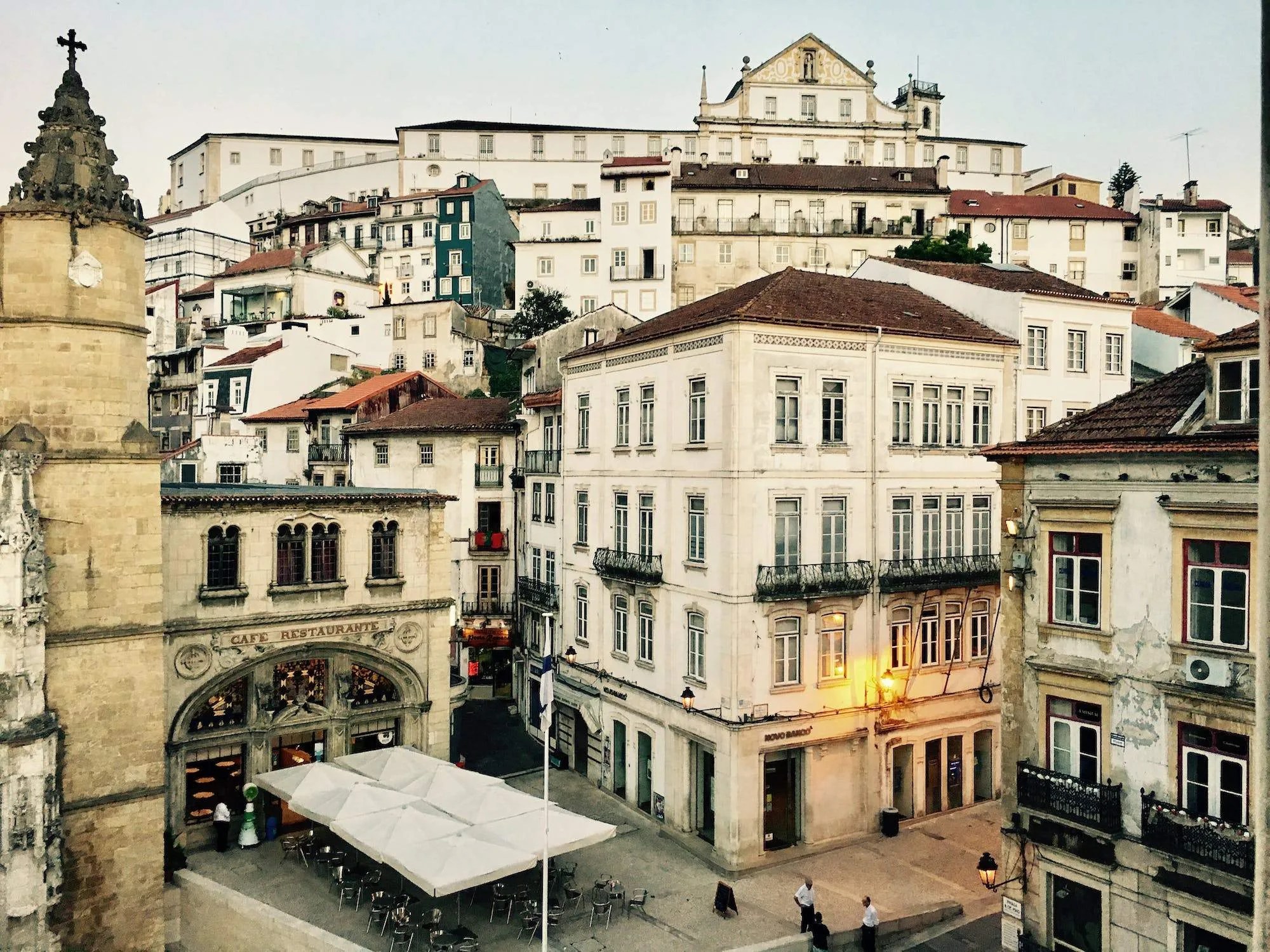
Best Cafés in Coimbra
Coimbra is a coffee city.
Not in the flashy third-wave, tasting-notes-about-jazz sense. More in the Portuguese tradition of standing at the counter, drinking an espresso and then getting on with your life.
Café Santa Cruz is the classic stop, but part of the fun is finding your own neighborhood café and returning to it for several days.
That is one of the reasons I care about slow travel .
You stop collecting attractions and begin collecting rituals.
You do not really know a city until you have a regular coffee spot.

What to Eat in Coimbra
Coimbra has traditional Portuguese restaurants, neighborhood cafés, bakeries and plenty of unfussy places where the food matters more than the décor.
Look for Pastel de Santa Clara when you see it. The traditional Coimbra sweet is tied to the city’s convent history.
You will also find hearty Portuguese dishes, grilled fish, bacalhau, soups, pastries and enough bread to keep your carbohydrate-loving ancestors satisfied.
Portugal does not ask whether you want bread. Portugal assumes you are emotionally ready.
Stay long enough to move away from the most obvious visitor streets. Some of the best meals come from ordinary places that are not trying to win Instagram.
Continue with my Portuguese Food Guide .

Coimbra at Night
Coimbra changes after dark.
The old town becomes moodier. The river reflects the city lights. Students gather. Restaurants fill. Streets that felt busy during the day become quieter and more atmospheric.
This is another reason I recommend spending the night.
A day trip gives you Coimbra in daylight.
An overnight stay gives you Coimbra with the lights turned low.
Coimbra at night feels like the city leaned closer and lowered its voice.
Where to Stay in Coimbra
Choosing where to stay mostly comes down to three things: convenience, historic atmosphere or river views.
For most first-time visitors, Baixa is the easiest overall choice. You are close to restaurants, cafés, Santa Cruz, the riverfront and the streets leading into the historic center.
Alta puts you beside the university and medieval landmarks, but you pay for the atmosphere with steep lanes, stairs and cobblestones.
Santa Clara gives you a quieter stay across the Mondego with some of the best views back toward the city.
| Area | Best For | What to Expect |
|---|---|---|
| Baixa | First-time visitors and short stays | Central, convenient and close to restaurants |
| Alta | History and university atmosphere | Beautiful, historic and very hilly |
| Santa Clara | River views, couples and quiet evenings | Scenic and slightly removed from the center |
| Praça da República | Student energy and evening activity | Lively, social and potentially noisy |
| Celas / Solum | Longer stays and everyday local life | Residential, practical and less touristy |
| Coimbra-B | Early trains and brief overnight stops | Transport convenience with less atmosphere |
Baixa: Best for First-Time Visitors
Baixa is my top recommendation for most travelers visiting Coimbra for the first time.
This is the lower historic center around Praça 8 de Maio, Santa Cruz Monastery, Rua Ferreira Borges and the streets running toward the Mondego.
Restaurants, bakeries, cafés, shops and many evening options are within easy walking distance.
It is also easier when you have luggage. Baixa is not completely flat—Coimbra would never surrender that easily—but it avoids some of Alta’s most aggressive climbs.
Stay in Baixa when:- You have only one or two nights.
- You want restaurants and cafés nearby.
- You prefer convenience over medieval atmosphere.
- You have heavy luggage or limited mobility.
- You plan to explore primarily on foot.
You still have to climb to the university, but at least you only negotiate with the hill while sightseeing instead of every time you go home.
Alta: Best for History and Atmosphere
Alta surrounds the University of Coimbra, Sé Velha, Joanina Library and Paço das Escolas.
Staying here places you inside some of the city’s most atmospheric streets. Early mornings and evenings can be especially beautiful once daytime visitors leave.
The trade-off is accessibility. Alta includes steep cobbled lanes, staircases and limited vehicle access.
Stay in Alta when:- The university is the main focus of your visit.
- You love medieval streets and old buildings.
- You want early-morning photography opportunities.
- You do not mind hills and uneven pavement.
- Atmosphere matters more than convenience.
Alta is beautiful, but arriving with a giant suitcase can transform your romantic Portuguese escape into an unscheduled strength-training program.
Santa Clara: Best for River Views and Quiet Evenings
Santa Clara sits across the Mondego River from Coimbra’s historic center.
This side of the city includes Portugal dos Pequenitos, Santa Clara-a-Velha and Quinta das Lágrimas.
It also provides the classic view of Coimbra rising above the river.
Santa Clara is quieter than Baixa or Alta and works well for couples, families and travelers who prefer calmer evenings.
Stay in Santa Clara when:- You want Coimbra skyline views.
- You prefer a quieter neighborhood.
- You are traveling with a car.
- You want to stay near Quinta das Lágrimas.
- You do not need to be in the center of student activity.
Praça da República: Best for Student Energy
Praça da República sits between the historic center, university and Coimbra’s more residential neighborhoods.
Students gather around the square, and the nearby streets contain casual restaurants, cafés and late-night activity.
This makes it useful for travelers interested in Coimbra’s student culture.
Light sleepers should be cautious during major university celebrations such as Latada and Queima das Fitas.
Celas and Solum: Best for Longer Stays
Celas and Solum are more residential than the historic center.
They offer supermarkets, neighborhood restaurants, cafés, gyms and the everyday services that become more useful after several days in one place.
These neighborhoods make more sense for digital nomads, repeat visitors and travelers staying for a week or longer.
They are less convenient for a short sightseeing trip because you will spend more time using local transportation, taxis or rideshares to reach the old town.
Coimbra-B Area: Best for Early Trains
The area around Coimbra-B is practical when you arrive late, leave early or spend only one night in the city.
What you gain in rail convenience, however, you lose in atmosphere and easy sightseeing access.
Stay near Coimbra-B when transportation matters more than historic surroundings.
For most first-time visitors, Baixa remains the stronger overall base.
Recommended Places to Stay in Coimbra
Accommodation prices change according to season, university events and how early you book. Compare current rates and cancellation policies rather than relying on a fixed price category.

Hotel Oslo Coimbra
Hotel Oslo is a practical Baixa-area choice with easy access to the historic center, riverfront, restaurants and transportation.
Its rooftop terrace provides views across Coimbra and is particularly appealing around sunset.
This is a strong option for a first visit when you want a central base without sleeping halfway up the university hill.

Quinta das Lágrimas
Quinta das Lágrimas is a historic palace hotel set within extensive gardens in Santa Clara.
The property is connected to the story of Pedro and Inês and offers more space and tranquility than the historic center.
It makes the most sense for a romantic stay, special occasion or traveler who wants the hotel itself to become part of the trip.

NH Coimbra Dona Inês
NH Coimbra Dona Inês is a larger modern hotel near the Mondego River and Coimbra’s bus station.
Spacious rooms and full-service hotel facilities make it a practical choice for families and travelers who prefer a more conventional hotel setup.
It sits outside the most atmospheric streets but remains within walking distance of Baixa.

Sapientia Boutique Hotel
Sapientia sits in Alta beside the principal University of Coimbra buildings.
Its rooms, lofts and apartments draw inspiration from Portuguese writers connected to Coimbra, and some units provide kitchenettes or river views.
Choose Sapientia when you want to stay in the middle of Coimbra’s university history and are prepared to live with the climb.
Which Coimbra area should you choose?
For a first visit, choose Baixa. Pick Alta for history and atmosphere, Santa Clara for river views and quieter evenings, or Praça da República when student energy matters more than silence. Longer stays may fit Celas or Solum better.
How to Get to Coimbra
Coimbra sits between Lisbon and Porto, making it easy to include in a wider Portugal itinerary . The train is usually the simplest way to arrive.
| Traveling From | Best Option | Arrival Point |
|---|---|---|
| Lisbon | Alfa Pendular or Intercidades | Coimbra-B |
| Porto | Alfa Pendular or Intercidades | Coimbra-B |
| Other Portuguese cities | Regional train or coach | Coimbra-B or bus terminal |
| Porto or Lisbon Airport | Train, transfer or rental car | Coimbra |
| Central Portugal countryside | Rental car | Hotel or public parking |
Getting to Coimbra by Train

The train is the most convenient option for most visitors.
CP operates Alfa Pendular and Intercidades trains along Portugal’s main north–south railway line. Both connect Coimbra with Lisbon and Porto.
Alfa Pendular is generally the faster service, while Intercidades may offer a better departure time or fare depending on the day.
From Lisbon, long-distance trains commonly leave Oriente or Santa Apolónia. From Porto, services generally use Campanhã.
Reserve tickets and confirm current schedules through Comboios de Portugal .
Check again shortly before traveling. Engineering work, strikes and temporary service changes occasionally alter individual journeys.
Arriving at Coimbra-B Station

Coimbra-B is the principal long-distance station, but it is not directly in the historic center.
It sits roughly two kilometers from Baixa and farther from the university.
Walking is technically possible without much luggage, but it is not the most attractive introduction to Coimbra.
- Metro Mondego Metrobus
- SMTUC city bus
- Taxi
- Uber or Bolt
- A transfer arranged by your accommodation
Coimbra-B is close enough to the center to look convenient on a map and far enough away to regret walking with a large suitcase.
Getting to Coimbra by Bus
Long-distance coaches connect Coimbra with Lisbon, Porto and many other Portuguese cities.
Rede Expressos is the principal national coach network, although other companies may also serve Coimbra.
Coaches generally arrive near Avenida Fernão de Magalhães, closer to Baixa than Coimbra-B.
A coach can make sense when train schedules do not fit your itinerary, the fare is significantly better, or your accommodation is closer to the bus terminal.
Compare total journey time rather than looking only at ticket price.
Driving to Coimbra
Coimbra is easy to reach by road from Lisbon, Porto and the rest of Central Portugal. The A1 motorway provides the principal north–south connection.
A car is not necessary for central Coimbra. Narrow streets, restricted-access areas, steep lanes and limited parking can make driving through the historic center substantially less romantic than the brochure suggested.
A rental car becomes useful for:
- Conímbriga
- Penela
- Buracas do Casmilo
- Buçaco
- Remote schist villages
Choose accommodation with parking or leave the car in a public garage before exploring on foot.
Reaching Coimbra from the Airport
Coimbra does not have a major commercial airport.
Porto Airport is the closest major international airport. Lisbon Airport is farther away but often provides a broader range of international flights.
From either airport you can travel to the main railway station and continue by train, reserve a transfer, rent a car or use a long-distance coach.
Avoid booking an aggressively tight train connection immediately after landing. Immigration, luggage and airport transportation have no interest in your beautifully optimized spreadsheet.
Getting Around Coimbra
Coimbra is compact enough to explore largely on foot. The challenge is not distance. It is elevation.

Walking Around Coimbra
Walking is the best way to experience the historic center.
Many of Coimbra’s most interesting streets are narrow, pedestrianized or inaccessible to regular traffic. Walking also exposes stairways, courtyards, shops and viewpoints you would miss from a vehicle.
Wear shoes with grip and support. Cobbled streets can become slippery when wet, and several climbs are steeper than they appear on a map.
Travelers with limited mobility should expect challenges around Alta and the medieval center. Buses, Metrobus, taxis and rideshares can reduce the most difficult climbs.
SMTUC City Buses
SMTUC operates Coimbra’s municipal bus network.
Buses are useful for Coimbra-B, the university, Celas, Solum, Santa Clara, hospitals and residential neighborhoods outside the historic center.
Check SMTUC for current routes, service notices and fares.
Metro Mondego Metrobus
Metro Mondego now connects parts of Coimbra with Miranda do Corvo, Lousã and the surrounding corridor.
The current network includes Coimbra-B, Portagem, República and other urban stops, making the system increasingly useful both for moving around Coimbra and for reaching Lousã without a rental car.
Check the Metro Mondego journey planner immediately before traveling because temporary service alterations can occur.
Taxis and Rideshares
Taxis, Uber and Bolt are especially useful when you arrive with luggage, stay in Alta, return after an evening fado performance or simply decide your relationship with Coimbra’s hills needs a temporary separation.
Do You Need a Car in Coimbra?
No.
Walking, Metrobus, buses, taxis and rideshares are enough for Coimbra’s principal attractions.
A car becomes valuable for rural day trips and smaller destinations outside the public transportation network.
If you rent one, consider collecting it after sightseeing in Coimbra. There is little joy in introducing a rental car to a medieval street.
For travel throughout the country, continue with my Portugal Transportation Guide .
Coimbra’s transportation system has changed considerably with Metro Mondego. Check current information instead of relying on older travel guides that still describe the former Coimbra-A rail connection as though nothing changed.
How Many Days Do You Need in Coimbra?
Two days is ideal for most first-time visitors.
You can see Coimbra’s principal landmarks in one day, but the schedule will feel rushed. Two days gives you enough time for the university, old town, riverfront, food and an evening fado performance.
Stay three days when you want to use Coimbra as a base for exploring Central Portugal.
University, Joanina Library, old town, Santa Cruz and the river.
Major attractions, Santa Clara, gardens, local food and an evening experience.
Two days in Coimbra plus a Central Portugal day trip.
Suggested Coimbra Itineraries
These routes group nearby attractions together and work downhill whenever possible. Your legs may still complain, but at least they will have fewer legitimate grievances.
One Day in Coimbra
Morning
Begin at the University of Coimbra. Visit Paço das Escolas and Joanina Library, then walk toward Sé Velha.
Reserve the university in advance when possible. Timed entry and academic events can affect access.
Lunch
Walk downhill through the old town, pass through Arco de Almedina and choose a restaurant around Baixa.
Afternoon
Visit Santa Cruz Monastery and Praça 8 de Maio, then continue toward Parque Verde and the Mondego.
Evening
Cross the river for views back toward Coimbra or attend a Coimbra fado performance before dinner.
This gives you the essential Coimbra experience without treating the city like an obstacle course with churches.
Two Days in Coimbra
Day One: University and Old Town
- University of Coimbra
- Joanina Library
- Paço das Escolas
- Sé Velha
- Medieval streets of Alta
- Arco de Almedina
- Santa Cruz Monastery
Finish with dinner in Baixa and a Coimbra fado performance.
Day Two: Gardens, River and Santa Clara
Begin at the Botanical Garden before walking toward Parque Verde do Mondego.
Cross the river and choose between:
- Santa Clara-a-Velha for history
- Portugal dos Pequenitos for families
- Quinta das Lágrimas for gardens and the Pedro and Inês story
Finish with sunset views of Coimbra from the opposite bank.

Download the Free 2-Day Coimbra Itinerary
Planning two days in Coimbra? Take the route with you.
The guide includes attractions arranged in a practical order, a walking map, suggested food stops, transportation advice and a few local shortcuts from someone who actually lives here.
Keep your existing Coimbra itinerary signup form directly beneath this HTML box.
Three Days in Coimbra
Spend the first two days following the itinerary above.
Use the third day outside Coimbra. Conímbriga is the easiest choice for Roman history, Lousã offers mountain scenery and schist villages, while Figueira da Foz works well when you want the Atlantic coast.
For more options, use my complete Coimbra day-trip guide .
Best Day Trips from Coimbra
Coimbra makes an excellent base for Roman ruins, castles, forests, mountain villages and Atlantic beaches.
This is the short version. My dedicated Best Day Trips from Coimbra guide goes deeper into transport, travel time and half-day versus full-day options.
| Destination | Best For | Time Needed | Best Transport |
|---|---|---|---|
| Conímbriga | Roman ruins and mosaics | ½–1 day | Car or regional transport |
| Penela | Castle and small-town atmosphere | ½ day | Car |
| Buracas do Casmilo | Geology and unusual landscapes | ½–1 day | Car |
| Lousã | Mountains and schist villages | Full day | Metrobus + taxi, tour or car |
| Buçaco and Luso | Forest and architecture | Full day | Car |
| Figueira da Foz | Atlantic coast | Full day | Train or car |
| Aveiro and Costa Nova | Canals and coast | Full day | Train + local transport |
| Tomar | Templar history | Full day | Train or car |
Conímbriga
One of Portugal’s most important Roman archaeological sites, with mosaics, houses, defensive walls and a museum.
Lousã and the Schist Villages
Mountain scenery, hiking, a castle and access to traditional schist villages. A car remains useful when going beyond Lousã itself.
Buçaco and Luso
Forest paths, chapels, unusual trees and the dramatic Buçaco Palace, paired naturally with nearby Luso.
Figueira da Foz
The obvious answer when Coimbra’s stone streets have you craving sand, ocean and a horizon that does not involve another hill.
Buracas do Casmilo
Huge openings formed by the collapse of a limestone cave system in Serra de Sicó. Wild, strange and surprisingly close to Coimbra.
Bring proper shoes, water and enough common sense not to stand beneath unstable rock for an Instagram photograph.
Best Time to Visit Coimbra
April through June and September through October generally provide the best combination of walking weather and city energy.
Central Portugal does history with considerably more commitment than a few museum labels.
Spring
My favorite overall season. Gardens come alive, days get longer and walking becomes more pleasant. Queima das Fitas can make May especially energetic—and especially busy.
Summer
Hot afternoons make the climb between Baixa and the university substantially less charming. Sightsee early, rest during peak heat and return to the river in the evening.
Autumn
September and October usually offer comfortable sightseeing weather and the return of university life. Latada brings major student energy.
Winter
Quieter and rainier, but Coimbra wears gloomy weather well. Cafés become more appealing and major attractions are generally less crowded.
Is Coimbra Worth Visiting?
Yes.
Coimbra is worth visiting when you enjoy history, university culture, medieval streets, atmospheric cafés and destinations that reward a slower pace.
It may not be the right choice when your priority is beaches, massive nightlife, luxury shopping or an endless list of headline attractions.
Lisbon is larger and more international. Porto is grittier and more dramatic. Coimbra is smaller, more intimate and deeply shaped by its university.
That difference is precisely why you should visit.
Tips for Visiting Coimbra
University and Joanina Library access can use timed entry, particularly during busy periods.
Start around the university and work downhill toward Baixa whenever possible. Gravity has already made its position clear.
Steep streets, polished cobblestones and stairs care very little about your travel-fashion argument.
Fado, dinner, river sunsets and quiet evening streets add an entirely different layer to the city.
Metrobus and local transport continue to evolve. Check official information shortly before traveling.
Do not schedule every hour. Coimbra’s old town works best when you allow space for a viewpoint, pastry or street you did not plan to find.

What It Is Like Living in Coimbra
I moved to Coimbra because it offered the balance I had been searching for.
The city is large enough for trains, hospitals, restaurants, cafés, culture, events and the daily services you need. Yet it remains small enough that ordinary life rarely feels overwhelming.
Living here is different from visiting. The university becomes part of the skyline rather than an attraction. The river becomes somewhere to clear your head. Café workers begin recognizing you, and streets slowly turn into routines instead of routes.
Coimbra is not one long Portuguese vacation. There are grocery runs, bureaucracy, editing deadlines, laundry and days when I unnecessarily walk uphill twice.
But ordinary life feels richer here.
I can drink coffee beside a monastery, walk through streets older than my home country and watch students in black capes pass by as though Academic Dracula is a completely normal part of Tuesday.
Coimbra is generally quieter and less expensive than Lisbon or Porto, although rising prices affect life throughout Portugal.
It works especially well for people who value history, walkability, student energy, railway connections and a slower rhythm.
It may feel too quiet for someone who needs major nightlife, an enormous international restaurant scene, direct airport access or a substantial expat bubble.
Coimbra is not for everyone. That is part of why it still feels like itself.
For the practical side of building a life abroad, continue with my guide to expat life .
FAQ: Coimbra Travel Guide
What is Coimbra known for?
Coimbra is best known for the University of Coimbra, its UNESCO-listed historic university area, Coimbra fado, medieval streets, student traditions and the Mondego River.
Is Coimbra good for a day trip?
Yes, but staying one or two nights gives you a substantially better experience because Coimbra rewards a slower pace.
How many days should I spend in Coimbra?
Two days is ideal for most visitors. Three days works especially well when you want to add a Central Portugal day trip.
Is Coimbra walkable?
Yes, but it is very hilly. The climb from downtown toward the university is steep, so comfortable shoes matter.
What are the best things to do in Coimbra?
Highlights include the University of Coimbra, Joanina Library, Sé Velha, Santa Cruz Monastery, Botanical Garden, Mondego River, Santa Clara-a-Velha, Portugal dos Pequenitos and Penedo da Saudade.
Is Coimbra better than Porto or Lisbon?
It is different rather than better or worse. Lisbon is larger and more international. Porto is grittier and more dramatic. Coimbra is smaller, historic, student-driven and better suited to travelers who enjoy slower, atmospheric cities.
Is Coimbra expensive?
Coimbra is generally more affordable than Lisbon or Porto for food, coffee and many daily expenses, although prices have risen throughout Portugal.
Is Coimbra safe?
Coimbra is generally a safe city for travelers. Use normal city awareness, protect belongings in crowded areas and do not let charming medieval lanes convince you to switch your common sense off.
Can you visit Coimbra without a car?
Absolutely. Central Coimbra is walkable, while Metrobus, buses, taxis and rideshares cover longer trips. A car is useful for some rural day trips but not necessary for the city itself.
Is Coimbra-A train station still open?
For practical trip planning, long-distance rail travelers should use Coimbra-B. The former central rail connection changed as part of the Metro Mondego project. Metrobus and other local transport now provide connections into central Coimbra. Check current Metro Mondego and CP information immediately before traveling.
What food is Coimbra known for?
Coimbra is associated with traditional Portuguese dishes including chanfana, as well as pastries and sweets such as Pastel de Santa Clara.
What is the best area to stay in Coimbra?
Baixa is the best overall choice for most first-time visitors. Alta provides more historic atmosphere, while Santa Clara is excellent for river views and quieter evenings.
Is the Machado de Castro Museum open?
Its operating status can change while works are underway. Check the museum’s official information before planning your visit rather than relying on an old opening-hours listing.
What is the closest airport to Coimbra?
Porto Airport is the closest major international airport. Lisbon Airport is farther away but may offer more international flight options.
Atypical Last Thoughts
Coimbra is the kind of city that sneaks up on you.
It does not need Lisbon’s scale, Porto’s drama or the Algarve’s beaches.
It has old stone, river light, student songs, steep streets, quiet corners and enough history to keep revealing new layers long after the first photographs are taken.
I arrived in Portugal after years of treating airports like addresses. Somewhere along the way, Coimbra stopped feeling like another destination and began feeling like home.
That is why I recommend giving it more than a hurried afternoon.
Give Coimbra one day and you will probably enjoy it.
Give it two days and you may begin to understand it.
Stay longer, and do not be surprised when you start wondering what life here would feel like.
Ask me how I know.
[…] considerably more time if you tour Santa Cruz, Sé Velha, Torre de Almedina, or the university. My complete Coimbra travel guide can help you turn this route into a full day in the […]
[…] live in Coimbra , which happens to be a very useful place from which to understand […]
[…] you are planning a broader visit, start with my Coimbra Travel Guide. Latada makes far more sense once you understand how deeply the university is woven into Coimbra […]