
Day Trips from CoimbraCastles, villages & a different kind of day out
Roman ruins, mountain villages and Atlantic beaches. Choose the escape that fits your time, then work out how to get there.
Coimbra has enough medieval streets, university traditions and hillside staircases to keep travelers busy for several days. However, one of the best reasons to use Coimbra as a base is what lies beyond the city.
The surrounding region contains Roman mosaics, ruined cave systems, schist villages, enormous forests, medieval fortresses and Atlantic beaches. Some of the best day trips from Coimbra are less than an hour away, yet they reveal landscapes and communities that feel far removed from the university crowds.
Living in Coimbra has given me time to explore these places gradually rather than racing through Central Portugal with a checklist. Some trips have involved carefully researched plans. Others began with a friend saying, “Get in the car,” followed by several hours of villages, bread, castles and roads that appeared increasingly unconvinced they were roads.
Which day trip fits your plans? Start with Aveiro for canals and architecture, Figueira da Foz for the coast, Conímbriga for Roman history, or Lousã and its schist villages for a mountain day. Choose your transport first: the villages need a separate plan beyond the Metrobus journey to Lousã town.
Use this guide to choose individual excursions. For a complete route with overnight stops, follow my Central Portugal itinerary; for the wider trip, start with the Portugal travel guide.
- Quick Guide to the Best Day Trips from Coimbra
- Half-Day and Full-Day Trips from Coimbra
- Best Half-Day Trips from Coimbra
- Best Full-Day Trips from Coimbra
- Do You Need a Car for Day Trips from Coimbra?
- 1. Conímbriga: The Best Day Trip for Roman History
- 2. Buracas do Casmilo: Best for Geology and Rural Hiking
- 3. Penela: Best for a Medieval Castle and Country Roads
- 4. Lousã: Best for Mountains and Schist Villages
- 5. Buçaco: Best for Forest Walks and Unusual Architecture
- 6. Figueira da Foz: Best Beach Day Trip from Coimbra
- 7. Aveiro: Best for Canals and Art Nouveau Architecture
- 8. Montemor-o-Velho: Best for a Castle Above the Mondego Valley
- 9. Tomar: Best for Knights Templar History
- 10. Rabaçal: Best for Roman History and Cheese
- Best Day Trips from Coimbra by Train
- Best Coimbra Day Trips by Car
- How Many Day Trips Should You Add to a Coimbra Itinerary?
- Frequently Asked Questions About Day Trips from Coimbra
- Atypical Last Thoughts
- Hey, I’m Carter.
- Take the less-rehearsed road with me.
Quick Guide to the Best Day Trips from Coimbra

| Destination | Best for | Recommended transport | Approx. travel time | Time needed |
|---|---|---|---|---|
| Conímbriga | Roman history and mosaics | Car or regional bus | 25–45 minutes | Half day |
| Buracas do Casmilo | Geology and rural hiking | Car | 35–45 minutes | Half day |
| Penela | Medieval castle and countryside | Car | 30–40 minutes | Half day |
| Lousã | Mountains and schist villages | Metrobus and car | 45–60 minutes | Half day for town; full day for villages |
| Buçaco | Forest walks and architecture | Car | 35–45 minutes | Half to full day |
| Figueira da Foz | Beaches and seafood | Train or car | 50–70 minutes | Full day |
| Aveiro | Canals and Art Nouveau | Train | 35–60 minutes | Full day |
| Montemor-o-Velho | Castle and Mondego Valley | Train or car | 30–45 minutes | Half day |
| Tomar | Templar history | Train or car | 1 hour 15 minutes–2 hours | Full day |
| Rabaçal | Roman villa and regional cheese | Car | 30–40 minutes | Half day |
Transport schedules change, especially on weekends and public holidays. Check the official CP, Metro Mondego or regional bus timetable shortly before traveling.
Half-Day and Full-Day Trips from Coimbra
One of the advantages of using Coimbra as a base is that not every excursion requires an early alarm and an ambitious battle plan. Several nearby castles, ruins and countryside attractions work well as half-day trips, while destinations farther from the city deserve a slower, full-day adventure.
Choosing between half-day and full-day trips from Coimbra depends on your transportation, how many attractions you want to visit and whether you prefer to explore at a sprint or leave time for an unhurried lunch. Use the links below to jump directly to the destination that fits your schedule.
Planning tip: Travel times and public transportation schedules can change. Confirm your train, regional bus or Metrobus departure before leaving Coimbra, especially when combining two locations in one day.
Do You Need a Car for Day Trips from Coimbra?
You do not need a car for every trip, but renting one dramatically increases the number of places you can visit.
Aveiro and Figueira da Foz are among the easiest Coimbra day trips by train. Montemor-o-Velho is also served by trains on the Coimbra–Figueira da Foz line, although driving gives you more freedom once you arrive. CP’s current timetable includes regular services between Coimbra-B, Montemor and Figueira da Foz.
Lousã is now connected to Coimbra by the Metro Mondego Metrobus system. The service operates between Coimbra, Miranda do Corvo and Lousã, making the town easier to reach without a rental car. A car is still useful for visiting the mountain’s more remote schist villages.
Conímbriga has a regional bus connection from Coimbra, but you should examine the outbound and return times before relying on it. The regional network currently lists a dedicated Coimbra–Conímbriga route, along with services to Condeixa-a-Nova, Penela, Montemor-o-Velho and other nearby communities.
Casmilo, Rabaçal, Penela and Buçaco are much easier to explore by car. Driving also lets you combine several smaller destinations into one regional road trip rather than spending half your day negotiating connections.
A Note About Coimbra Train Stations
Most regional and long-distance train journeys use Coimbra-B. CP currently directs passengers traveling between Coimbra-B and the central Coimbra station area to use connecting Metro Mondego buses, so check where your journey actually begins before casually strolling toward the wrong station with a coffee and misplaced confidence.
1. Conímbriga: The Best Day Trip for Roman History

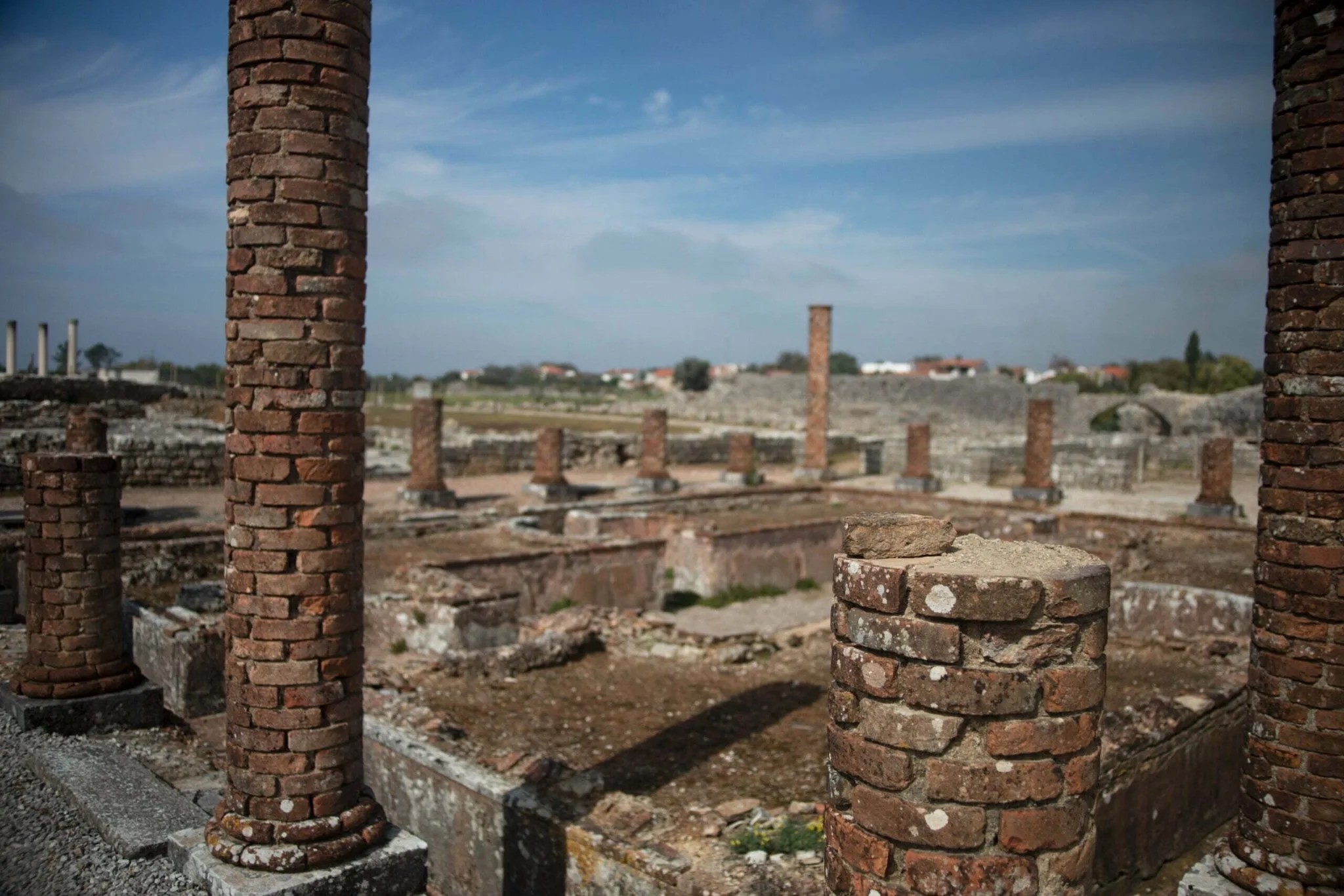
Conímbriga is one of the easiest and most rewarding day trips from Coimbra. The archaeological site lies near Condeixa-a-Nova and preserves the remains of a substantial Roman settlement.
Visitors can walk beside defensive walls, baths, fountains and the foundations of elaborate homes. The site is especially known for its surviving mosaics, which make it easier to imagine these structures as lived-in homes rather than piles of photogenic stone.
Conímbriga began as a pre-Roman settlement and developed significantly under Roman occupation. Public baths and a forum were constructed as the city expanded, while objects discovered during archaeological work are displayed inside the adjacent museum.
Allow enough time to visit both the ruins and the museum. Check the official Conímbriga opening hours and ticket information before visiting, particularly around public holidays. Walking around the archaeological area without entering the museum would be like watching the first half of a historical documentary and leaving when someone finally starts explaining what happened.
How to Get to Conímbriga
Driving gives you the most flexibility, particularly if you plan to combine Conímbriga with Casmilo, Condeixa-a-Nova or Rabaçal.
Travelers without a car can examine the current regional Coimbra–Conímbriga bus schedule. Service exists throughout the week, but return times may limit how long you can remain at the site.
Best combined with: PO.RO.S Roman Portugal Museum, Condeixa-a-Nova or the Buracas do Casmilo.
Planning more time in the city? My Coimbra travel guide covers the historic center, university, restaurants and neighborhoods, while my Central Portugal guide can help you connect these day trips to a longer regional itinerary.
2. Buracas do Casmilo: Best for Geology and Rural Hiking

South of Coimbra, the Buracas do Casmilo sit inside the limestone landscape of the Serra de Sicó. The valley contains enormous cave-like openings sometimes described locally as mouths in the mountain.
The official Central Portugal tourism information for Buracas do Casmilo provides additional background on the valley and its unusual limestone landscape.
The formations are remnants of a cave system exposed after sections of its central passage collapsed. The valley holds Portugal’s largest concentration of these openings, with some entrances reaching approximately ten metres in height.
Visitors do not need to complete an all-day hike to see them. A shorter local walking route covers approximately 3.5 kilometres, while another route extends to around 6.5 kilometres. Experienced walkers can also follow the much longer PR2 Rota do Sicó through the wider landscape.
I first explored Casmilo with my friend Omar. The trip became about more than the geological formations. We passed rural villages, stopped for local bread and gradually moved into a side of the Coimbra region that most visitors never encounter.
That is what makes Casmilo one of my favorite hidden gems near Coimbra. The formations are dramatic, but the journey also provides a glimpse into the quiet farming communities surrounding the Serra de Sicó.
How to Get to the Buracas do Casmilo
A car is the most practical option. Navigate to the picnic and recreation area at Casmilo rather than driving directly toward the formations. Leave the car near the public recreation space and continue along the walking trail.
Casmilo is a working residential village rather than a purpose-built visitor complex. Do not block house entrances, farm gates or the narrow roads local residents need to use.
Read my complete Buracas do Casmilo hiking and day-trip guide for parking information, walking-route choices, safety tips and a one-click directions link.
Best combined with: Conímbriga, Rabaçal, Penela or Soure.
3. Penela: Best for a Medieval Castle and Country Roads

Penela is an easy choice for travelers who want a castle without devoting an entire day to one monumental attraction. The Municipality of Penela provides additional historical information about Penela Castle and its role in the region’s medieval defenses.
The town developed beneath a hilltop fortress that played an important role in the medieval defensive line around the Mondego. Narrow streets and traditional houses remain clustered below the castle walls.
You can walk around the fortifications, look across the surrounding countryside and explore the compact historic center. Penela feels different from Coimbra despite being close enough for a relaxed half-day trip.
I visited during the town’s medieval festival, when the streets filled with costumes, performances, crafts and enough sword-related activity to make every unattended child briefly consider a new career. Outside festival dates, Penela is considerably calmer but still worth visiting.
How to Get to Penela
Driving is the simplest option and allows you to combine Penela with other Serra de Sicó destinations.
Regional buses serve the wider Penela area, but the frequency and final stops are better suited to local transportation than an improvised sightseeing itinerary. Travelers using public transport should confirm the return schedule before leaving Coimbra.
Read my story about Penela Castle and its Medieval Festival for a closer look at the town and annual celebration.
Best combined with: Rabaçal, Casmilo, Conímbriga or the schist village of Ferraria de São João.
4. Lousã: Best for Mountains and Schist Villages

Lousã is one of the most versatile places to visit near Coimbra. The town offers a castle, river beach and access to the forested Serra da Lousã, while the surrounding mountain contains a collection of restored schist villages.
Twelve recognized schist villages are scattered across the Lousã Mountain landscape, including Talasnal, Cerdeira, Candal, Chiqueiro, Aigra Nova and Aigra Velha. Their stone houses, narrow paths and forest setting make them some of Central Portugal’s most distinctive rural destinations. Travelers interested in hiking between the settlements can consult the official Lousã Schist Villages route, which passes through several of the mountain communities.
Talasnal is one of the best-known villages and a reasonable choice for a first visit. Cerdeira has developed a strong arts and creative identity, while smaller settlements such as Chiqueiro feel quieter and less polished.
Do not attempt to visit every village in one day. Choose two or three, leave time for lunch and accept that mountain roads move according to mountain-road time rather than whatever optimistic schedule you created over breakfast.
Coimbra to Lousã Without a Car
Metro Mondego’s Metrobus currently connects Coimbra with Miranda do Corvo and Lousã. Check the official Metro Mondego journey planner for current stops, ticket information and service notices. This makes it possible to explore Lousã town without driving.
However, the schist villages are located above and beyond the town. Reaching them generally requires a car, taxi, organized tour or a substantial hike. Travelers using Metrobus should plan the mountain portion separately.
Best combined with: Lousã Castle, Nossa Senhora da Piedade, Talasnal and Cerdeira.
5. Buçaco: Best for Forest Walks and Unusual Architecture

The Mata Nacional do Buçaco—also written as Bussaco—is one of the best Coimbra day trips for travelers who want greenery without committing to a demanding mountain hike.
The walled forest contains walking paths, chapels, hermitages, fountains, viewpoints and the Convent of Santa Cruz. At its center stands the elaborate Palace Hotel do Bussaco, a Neo-Manueline building that looks as though someone planted a royal palace in the forest and then waited for a fairy tale to break out.
Fonte Fria is one of the forest’s most recognizable features, with water descending beside a long stone staircase beneath dense vegetation. Cruz Alta provides broad views over the surrounding region.
You can spend several hours walking through the forest, visit nearby Luso for lunch or continue toward Mealhada if roast suckling pig has become an important part of your Central Portugal research.
How to Get to Buçaco
Driving is the easiest method. Public transport can take you toward Luso, but reaching the forest entrances and exploring the surrounding area is more straightforward with a car.
Check the official Mata do Bussaco visitor information before traveling because access arrangements, events and forest conditions can change.
Best combined with: Luso, Mealhada or Curia.
6. Figueira da Foz: Best Beach Day Trip from Coimbra

Figueira da Foz is the obvious answer when summer temperatures turn Coimbra into a decorative hillside oven.
The coastal city sits where the Mondego reaches the Atlantic. Its waterfront includes the enormous Praia da Claridade, while Buarcos offers a more traditional neighborhood atmosphere, seafood restaurants and additional beach access. The official Central Portugal guide to Figueira da Foz provides additional information about the beaches, Buarcos and the surrounding coastline.
The coast is also popular for surfing, windsurfing, sailing and other water sports. Buarcos is associated with a long right-hand surf break, while Cabedelo Beach has become another important local surfing area.
Figueira is not just a swimming destination. You can walk through Buarcos, eat grilled fish, explore the seafront or continue toward Cabo Mondego for cliffs, coastal geology and lighthouse views.
Coimbra to Figueira da Foz by Train
Figueira da Foz is one of the easiest day trips from Coimbra by train. CP operates regular services from Coimbra-B along the Mondego Valley to Figueira da Foz. The same line also serves Montemor and several smaller communities.
Depending on the service, the train journey from Coimbra-B to Figueira da Foz normally takes approximately 50 to 70 minutes. Journey times vary between Urban, Regional and InterRegional services.
Check the return timetable before settling into a seafood lunch that quietly becomes dinner.
Best combined with: Buarcos, Cabo Mondego or the salt landscapes around Morraceira Island.
7. Aveiro: Best for Canals and Art Nouveau Architecture

Aveiro offers an easy contrast to Coimbra. Instead of steep medieval lanes, the center is shaped by flat streets, canals, Art Nouveau façades and the waterways of the Ria de Aveiro.
Traditional moliceiro boats now carry visitors through the canals, while the historic boats were originally connected to work around the lagoon. The Ria forms a network of canals and islands that influenced local fishing, salt production and boatbuilding.
The city is compact enough to explore on foot. Walk around the central canal, follow the Art Nouveau route, visit the market area and try ovos moles, Aveiro’s famous egg-and-sugar sweet.
The oldest established producer, Confeitaria Peixinho, dates to 1856, while the sweet itself developed from a convent tradition and now holds Protected Geographical Indication status.
Travelers with more time can continue to Costa Nova to see its striped houses or visit the beaches around Barra. Travelers continuing to the coast can check the official Costa Nova visitor information before planning the connection from Aveiro.That addition is easier with a car or local bus, so do not casually assume Costa Nova sits beside Aveiro station. Portugal occasionally expects you to participate in the logistics.
Coimbra to Aveiro by Train
Aveiro is one of the most convenient Coimbra day trips by train. CP lists Coimbra–Aveiro–Porto services among its current regional and intercity timetables. Journey duration depends on whether you choose a faster long-distance service or a stopping train.
Best combined with: Costa Nova, Barra or the Aveiro salt pans.
8. Montemor-o-Velho: Best for a Castle Above the Mondego Valley

Montemor-o-Velho is often overlooked by travelers heading directly between Coimbra and Figueira da Foz.
The town’s castle rises above the Lower Mondego Valley and overlooks a landscape of river channels and agricultural fields. During the medieval period, the fortress became one of the region’s most important defensive positions.
The castle walls enclose a broad open space rather than a furnished royal interior. That is part of its appeal. You can walk along sections of the fortification, look over the valley and imagine why controlling this hill mattered.
Montemor works well as a half-day destination or as a stop on the way to Figueira da Foz.
How to Get to Montemor-o-Velho
Driving provides the easiest access to the historic center and castle. Before visiting check the official Montemor-o-Velho tourism information for current hours and special events.
The Coimbra–Figueira da Foz railway also stops at Montemor. Check the station location and return timetable before traveling, as arriving in the municipality is not the same thing as stepping directly through the castle gate.
Best combined with: Figueira da Foz, Pereira or the Mondego Valley.
9. Tomar: Best for Knights Templar History

Tomar is the longest trip in this guide, but it deserves a full day.
The city’s history is closely connected to the Knights Templar and their Portuguese successors, the Order of Christ. The Castle and Convent of Christ dominate the hill above town and have been classified as a UNESCO World Heritage Site since 1983.
Check the official Convent of Christ opening hours and ticket prices before traveling to Tomar.
The complex combines military, religious and architectural history across several centuries. Its circular Templar church, cloisters and Manueline details make it one of Portugal’s most important monuments.
Below the convent, Tomar’s historic center contains the Praça da República, the Church of São João Baptista and streets arranged around the Nabão River. The former synagogue now houses the Abraão Zacuto Luso-Hebrew Museum, while the Church of Santa Maria do Olival contains tombs associated with Templar masters.
Do not rush the Convent of Christ to squeeze in three unrelated destinations. Tomar rewards travelers who allow the history to unfold rather than sprinting through eight centuries because parking expires at 14:30.
Coimbra to Tomar
Driving offers the simplest journey and gives you flexibility around arrival and departure times.
Train travel is also possible through CP’s regional and InterRegional network. Depending on the service, your journey may require a connection, so search the complete itinerary rather than assuming every southbound train goes to Tomar. CP’s regional network includes both the Alfarelos and Tomar branches.
Best combined with: Nothing substantial. Give Tomar the day it deserves.
10. Rabaçal: Best for Roman History and Cheese

Rabaçal is a small destination, but it fits beautifully into a Serra de Sicó road trip.
The Roman Villa of Rabaçal lies approximately 12 kilometres south of Conímbriga and once stood near the Roman road linking Olisipo—modern Lisbon—with Bracara Augusta—modern Braga. Archaeological work uncovered architectural remains, mosaics and marble decorative pieces that are interpreted through the village museum.
Rabaçal is also associated with a protected regional cheese made from sheep and goat milk. Its distinctive character is connected to the local landscape and the wild thyme eaten by grazing animals.
This is not a destination with dozens of attractions fighting for your attention. That is precisely why it works. Visit the museum and villa, find somewhere to taste the cheese and then continue through the surrounding limestone countryside.
How to Get to Rabaçal
A car is strongly recommended. Regional services exist around Penela and Rabaçal, but the timetable is generally not flexible enough for a relaxed sightseeing day. The regional network currently lists a Penela–Rabaçal service, which may help travelers already staying within the municipality.
Best combined with: Penela, Conímbriga or Casmilo.
Always check current CP departure information and buy the correct ticket before boarding. CP allows Regional, InterRegional and Coimbra Urban tickets to be purchased through its app, online ticket office, stations and ticket machines.
How Many Day Trips Should You Add to a Coimbra Itinerary?
For a three-day stay in Coimbra, devote at least two full days to the city and choose one nearby excursion.
With four or five days, you can add two day trips without turning Coimbra into nothing more than the bedroom you return to after touring somewhere else. My approach to slow travel is to leave room for the city itself, including a morning with no departure time to chase.
A balanced five-day plan could look like this:
| Day | Suggested plan |
|---|---|
| Day 1 | Coimbra historic center and University |
| Day 2 | Santa Clara, Botanical Garden and riverfront |
| Day 3 | Conímbriga and Casmilo |
| Day 4 | Coimbra museums and neighborhoods |
| Day 5 | Lousã, Aveiro or Figueira da Foz |
The best choice depends on what your Portugal itinerary needs. Choose Conímbriga for archaeology, Casmilo for hiking, Lousã for mountain villages, Figueira for the beach and Aveiro for an easy train-based city trip.
Frequently Asked Questions About Day Trips from Coimbra
Atypical Last Thoughts

Coimbra deserves more than a hurried stop between Lisbon and Porto. It also deserves to be used as something more interesting than a place to sleep before catching the next train.
The city sits at the center of a region filled with Roman history, medieval fortresses, mountain villages, forests and Atlantic coastlines. Better still, many of these places remain quiet enough to explore without feeling as though the entire tourism industry arrived five minutes before you did.
Begin with Conímbriga or Casmilo if you have a car. Choose Aveiro or Figueira da Foz if you prefer the train. Head toward Lousã when you need mountains, stone villages and roads that occasionally appear to be testing your commitment.
Whichever trip you choose, leave enough room for the unplanned stop. Central Portugal has a habit of hiding its best stories between the places you originally intended to visit.
[…] Allow at least 60–90 minutes without entering attractions. Add considerably more time if you tour Santa Cruz, Sé Velha, Torre de Almedina, or the university. My complete Coimbra travel guide can help you turn this route into a full day in the city. Once you have explored the Alta and Baixa, use Coimbra as a base for Roman ruins, castles, mountain villages, and Atlantic beaches with my guide to the best day trips from Coimbra. […]
[…] you have extra time around Coimbra, my guide to the best day trips from Coimbra can help you turn the festival into a longer Central Portugal […]
[…] History lovers, slow travelers, university culture, cafés, viewpoints, and Central Portugal day trips […]