

Braga Travel Guide: Things to Do, Itineraries and Local Tips
Braga blends Roman history, baroque drama, and the youthful energy of a modern Portuguese city. Use this Braga travel guide to explore Bom Jesus do Monte, plan your itinerary, find local food, and discover the best day trips across Northern Portugal.
Written by Carter Lowry | Portugal resident and founder of Atypical Vagabond | Last updated: August 2026
Based on: My visit to Braga and current official visitor information
Braga is one of Northern Portugal’s easiest cities to underestimate. Its compact historic center combines Roman history, medieval streets, tiled façades, lively cafés, and enough church bells to ensure that nobody forgets they are visiting Portugal’s religious capital.
The city’s headline attraction is Bom Jesus do Monte, a UNESCO-listed sanctuary whose monumental staircase climbs through chapels, fountains, and gardens above Braga. Yet the city is more than one spectacular staircase. Braga Cathedral, Jardim de Santa Bárbara, Palácio do Raio, Roman ruins, traditional Minho food, and a youthful university atmosphere make Braga worth considerably more than a hurried photo stop.
This Braga travel guide will help you choose the best things to do, plan a one- or two-day Braga itinerary, decide where to stay, find regional food, and explore the best day trips from the city. It is based on my own time exploring Braga and updated with current official attraction and transportation information.
Plan Your Braga Trip
Braga is compact enough to explore without turning your holiday into an endurance event, but its attractions are divided between the walkable historic center and the hills outside the city. Braga Cathedral, Jardim de Santa Bárbara, Palácio do Raio, Roman sites, cafés, and many museums can be reached on foot. Bom Jesus do Monte and Sameiro require a bus, taxi, rideshare, or car.
This distinction matters when planning your visit. One day is enough for Braga’s essential sights, but two days allow the city to become more than another Porto side quest.
Braga Travel Guide at a Glance
| Braga travel fact | What to know |
|---|---|
| Region | Minho, Northern Portugal |
| Best known for | Bom Jesus do Monte, Braga Cathedral, Roman history, religious festivals, gardens, and Baroque architecture |
| Recommended stay | Two days |
| Minimum time | One full day |
| Best time to visit | April through June or September through October |
| Nearest major airport | Francisco Sá Carneiro Airport in Porto |
| Travel time from Porto | Approximately 65–75 minutes by direct urban train from Porto São Bento; driving generally takes 45–60 minutes without heavy traffic |
| Do you need a car? | No. The historic center is walkable, and local buses connect the city with Bom Jesus do Monte |
| Best area for a first visit | Braga’s historic center |
| Essential experience | Bom Jesus do Monte and its monumental staircase |
| Best nearby destinations | Guimarães, Peneda-Gerês, Ponte de Lima, Barcelos, and Viana do Castelo |
Direct urban trains connect Porto São Bento and Porto Campanhã with Braga throughout the day. Journey times and frequencies vary, so confirm your departure using the official CP Porto–Braga timetable shortly before traveling.
Within Braga, the historic center is easiest to explore on foot. The local TUB Line 2 serves Bom Jesus, although stops and timetables can change. Check the current route rather than trusting a three-year-old screenshot floating around the internet like an abandoned travel fossil.
Is Braga Worth Visiting?
Yes, Braga is worth visiting—especially if you enjoy history, architecture, local food, gardens, and cities that still function as real places after the tour buses leave.
The city does not have Porto’s riverfront drama or Lisbon’s enormous collection of famous landmarks. That is part of its appeal. Braga feels more manageable, and its historic center combines monumental buildings with cafés, pedestrian streets, shops, students, families, and ordinary daily life.
Bom Jesus do Monte is the headline attraction and deserves the attention. The UNESCO-listed sanctuary combines a monumental Baroque staircase, chapels, fountains, gardens, woodland, and views across Braga. However, travelers who visit only the sanctuary miss the Roman foundations, medieval cathedral, tiled façades, public gardens, regional cooking, and youthful energy found below the hill.
Braga is particularly worthwhile for:
- Travelers interested in Portuguese and Roman history
- Architecture and photography enthusiasts
- Visitors exploring Northern Portugal without a car
- Travelers looking for an easy trip from Porto
- Anyone who prefers compact cities over frantic attraction collecting
- Slow travelers looking for a practical regional base
Braga Travel Guide
Nestled in the heart of northern Portugal, Braga is a city where ancient history and modern vibrancy coexist harmoniously. Known as the “Rome of Portugal,” Braga is one of the country’s oldest cities, offering a unique blend of cultural heritage, religious significance, and contemporary charm. Whether you’re a history buff, an architecture enthusiast, or simply a traveler seeking an authentic Portuguese experience, Braga has something for everyone. This Braga Travel guide will take you through the must-see attractions and provide local tips to make the most of your visit to this captivating city.
How Many Days Do You Need in Braga?

For most first-time visitors, two days in Braga is ideal. One day covers the essential sights, while a second day provides time for Sameiro, museums, regional food, and slower exploration.
| Time in Braga | Best for | What you can realistically experience |
|---|---|---|
| Half day | Travelers passing through | Choose either the historic center or Bom Jesus do Monte. Attempting both will feel rushed. |
| One day | Porto day-trippers and first-time visitors | Visit Bom Jesus do Monte, Braga Cathedral, Jardim de Santa Bárbara, Arco da Porta Nova, and the main historic streets. |
| Two days | The best overall experience | Add Sameiro, Palácio do Raio, Roman sites, museums, local restaurants, and time to explore without watching the clock every six minutes. |
| Three or more days | Slow travelers and regional exploration | Use Braga as a base for Guimarães, Peneda-Gerês, Ponte de Lima, Barcelos, or other Northern Portugal destinations. |
If you only have one day, begin at Bom Jesus do Monte in the morning and explore central Braga afterward. This places the attraction requiring transportation at the beginning of the day and leaves the more flexible, walkable sights for the afternoon.
With two days, separate the hillside sanctuaries from the historic center. This creates a calmer itinerary and prevents the churches from eventually blending into one enormous gold-leaf hallucination.
For a longer regional trip, connect Braga with the Northern Portugal travel guide or use these Portugal itinerary ideas to build a route through Porto, Braga, Guimarães, the coast, and Peneda-Gerês.
When Is the Best Time to Visit Braga?
The best time to visit Braga is generally spring or early autumn. April through June and September through October provide a good balance of comfortable weather, greenery, daylight, and manageable visitor numbers.
Braga is in Northern Portugal, where rain is more common than in Lisbon or the Algarve. Even during warmer months, carrying a light waterproof layer is sensible. The clouds do not consult your itinerary before arriving.
| Season | What to expect | Best for |
|---|---|---|
| Spring: April–June | Mild temperatures, green landscapes, flowers, religious celebrations, and increasing visitor numbers | Gardens, walking, photography, and cultural events |
| Summer: July–August | Warm weather, long days, larger crowds, and hotter climbs at Bom Jesus | Festivals, outdoor dining, and long sightseeing days |
| Autumn: September–October | Comfortable temperatures, fewer peak-season visitors, and a growing chance of rain | Walking, food, photography, and slower travel |
| Winter: November–March | Cooler weather, frequent rain, shorter days, and fewer tourists | Museums, churches, festive atmosphere, and quieter travel |
Holy Week attracts visitors for Braga’s religious ceremonies, while São João fills the city with music, processions, decorations, and late-night celebrations in June. These periods can be memorable, but accommodations may become busier. Check the official Visit Braga events calendar before choosing your dates.
Atypical tip: Choose your dates according to the experience you want. Festival days reveal Braga at its loudest and most communal. Ordinary weekdays offer more room to notice the smaller details. Neither is automatically better—but they are very different trips.
Best Things to Do in Braga
The best things to do in Braga combine religious architecture, Roman history, public gardens, tiled palaces, and the everyday energy of a university city. Bom Jesus do Monte receives most of the photographs, but Braga becomes more interesting once you come down from the hill and explore the streets beneath it.
If you only have time for three experiences, prioritize:
- Bom Jesus do Monte
- Braga Cathedral
- A walk through the historic center from Arco da Porta Nova to Praça da República
Opening hours frequently change, and several museums close on Mondays or pause during lunch. Check official information before building a tightly timed itinerary.
Quick Guide to Braga’s Best Attractions
| Attraction | Best for | Location | Suggested time |
|---|---|---|---|
| Bom Jesus do Monte | Baroque architecture, gardens, and panoramic views | Outside the center | 1½–2½ hours |
| Braga Cathedral | Medieval history, sacred art, and architecture | Historic center | 45–75 minutes |
| Historic center | Walking, cafés, shopping, and city atmosphere | Central Braga | 1–2 hours |
| Jardim de Santa Bárbara | Gardens and photography | Historic center | 15–30 minutes |
| Palácio do Raio | Baroque design, azulejos, and local history | Central Braga | 45–60 minutes |
| Roman Braga | Archaeology and Bracara Augusta | South and west of the center | 1½–3 hours |
| Sameiro Sanctuary | Views, pilgrimage history, and quieter surroundings | Outside the center | 45–75 minutes |
| Palácio dos Biscainhos | Historic interiors and gardens | Historic center | 60–90 minutes |
| Tibães Monastery | Benedictine history and an uncrowded heritage site | About 6 kilometers from Braga | 1½–2 hours, excluding transport |
Bom Jesus do Monte

Bom Jesus do Monte is Braga’s defining landmark and one of the most recognizable religious sites in Portugal. The sanctuary became a UNESCO World Heritage Site in 2019, but its importance extends beyond the church at the summit.
The approach follows a monumental Via Crucis through wooded grounds, chapels, fountains, allegorical statues, formal gardens, and an elaborate Baroque staircase. Each section was designed as part of a religious journey rather than as an unusually ambitious fitness challenge, although your legs may reach a different theological conclusion.
At the summit, the church, gardens, terraces, and surrounding woodland provide broad views across Braga. Leave enough time to explore beyond the famous zigzag staircase. Many visitors reach the top, take the obligatory photograph, and depart before discovering that the grounds continue behind the sanctuary.
Best for: Architecture, views, gardens, religious history, and photography
Suggested time: 1½–2½ hours
Atypical tip: Visit early in the morning for a quieter staircase, or later in the afternoon for warmer light. Midday offers stronger sun, larger groups, and the distinct sensation that every stone step has developed a personal grudge.
You can reach Bom Jesus by local bus, taxi, rideshare, or car. The historic funicular opened in 1882 and still uses a water-powered balancing system. It provides an alternative to the stairs and is part of the experience rather than merely an escape hatch for tired knees.
If your mobility allows, combine the staircase and funicular by taking one uphill and the other downhill. Descending hundreds of stone steps is not automatically easier than climbing them, so choose the direction that works best for your body.
Sé de Braga: Braga Cathedral

Braga Cathedral is older than Portugal itself. Construction began before the establishment of the Portuguese kingdom, and the building developed across centuries of Romanesque, Gothic, Manueline, and Baroque alterations.
The cathedral contains the tombs of Henry of Burgundy and Teresa of León, parents of Portugal’s first king, Afonso Henriques. Its chapels, choir, organs, cloisters, and treasury reveal far more complexity than the comparatively restrained exterior initially suggests.
Different areas may require separate admission, and access can be affected by services or religious events. If the treasury, upper choir, or chapels are open during your visit, they provide valuable context for understanding Braga’s religious and political importance. Official Portuguese tourism describes the Sé as the country’s first cathedral and one erected before Portugal existed as an independent nation.
Best for: Medieval history, sacred art, and layered architecture
Suggested time: 45–75 minutes
Atypical tip: Walk around the entire exterior before going inside. Braga Cathedral makes more sense when you can see how centuries of additions created a building that refuses to belong to only one architectural period.
The cathedral sits in the historic center, making it easy to combine with Rua do Souto, Jardim de Santa Bárbara, Arco da Porta Nova, and Palácio dos Biscainhos.
Walk Through Braga’s Historic Center
Braga’s historic center is compact, mostly pedestrian-friendly, and best explored without an attraction-by-attraction battle plan.
Begin at Arco da Porta Nova, the ceremonial gateway at the western end of Rua do Souto. A passage was first opened through Braga’s walls in the early 16th century, but the arch seen today received its late-Baroque and Rococo appearance during the 18th century. The city council considers it one of architect André Soares’s most important urban interventions.
Continue east along Rua do Souto toward Braga Cathedral, Largo do Paço, Jardim de Santa Bárbara, Praça da República, Avenida Central, and the cafés surrounding the Arcada. This route connects many of the city’s principal sights while still leaving room for shops, tiled façades, side streets, and unplanned coffee.
Best for: First-time visitors, street photography, cafés, and local atmosphere
Suggested time: 1–2 hours
Atypical tip: Walk the route once with a loose destination and again without one. The first walk helps you understand Braga. The second is usually when you notice it.
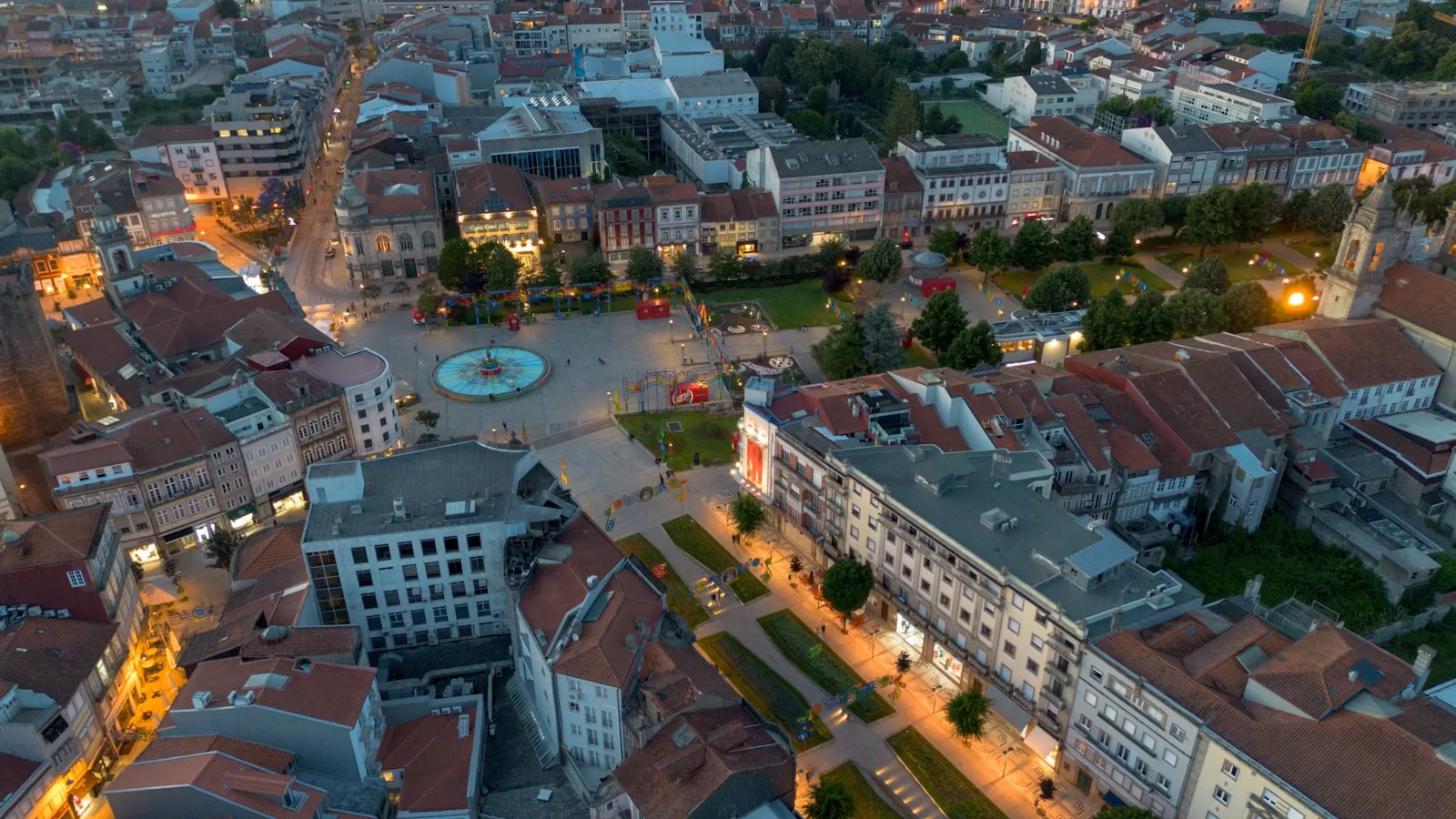
Praça da República is Braga’s main gathering point. The surrounding pedestrian streets demonstrate why the city feels younger and livelier than its religious reputation suggests. Students, families, shoppers, visitors, and café tables all compete for space beneath architecture carrying several centuries of history.
Jardim de Santa Bárbara

Jardim de Santa Bárbara is a small formal garden beside the medieval wing of the former Archbishop’s Palace. Its geometric flowerbeds, central fountain, stone arcades, and palace walls create one of Braga’s most photographed scenes.
This is not an attraction requiring half a day or an advance strategy. It works best as a peaceful pause between Braga Cathedral, Largo do Paço, and Praça da República.
The garden changes with the seasons, but the contrast between bright planting and weathered medieval stone remains its defining feature. Late afternoon generally provides softer light, although the garden can become busy when flowers are at their peak.
Best for: Gardens, photography, and a quiet pause
Suggested time: 15–30 minutes
Atypical tip: Do not schedule the garden like a museum appointment. Let it interrupt your walk through the historic center.
Palácio do Raio
Palácio do Raio is one of Braga’s most striking Baroque buildings. Its bright blue azulejos, carved stone windows, elaborate doorway, and dramatic façade make it difficult to walk past without stopping.
The palace is associated with architect André Soares and now contains the Interpretive Center of the Memories of the Misericórdia of Braga. Exhibits explore the building and the social, religious, and charitable history of the institution connected with it.
The exterior provides the immediate visual impact, but the interior adds context and allows visitors to see architectural details that cannot be appreciated from the pavement. Palácio do Raio commonly closes on Sundays and Mondays and may have a midday break, so verify current access through the Braga municipal visitor information.
Best for: Baroque architecture, azulejos, and photography
Suggested time: 45–60 minutes
Atypical tip: Even if the interior is closed, keep it on your walking route. The façade is not a consolation prize.
Explore Roman Braga and Bracara Augusta
Braga existed long before its Baroque staircases and medieval churches. The Romans established Bracara Augusta during the reign of Emperor Augustus, and it developed into one of the principal administrative centers of the northwestern Iberian Peninsula.
Begin at the D. Diogo de Sousa Archaeology Museum. Its collection explains the development of the Roman city and provides context for archaeological remains scattered around modern Braga. The museum stands within one of the most significant archaeological areas of ancient Bracara Augusta and serves as a logical starting point for exploring nearby sites.
Continue to the Roman Baths of Alto da Cividade and the Fonte do Ídolo. The baths reveal part of a public thermal complex, while the rock-cut Fonte do Ídolo preserves religious inscriptions and carvings connected with the pre-Roman and Roman city.
Best for: Roman history, archaeology, and museums
Suggested time: 1½–3 hours
Atypical tip: Visit the archaeological museum before the outdoor remains. A broken wall becomes considerably more interesting once you understand what was happening around it two thousand years ago.
Braga’s municipal Bracara Augusta route connects the archaeological museum, Roman baths, Fonte do Ídolo, and other surviving remains.
Sanctuary of Our Lady of Sameiro
Sameiro rises above Braga on a hill even higher than Bom Jesus. The present sanctuary developed during the 19th century and became one of Portugal’s most important places of Marian pilgrimage.
The complex includes the main church, crypt, broad ceremonial spaces, statues, and expansive views across the surrounding landscape. Sameiro generally feels quieter and more open than Bom Jesus, with less visual drama but considerably more breathing room.
The two sanctuaries appear close on a map, but visitors should not assume they are connected by a quick level stroll. Combine them by car, taxi, rideshare, or a deliberately planned walk rather than discovering the elevation change through blind optimism.
Best for: Religious history, panoramic views, and quieter surroundings
Suggested time: 45–75 minutes
Atypical tip: Visit Sameiro after Bom Jesus. The quieter atmosphere creates a useful contrast between two very different pilgrimage landscapes.
If you only have one day, prioritize Bom Jesus. Add Sameiro when you have a second day, a particular interest in pilgrimage sites, or enough time to enjoy the hilltop without rushing.
Palácio dos Biscainhos
Palácio dos Biscainhos offers a look inside the domestic world of Braga’s former nobility. The palace developed between the 17th and 19th centuries and contains decorated rooms, painted ceilings, azulejos, furniture, ceramics, and objects associated with aristocratic life.
The historic gardens are an essential part of the visit. Formal planting, fountains, old trees, orchard spaces, and Baroque design extend the story beyond the palace rooms.
Because it sits close to Arco da Porta Nova and Braga Cathedral, the museum fits naturally into a historic-center itinerary. It is particularly valuable for visitors who want to see more than religious architecture.
Best for: Historic interiors, decorative arts, gardens, and social history
Suggested time: 60–90 minutes
Atypical tip: Do not leave immediately after the palace rooms. The gardens are part of the experience, not decorative parsley beside the main course.
Check current hours and admission through the official Palácio dos Biscainhos website, as access and exhibition arrangements may change.
Monastery of São Martinho de Tibães
The Monastery of São Martinho de Tibães sits approximately six kilometers outside central Braga. It became the Portuguese and Brazilian headquarters of the Benedictine order in the 16th century and developed into an enormous religious complex.
Visitors can explore the church, cloisters, monastic rooms, decorative interiors, grounds, and surrounding landscape. The scale makes Tibães feel entirely different from Braga’s compact urban churches.
The monastery receives fewer visitors than Bom Jesus or the cathedral, making it one of the strongest additions for a second or third day. A car, taxi, or rideshare is generally the simplest way to reach it.
Best for: Roman history, Best for: Benedictine history, architecture, quiet exploration, and travelers returning to Braga
Suggested time: 1½–2 hours, excluding transportation
Atypical tip: Choose Tibães when you want depth rather than another famous photo. It is one of those places that rewards curiosity more than checklist travel.
The monument is normally open Tuesday through Sunday, but confirm current access through the official São Martinho de Tibães ticketing page.
More Things to Do in Braga
If you have additional time, consider adding:
- Capela de São Frutuoso de Montélios: A compact early-medieval chapel with an unusual Greek-cross plan, located outside the central sightseeing route.
- Theatro Circo: Braga’s ornate early-20th-century theater, worth checking for performances and guided visits.
- Braga Municipal Stadium: Designed by Portuguese architect Eduardo Souto de Moura and built into the side of a former quarry.
- Museu Pio XII: Archaeology, religious art, and access to the medieval tower known as Nossa Senhora da Torre.
- Museu da Imagem: A photography museum beside Arco da Porta Nova, housed partly within a former medieval wall tower.
These are worthwhile additions, but they should not displace Bom Jesus, Braga Cathedral, the historic center, or Roman Braga on a first visit.
Braga Itinerary: How to Spend One or Two Days
A useful Braga itinerary must account for one inconvenient fact: the historic center is compact, but Bom Jesus do Monte and Sameiro sit outside it. A route that repeatedly bounces between the hills and central Braga wastes time and turns a relaxed city break into an unnecessary transportation experiment.
The itineraries below group nearby attractions together, leave room for meals, and avoid pretending every museum can be conquered before lunch.
One-Day Braga Itinerary
One day in Braga is enough to visit Bom Jesus do Monte and explore the essential sights in the historic center. Begin early, especially if you are arriving from Porto.
Route: Bom Jesus do Monte → Arco da Porta Nova → Braga Cathedral → Jardim de Santa Bárbara → Praça da República → Palácio do Raio
| Approximate time | Stop | What to do |
|---|---|---|
| 8:30–10:45 | Bom Jesus do Monte | Explore the staircase, church, terraces, gardens, and funicular |
| 10:45–11:30 | Travel to central Braga | Take the local bus, taxi, rideshare, or car |
| 11:30–12:00 | Arco da Porta Nova and Rua do Souto | Enter the historic center and walk toward the cathedral |
| 12:00–13:00 | Braga Cathedral | Visit the cathedral and any open chapels, choir, or treasury |
| 13:00–14:30 | Lunch | Stop in the historic center and try a regional Braga dish |
| 14:30–15:15 | Largo do Paço and Jardim de Santa Bárbara | Explore the former Archbishop’s Palace area and garden |
| 15:15–16:00 | Praça da República | Walk through the Arcada, Avenida Central, and surrounding pedestrian streets |
| 16:00–17:00 | Palácio do Raio | Visit the palace when open or admire its tiled exterior |
| After 17:00 | Coffee, dinner, or additional wandering | Return to a favorite street instead of inventing three more mandatory attractions |
Morning: Bom Jesus do Monte
Start at Bom Jesus before the largest groups arrive. Allow at least 90 minutes for the staircase, church, viewpoints, gardens, and funicular. Two hours is better if you enjoy photography or want to explore the woodland beyond the principal terrace.
Visitors arriving by train can continue directly from Braga station by taxi, rideshare, or local bus. Driving is not necessary for this itinerary.
If you prioritize photography over avoiding crowds, reverse the route and visit Bom Jesus later in the afternoon. The sanctuary faces west, and the warmer light can be beautiful. Just confirm the funicular schedule before relying on it for your descent.
Late Morning: Enter Through Arco da Porta Nova
Return to central Braga and begin your walking route at Arco da Porta Nova. Follow Rua do Souto toward Braga Cathedral, allowing side streets and shop windows to interfere with your progress.
The route from the arch to the cathedral is short, but there is no prize for completing it at competitive speed.
Midday: Braga Cathedral and Lunch
Spend approximately 45 to 60 minutes at Braga Cathedral. Access to the treasury, chapels, or upper areas may add time, depending on what is open.
Afterward, stop for lunch in the historic center. Avoid saving lunch until late afternoon unless you enjoy discovering that the restaurant you chose has closed between services.
The Braga food section later in this guide explains the regional dishes worth trying, including bacalhau à Braga, rojões, and pudim Abade de Priscos.
Afternoon: Gardens, Squares, and Palácio do Raio
After lunch, walk toward Largo do Paço and Jardim de Santa Bárbara. Continue to Praça da República and Avenida Central before heading south toward Palácio do Raio.
Palácio do Raio is commonly closed on Sundays and Mondays. If it is unavailable, replace the interior visit with Fonte do Ídolo, Museu Pio XII, Theatro Circo, or additional time in the historic center.
Finish with coffee or an early dinner rather than adding another attraction simply because daylight remains. A travel day should end when your curiosity is satisfied, not when your spreadsheet declares victory.
Atypical tip: Bom Jesus, the cathedral, and the historic-center walk are the essential pieces. Treat everything else as a bonus. This keeps a delayed train or long lunch from detonating the entire day.
Two-Day Braga Itinerary
Two days is the best amount of time for a first visit. Dedicate the first day to central Braga and its Roman history. Use the second for the hillside sanctuaries and one additional attraction outside the center.
Day One: Historic Braga and Bracara Augusta
Route: Arco da Porta Nova → Palácio dos Biscainhos → Braga Cathedral → Jardim de Santa Bárbara → Praça da República → Palácio do Raio → Roman Braga
| Approximate time | Stop | What to do |
|---|---|---|
| 9:00–9:30 | Arco da Porta Nova | Begin the historic-center walk |
| 9:30–10:45 | Palácio dos Biscainhos | Explore the palace rooms and historic gardens |
| 11:00–12:00 | Braga Cathedral | Visit the cathedral and available museum areas |
| 12:00–12:45 | Largo do Paço and Jardim de Santa Bárbara | Walk through the palace quarter and garden |
| 13:00–14:30 | Lunch | Try a Minho or Braga specialty |
| 14:30–15:15 | Praça da República | Explore the Arcada, Avenida Central, and nearby streets |
| 15:30–16:15 | Palácio do Raio | Visit the interpretive center or view the façade |
| 16:15 onward | Roman Braga | Choose Fonte do Ídolo, the Roman baths, or the D. Diogo de Sousa Archaeology Museum |
Do not attempt every Roman site unless archaeology is the primary purpose of your visit. The D. Diogo de Sousa Archaeology Museum provides the most complete introduction. Fonte do Ídolo is easier to add to a central walking route, while the Roman baths work well when paired with the museum.
If your first day falls on a Monday, several museums may be closed. Use Monday for outdoor landmarks, the cathedral, public gardens, street exploration, and Bom Jesus, then move museum visits to the second day.
Day Two: Bom Jesus, Sameiro, and a Quieter Braga
Route: Bom Jesus do Monte → Sameiro Sanctuary → lunch → Tibães Monastery or additional central Braga
| Approximate time | Stop | What to do |
|---|---|---|
| 8:30–11:00 | Bom Jesus do Monte | Explore the sanctuary, staircase, gardens, woodland, and funicular |
| 11:15–12:30 | Sameiro Sanctuary | Visit the church, monumental spaces, and viewpoints |
| 12:30–14:00 | Lunch | Eat near the sanctuaries or return to central Braga |
| 14:30–16:30 | Choose one additional experience | Visit Tibães Monastery, a Roman site, or a museum missed on day one |
| After 16:30 | Unstructured Braga | Return to the historic center for coffee, shopping, photography, or dinner |
Bom Jesus and Sameiro naturally belong on the same day because both sit in the hills east of Braga. Use a taxi, rideshare, car, or planned public transportation connection between them. Walking is possible, but it should be a deliberate hike rather than a surprise produced by an optimistic map.
After lunch, choose only one significant addition.
- Choose Tibães Monastery for Benedictine history, architecture, and a quieter heritage site.
- Choose Roman Braga if museum hours prevented a complete visit on day one.
- Choose the historic center if your preferred form of cultural immersion involves cafés, shops, and refusing to hurry.
Trying to add Tibães, every Roman site, and three museums would technically fill the afternoon. It would also make the second day feel like an administrative error.
Braga as a Day Trip from Porto
Braga is one of the easiest day trips from Porto without a car. Direct CP urban trains run between Porto São Bento, Porto Campanhã, and Braga, with most journeys taking approximately 65 to 75 minutes.
Aim to arrive in Braga by 9:00 or 9:30. From the station, travel directly to Bom Jesus by local bus, taxi, or rideshare. Return to the historic center before lunch and follow the one-day itinerary through the afternoon.
A practical Porto-to-Braga day looks like this:
- Take an early direct train from Porto.
- Visit Bom Jesus do Monte before midday.
- Return to central Braga for lunch.
- Explore Braga Cathedral and the historic center.
- Visit Jardim de Santa Bárbara and Palácio do Raio.
- Eat an early dinner or return to Porto in the late afternoon.
Check the current CP Porto–Braga timetable before traveling. Weekend, holiday, and evening services may differ from weekday schedules.
Should You Combine Braga and Guimarães in One Day?
It is possible to visit Braga and Guimarães in one day, particularly on an organized tour or with a car. It is not the best way to experience either city.
Combining them usually means choosing Bom Jesus and a hurried walk through Braga before racing toward Guimarães Castle and its historic center. You will see the landmarks, but both cities become supporting actors in a transportation schedule.
If you have two days, give one day to each city. If you only have one day, choose Braga for religious architecture, Roman history, and Bom Jesus. Choose Guimarães for medieval streets, the castle, and Portugal’s national origin story.
Atypical tip: Portugal looks small on a map, which encourages travelers to treat cities like trading cards. Braga becomes more memorable when you stop trying to collect Guimarães before dinner.
Where to Stay in Braga
For a first visit, the historic center is the best place to stay in Braga. You can walk to Braga Cathedral, Jardim de Santa Bárbara, Palácio do Raio, restaurants, cafés, and most of the city’s evening atmosphere. Staying farther out can save money or provide quieter surroundings, but you will spend more time getting around.
| Area | Best for | Advantages | Tradeoffs |
|---|---|---|---|
| Historic center and Sé | First-time visitors and sightseeing | Walkable attractions, restaurants, and historic atmosphere | Parking can be awkward, and central streets may be lively |
| Avenida da Liberdade and São Lázaro | Events, modern hotels, and value | Close to the center and Altice Forum Braga | Less atmospheric than staying beside the cathedral |
| Braga Station and Maximinos | Train travelers and tighter budgets | Excellent transport access and an easy walk into the center | The immediate surroundings feel more functional |
| Bom Jesus and Tenões | Quiet escapes, views, and nature | Peaceful setting beside Braga’s most famous sanctuary | Less convenient for restaurants and evenings downtown |
Historic Center and Sé: Best Overall
If you want to step outside and immediately feel like you are in Braga, stay around the cathedral, Rua do Souto, Jardim de Santa Bárbara, or Praça da República.
This compact area places most central attractions within walking distance. It is also the easiest base for finding breakfast, returning to your room during the afternoon, and heading out again for dinner without consulting a bus schedule like it is an ancient prophecy.
Best for: First visits, couples, short stays, and travelers without a car.
Watch for: Street noise during festivals and weekends. If you are driving, verify parking arrangements before booking.
For a boutique option, Burgus Tribute & Design Hotel sits close to Braga Cathedral. Travelers seeking a larger historic property can consider Vila Galé Collection Braga, housed in the restored former São Marcos hospital, whose history dates to 1508.
Avenida da Liberdade and São Lázaro: Best for Events
The southern side of central Braga works well if you want to remain close to the historic streets while having easier access to Altice Forum Braga and major roads.
You can still walk to Palácio do Raio, Avenida Central, and the cathedral, although some properties sit ten to fifteen minutes from the oldest part of town. The neighborhood feels more contemporary than medieval, but that can be a worthwhile trade if you want newer rooms or better vehicle access.
Best for: Concerts, conferences, road trips, and travelers wanting modern facilities.
Watch for: Check the exact address before booking. A hotel using “Braga Centro” in its name is not necessarily inside the pedestrian historic core.
INNSiDE by Meliá Braga Centro combines a central location with pools, wellness facilities, and parking. For a simpler option, ibis budget Braga Centro is near Altice Forum and approximately five minutes on foot from the historic center.
Braga Station and Maximinos: Best for Train Travelers
Staying around Braga railway station makes sense when you are arriving from Porto, leaving early, or using Braga as a base for exploring Northern Portugal by train.
The station sits west of the historic center. From here, you can walk through Arco da Porta Nova and reach the cathedral area without needing another connection. It is not Braga’s prettiest neighborhood, but it is practical—and practical occasionally wins the fistfight.
Best for: Budget trips, late arrivals, early departures, and rail-based itineraries.
Watch for: If atmospheric evenings are your priority, stay a little farther east near Arco da Porta Nova or the cathedral.
Basic Braga by Axis is beside the railway station and about a ten-minute walk from the historic center. It is a straightforward choice for travelers who value location and price over boutique flourishes.
Bom Jesus and Tenões: Best for Peace and Views
Staying near Bom Jesus do Monte provides a completely different Braga experience. Instead of stepping into busy central streets, you wake beside wooded parkland, hillside views, and one of Portugal’s most dramatic sanctuaries.
This area suits travelers seeking a quiet retreat or anyone who wants to photograph Bom Jesus early in the morning before the day-trippers arrive. However, you will need public transport, a taxi, or a car whenever you want to visit central Braga.
Best for: Quiet weekends, nature, views, and repeat visitors.
Watch for: Staying here is less convenient if your ideal evening involves wandering between central restaurants, cafés, and illuminated historic streets.
Hotel do Parque stands near the sanctuary and emphasizes the area’s history, nature, and peaceful setting. The same local hotel group operates several other properties around Bom Jesus.
Best Braga Hotels by Travel Style
| Travel style | Accommodation to consider |
|---|---|
| Historic property | Vila Galé Collection Braga |
| Boutique stay near the cathedral | Burgus Tribute & Design Hotel |
| Modern hotel with wellness facilities | INNSiDE by Meliá Braga Centro |
| Central budget stay | ibis budget Braga Centro |
| Convenient railway access | Basic Braga by Axis |
| Quiet hillside escape | Hotel do Parque |
Hotel prices in Braga vary considerably during Easter celebrations, Braga Romana, university events, and summer festivals. Compare the total cost, confirm whether breakfast and parking are included, and check the cancellation conditions before booking.
Atypical tip: For most travelers, choose a property within a ten-minute walk of Braga Cathedral. You will enjoy the city more when its historic streets, restaurants, and evening atmosphere are waiting directly outside your door.
Braga Restaurants and Food: What to Eat
Braga’s food is not interested in being delicate. Traditional Minho cooking arrives with fried cod, roasted pork, buttery pastries, and desserts capable of making your afternoon itinerary suddenly feel optional.
The city’s religious history also influenced its cuisine. Periods of abstinence encouraged cooks to develop numerous cod recipes, while Braga’s monasteries and convents helped inspire its gloriously excessive sweets. The Braga City Council’s gastronomy guide identifies cod and Pudim Abade de Priscos among the city’s defining specialties.
| Local specialty | What it is | Best for |
|---|---|---|
| Bacalhau à Braga | Fried salt cod with potatoes, onions, and olive oil | A traditional lunch |
| Frigideiras | Flaky pastries filled with seasoned minced meat | A quick snack |
| Rojões à Minhota | Seasoned pork served with potatoes and regional accompaniments | Minho comfort food |
| Papas de sarrabulho | A rich savory porridge made with meats, bread, spices, and traditionally blood | Adventurous eaters |
| Pudim Abade de Priscos | An intensely rich egg-yolk and caramel pudding | Braga’s essential dessert |
Bacalhau à Braga
Best for: Quiet weekends, nature, views, and repeat visitors.
Watch for: Staying here is less convenient if your ideal evening involves wandering between central restaurants, cafés, and illuminated historic streets.
Bacalhau à Braga is also known as bacalhau à Narcisa or, in some restaurants, bacalhau à minhota. Thick pieces of salt cod are fried and served with sliced potatoes, onions, olive oil, and garnishes such as olives and parsley.
The dish became famous through the historic Narcisa restaurant and remains one of Braga’s culinary signatures. The revived Bacalhau à Narcisa continues to specialize in the recipe.
Salt cod has a firm texture and pronounced flavor, so do not expect something resembling freshly grilled white fish. This is preserved fish carrying several centuries of Portuguese history—and enough salt to remember every one of them.
Frigideiras
Best for: A savory breakfast, quick lunch, or afternoon snack.
Atypical tip: Eat a frigideira while it is still warm. Cold pastry has its place in life, but this is not its revolution.
Frigideiras are small, round pastries made with flaky dough and a seasoned minced-meat filling. They are easy to eat while exploring and far less likely to destroy the rest of your afternoon than a full Minho feast.
Frigideiras do Cantinho has preserved the tradition for more than two centuries. The establishment also produces a “Roman cake” inspired by an ancient recipe, giving history enthusiasts another edible excuse to stop.
Rojões à Minhota
Best for: Cold days and travelers wanting traditional Minho comfort food.
Atypical tip: If you do not eat offal, ask what accompanies the rojões before ordering. The English menu may not list every traditional component.
Rojões are pieces of seasoned pork cooked until tender and served with potatoes and other regional accompaniments. Preparations vary, and some traditional versions include sausages, offal, or components of sarrabulho.
This is hearty northern Portuguese food rather than something designed for a hurried lunch between three churches and a staircase containing several hundred reasons to regret overeating.
Papas de Sarrabulho
Best for: Curious eaters looking beyond familiar Portuguese dishes.
Dietary note: Traditional papas de sarrabulho contains meat and blood. Ask before ordering if you have dietary restrictions because recipes differ between kitchens.
Papas de sarrabulho is one of Minho’s most distinctive dishes. It is a thick, savory porridge traditionally prepared with several meats, bread or corn flour, warming spices, and pork blood. It may arrive as a starter, soup, or accompaniment to rojões.
The flavor is rich and spiced, while the texture can surprise travelers expecting an ordinary bowl of soup. It is especially associated with colder weather and the region’s traditional winter cooking.
Pudim Abade de Priscos
Best for: Sharing after a traditional meal.
Dietary note: Despite looking like an ordinary caramel pudding, the traditional recipe is not vegetarian and includes alcohol. Ask the restaurant about its preparation if either ingredient is a concern.
Pudim Abade de Priscos is Braga’s most famous dessert. Created by the Abbot of Priscos, it combines caramel, egg yolks, sugar, and an unusual savory ingredient that helps create its remarkably smooth texture: pork fat or cured ham.
The traditional recipe published by Visit Portugal also includes Port wine. The result is dense, glossy, and intensely rich—a dessert that arrives looking innocent before revealing it has the nutritional subtlety of a bass amplifier.
Where to Eat in Braga
Braga restaurants range from old-fashioned dining rooms to contemporary kitchens experimenting with regional ingredients. These places provide a useful starting point rather than an exhaustive ranking.
| Restaurant | Best for | What to know |
|---|---|---|
| Bacalhau à Narcisa | Traditional Braga food | Specializes in the city’s signature cod dish |
| Frigideiras do Cantinho | Pastries and quick snacks | Historic establishment known for frigideiras |
| Taberna Belga | Francesinha | Popular, casual, and known for generous portions |
| O Filho da Mãe | Creative cooking | Michelin-listed restaurant combining Portuguese products with South American influences |
| Inato Bistrô | Contemporary dining | Michelin-listed modern cuisine near the historic center |
| Esperança Verde | Special occasions | Refined modern cooking focused on local products |
| Soul | Plant-based food | Fully plant-based café with vegan and gluten-free choices |
Although the francesinha originated in Porto, Taberna Belga has turned its version into a Braga institution. Expect bread layered with several meats, melted cheese, egg, sauce, and fries. It is less a sandwich than an architectural challenge with gravy.
Practical Tips for Eating in Braga
Many restaurants serve lunch and dinner as separate services, closing during the late afternoon. Kitchens may also close earlier than visitors from northern Europe or North America expect, particularly at lunchtime.
Reservations are sensible for popular Braga restaurants on Friday and Saturday evenings. They are especially important for small contemporary restaurants and during major festivals.
Bread, olives, butter, or other small items placed on the table form the couvert. You are generally charged only for what you consume, so politely decline anything you do not want.
Traditional Minho cuisine relies heavily on pork, cured meats, cod, and eggs. Vegetarian and vegan choices are easier to find in modern cafés, but never assume a soup, rice dish, pastry, or dessert is meat-free without asking.
Atypical tip: Plan one substantial traditional meal rather than attempting bacalhau, rojões, sarrabulho, and pudding in a single sitting. Braga has many miracles, but immediate recovery from that lunch is unlikely to be one of them.
Best Day Trips from Braga
Braga makes an excellent base for exploring Northern Portugal. Guimarães offers medieval history, Barcelos brings markets and folk art, Viana do Castelo adds Atlantic scenery, and Peneda-Gerês replaces church bells with waterfalls and mountain trails.
Most of these day trips from Braga work without a car, although driving or joining a tour provides considerably more freedom inside Peneda-Gerês. For a wider regional plan, use my Northern Portugal travel guide.
| Destination | Best for | Typical transport from Braga | Suggested time |
|---|---|---|---|
| Guimarães | Medieval history and architecture | Direct bus, approximately 25–40 minutes | Full day |
| Peneda-Gerês | Hiking, waterfalls, and mountain villages | Car, guided tour, or limited bus service | Full day |
| Ponte de Lima | Slow travel and riverside scenery | Bus or car, approximately 30–60 minutes | Half or full day |
| Barcelos | Markets, ceramics, and Portuguese folklore | Bus or train via Nine | Half or full day |
| Viana do Castelo | Coastal views and architecture | Direct bus or train via Nine | Full day |
| Porto | Riverfront scenery, museums, and city energy | Direct urban train, approximately 65–75 minutes | Full day |
Transport times are approximate. Check your exact date with Comboios de Portugal, Rede Expressos, or the relevant bus operator because weekend and holiday schedules may differ.
Guimarães Day Trip
Guimarães is the best day trip from Braga for travelers interested in medieval history. The city is closely associated with Portugal’s emergence as an independent kingdom, while its exceptionally preserved historic center is protected as a UNESCO World Heritage Site.
Begin around Guimarães Castle and the Palace of the Dukes of Braganza. From there, walk through the historic center toward Largo da Oliveira and Praça de São Tiago. The route is compact, atmospheric, and refreshingly free from the need to build a military-grade spreadsheet.
If time remains, take the cable car to Penha for views across the surrounding landscape. Otherwise, stay in the center and allow time for lunch and several unnecessary-but-entirely-justified detours through medieval lanes.
Best for: Castles, medieval streets, Portuguese history, and first-time visitors.
Suggested time: Six to eight hours.
Atypical tip: Give Guimarães its own day. Combining it with Braga is possible, but it reduces both cities to a historical speed-dating exercise.
Direct buses between Braga and Guimarães generally take around half an hour. Check both outbound and return times before leaving because services vary by operator.
Peneda-Gerês National Park Day Trip
Peneda-Gerês is Portugal’s only national park and the strongest day trip from Braga for nature. Its landscapes include granite mountains, forests, reservoirs, waterfalls, Roman roads, and traditional villages such as Soajo and Lindoso.
Braga is one of the most practical urban gateways to the park. Buses operate toward the town of Gerês and São Bento da Porta Aberta, but reaching trailheads, waterfalls, and remote villages remains difficult without independent transport. The official Gerês visitor site provides current arrival guidance.
A rental car gives you the most flexibility. A guided day tour is the easier alternative if you want to hike or visit several locations without navigating mountain roads.
Do not attempt to cover the entire park in one day. Choose one area and build the trip around a hike, village, waterfall, or scenic drive.
Best for: Hiking, wildlife, photography, villages, and escaping city streets.
Suggested time: A full day of at least eight hours.
Atypical tip: Download maps before leaving Braga. Mobile coverage can become unreliable precisely when the road forks and both directions look like the beginning of a folk-horror film.
Ponte de Lima Day Trip
Ponte de Lima is ideal when you want a slower day. Its riverfront, gardens, compact historic center, and Roman-medieval bridge create an easygoing alternative to Northern Portugal’s larger cities.
The town promotes itself as Portugal’s oldest town, based on its charter dating to 1125. Spend your visit walking beside the Lima River, crossing the bridge, exploring the old streets, and settling into a long lunch without trying to turn relaxation into another competitive sport.
Direct buses connect Braga with Ponte de Lima, although the frequency and journey time vary by operator. Driving typically provides more flexibility, particularly if you want to continue into the surrounding Lima Valley.
Best for: Slow travel, riverside walks, gardens, and relaxed lunches.
Suggested time: Four to seven hours.
Atypical tip: Ponte de Lima is not overloaded with blockbuster attractions. That is the attraction. Go there when you want the day to breathe.
Barcelos Day Trip

Barcelos is famous for the colorful rooster that became one of Portugal’s most recognizable symbols. Beyond the legend, the town offers ceramics, Camino history, riverside views, medieval ruins, and a traditional market.
Thursday is the most atmospheric day to visit. The Barcelos Market fills Campo da Feira from early morning with produce, clothing, household goods, crafts, and enough ceramic roosters to establish a small but highly decorative army.
Direct buses are generally the simplest option from Braga. Rail journeys are possible, but they usually require changing at Nine, so inspect the connection carefully before deciding that “train sounds easier.”
Best for: Markets, ceramics, folk traditions, and the Portuguese Camino.
Suggested time: Four to six hours, preferably on Thursday.
Atypical tip: Arrive early on market day. By late morning, the market becomes busier and the best handcrafted pieces have already faced serious competition.
Viana do Castelo Day Trip
Viana do Castelo combines a compact historic center with riverfront architecture, maritime history, Atlantic beaches, and the dramatic Santa Luzia hill.
Begin around Praça da República before walking toward the waterfront. The Gil Eannes hospital ship and the city’s contemporary buildings provide a sharp contrast with its churches and older streets. Later, ascend Monte de Santa Luzia for the sanctuary and panoramic views over the Lima estuary and coastline.
Visit Portugal highlights both Viana’s maritime heritage and its modern architecture, making it one of the region’s most varied small-city destinations.
Direct buses can take approximately 45–60 minutes, while train journeys usually require a change at Nine and take longer. Compare the complete return schedule before choosing.
Best for: Coastal views, maritime history, architecture, and photography.
Suggested time: Seven to nine hours.
Atypical tip: Save Santa Luzia for a clear part of the day. The view is the payoff, and Northern Portugal’s clouds occasionally behave like unionized curtain operators.
Porto Day Trip
Porto is larger and busier than the other destinations in this section, but its direct rail connection makes it an easy day trip from Braga.
Arrive at São Bento Station and focus on a compact route through the historic center. You can visit Porto Cathedral, cross the Luís I Bridge, explore the Ribeira riverfront, and walk through parts of Vila Nova de Gaia without needing local transport.
Do not attempt to cover every major Porto attraction in one day. Museums, Foz do Douro, Matosinhos, Serralves, and Boavista deserve additional time. My Porto travel guide can help you choose the right route.
Direct urban trains between Braga and Porto São Bento generally require around 65–75 minutes.
Best for: Iconic architecture, river views, urban energy, and first visits to Northern Portugal.
Suggested time: Eight to ten hours.
Atypical tip: If your Portugal itinerary already includes two or three nights in Porto, use your Braga day-trip slot for Guimarães, Gerês, or Ponte de Lima instead.
Choosing the Right Braga Day Trip
Choose Guimarães for the strongest combination of history and easy transportation.
Choose Peneda-Gerês when mountains and trails sound better than another museum.
Choose Ponte de Lima for a quiet, slower day beside the river.
Choose Barcelos for Thursday’s market, pottery, and Portuguese folklore.
Choose Viana do Castelo for Atlantic scenery and Santa Luzia.
Choose Porto if Braga is your main base and you have not visited Portugal’s northern capital.
If you have several extra days, connect these destinations using one of my Portugal travel itineraries instead of forcing everything into separate out-and-back journeys from Braga.
How to Get to Braga and Get Around
Braga is one of the easiest cities to reach in Northern Portugal. Direct trains connect it with Porto, long-distance services run from Lisbon, and coaches travel directly from Porto Airport.
Once you arrive, most of Braga’s historic center is walkable. Public transportation becomes important primarily for reaching Bom Jesus do Monte, Sameiro Sanctuary, and attractions beyond the central streets.
| Journey | Best option | Typical travel time |
|---|---|---|
| Porto to Braga | Direct urban train | 65–75 minutes |
| Porto Airport to Braga | Direct airport coach | Approximately 45 minutes |
| Lisbon to Braga | Direct Alfa Pendular or Intercidades train | Approximately 3½–4 hours |
| Historic center | Walking | Most sights within 5–20 minutes |
| Bom Jesus do Monte | TUB bus Line 2, taxi, or rideshare | Approximately 20–30 minutes |
| Sameiro Sanctuary | TUB bus Line 88, taxi, or rideshare | Approximately 25–35 minutes |
Times are approximate. Always check current schedules before traveling, especially on weekends and public holidays.
Porto to Braga
The simplest way to reach Braga from Porto is aboard a direct urban train operated by Comboios de Portugal.
Trains depart from Porto São Bento and pass through Campanhã before continuing to Braga. São Bento is convenient when staying in Porto’s historic center, while Campanhã is useful when connecting from a long-distance train.
The journey typically takes around 65–75 minutes. Braga is the final stop, so there is little danger of accidentally waking up somewhere across the Spanish border.
From Braga railway station, it takes approximately ten minutes to walk to Arco da Porta Nova and around fifteen minutes to reach Braga Cathedral. The route is straightforward and mostly level.
Best for: Visitors arriving from Porto without a car.
Atypical tip: Check both São Bento and Campanhã when planning your departure. The train normally serves both, but Campanhã provides more connections.
Porto Airport to Braga
Porto’s Francisco Sá Carneiro Airport is the nearest major airport to Braga.
The easiest connection is a direct coach. Get Bus operates a nonstop service between the airport and Braga’s central bus station, with a scheduled journey of approximately 45 minutes. Other coach companies may also serve the route.
This is usually simpler than taking the Porto Metro into the city and transferring to a train. That route works, but it turns one easy journey into a small public-transport nesting doll.
Braga’s bus station is close to the historic center, although travelers carrying heavy luggage may prefer a short taxi ride to their accommodation.
Best for: Travelers flying directly into Porto Airport.
Atypical tip: Reserve the airport coach in advance when arriving late, traveling during a festival, or carrying luggage that has developed its own gravitational field.
Lisbon to Braga
Direct Alfa Pendular and Intercidades trains connect Lisbon with Braga. The fastest journeys from Lisboa Oriente take approximately three hours and twenty minutes, while other services take closer to four hours.
Search the official CP timetable using both Lisboa Santa Apolónia and Lisboa Oriente. Oriente is often more convenient for travelers connecting from Lisbon Airport, while Santa Apolónia may be closer to accommodation in the historic center.
Not every departure is direct. Some routes require changing at Porto Campanhã, so inspect the journey details before purchasing your ticket.
Long-distance trains have reserved seating, and advance tickets can be cheaper than buying immediately before departure.
Best for: Travelers including Braga in a longer Portugal itinerary.
Atypical tip: Choose a direct service when the times work. Saving a few euros is less exciting when it comes bundled with luggage, a station transfer, and twenty minutes of platform anxiety.
Getting Around Braga on Foot
Walking is the best way to explore central Braga.
Braga Cathedral, Jardim de Santa Bárbara, Rua do Souto, Praça da República, Palácio do Raio, and many churches and museums sit within a compact area. Once you are inside the historic center, most journeys take between five and twenty minutes.
The central terrain is gentler than Porto’s hills, but Braga still has cobblestones, polished paving, curbs, and occasional slopes. Comfortable shoes remain a better strategic decision than fashionable footwear planning a rebellion against your toes.
The railway station sits west of the historic center, while the bus station is north of Avenida Central. Both are within walking distance of major sights.
Best for: The historic center and Roman Braga.
Accessibility note: Portuguese paving can become slippery when wet. Travelers with limited mobility may find taxis useful between the stations, accommodation, and attractions outside the pedestrian core.
Braga Public Buses
Transportes Urbanos de Braga, normally abbreviated as TUB, operates the city’s public buses. Current routes and schedules are available through the official TUB journey pages.
Most visitors will use buses only for Bom Jesus do Monte, Sameiro Sanctuary, the University of Minho, or accommodation outside the center.
Tickets can usually be purchased for an individual journey, but payment methods and fares can change. Consult the TUB website or ask your accommodation for the latest guidance.
Allow extra time on Sundays, holidays, and during major events, when schedules or central stops may change.
Getting to Bom Jesus and Sameiro
Bom Jesus do Monte and Sameiro Sanctuary are outside Braga’s walkable historic center.
TUB Line 2 travels toward Bom Jesus do Monte. The journey from central Braga normally takes approximately twenty to thirty minutes, depending on the stop and traffic.
The bus leaves visitors near the lower entrance and historic funicular. From there, you can climb the monumental staircase or ride the water-powered funicular when it is operating. Travelers avoiding stairs can also take a taxi or rideshare directly toward the upper sanctuary.
TUB Line 88 connects central Braga with the Sameiro area. Service frequency may be limited, so examine both the outbound and return schedules before leaving.
Bom Jesus and Sameiro are only a few kilometers apart, but connections between them are less frequent than transportation from central Braga. A taxi or rideshare is often the easiest way to visit both on the same morning.
Best route: Historic center → Bom Jesus → Sameiro → historic center.
Atypical tip: Start at Bom Jesus early, continue uphill to Sameiro, and return to Braga for lunch. Reversing the route works, but the views and transportation tend to cooperate better in this order.
Taxis and Rideshare Services
Traditional taxis and app-based rideshare services operate in Braga. They are most useful for:
- Reaching Bom Jesus or Sameiro early in the morning
- Connecting between the two sanctuaries
- Traveling with luggage
- Returning after evening bus services become less frequent
- Reaching Tibães Monastery or accommodation outside the center
Prices depend on demand and distance, so compare the estimated fare before confirming an app-based ride.
Driving and Parking in Braga
You do not need a car to explore central Braga. In fact, navigating narrow streets, pedestrian areas, and one-way systems can add unnecessary noise to an otherwise straightforward visit.
A car becomes valuable when using Braga as a base for Peneda-Gerês, rural Minho, or several smaller towns in one trip. If you are driving, choose accommodation with confirmed parking or use a public garage near the edge of the historic center.
Avoid leaving luggage visible inside a parked vehicle, even during a brief stop.
For broader advice about trains, buses, toll roads, and rental cars, see my Portugal transportation guide.
Atypical tip: Arrive, park once, and walk. Driving from monument to monument inside Braga wastes time and transforms a beautiful old city into an argument with a navigation app.
Braga Travel Guide FAQ
Atypical Last Thoughts

Braga does not demand attention the way Porto or Lisbon does. It lets the larger cities dominate the postcards while quietly carrying Roman ruins, medieval churches, baroque staircases, university life, and enough serious food to derail an ambitious afternoon.
At first glance, Braga can appear to be a city built entirely from churches. Look closer and it becomes something more complicated. Roman Bracara Augusta survives beneath modern streets. Students gather around buildings older than the country itself. Traditional restaurants serve recipes passed through generations, while newer kitchens happily tear up the rulebook.
That mixture prevents Braga from becoming a museum piece. It is ancient but not frozen, religious but not silent, and beautiful without feeling polished into submission.
You can visit Braga in one day, but the city improves when you give it two. See Bom Jesus early, walk the historic center without racing, eat something unapologetically heavy, and remain after the day-trippers return to Porto. Use this Braga travel guide as a framework rather than a scavenger hunt. Missing one church because you stopped for coffee is not a travel failure.
Braga’s greatest trick is balance. It delivers monumental architecture without big-city exhaustion, local character without making visitors work impossibly hard to find it, and excellent day trips when you are ready to explore farther.
Come for Bom Jesus do Monte. Stay long enough to discover the living city below it.
Continue planning your journey through my Northern Portugal travel guide, or connect Braga with a longer route using my Portugal travel itineraries.
By following this Braga travel guide and embracing the local tips, you’ll not only see the best of what Braga has to offer but also immerse yourself in the authentic rhythms of this remarkable city. So pack your bags, set your sights on Braga, and prepare to discover one of Portugal’s true gems. Safe travels, adventurer!
Meet Carter

I’m Carter, an American traveler living in Portugal and the creator of Atypical Vagabond. After selling my technology business, I traded the conventional path for slow travel, life abroad, and a slightly unreasonable number of long walks across Europe. I share honest Portugal guides, Camino stories, digital nomad advice, and practical lessons to help you explore the world with greater confidence and purpose.
Subscribe
Looking for honest travel inspiration without the polished influencer nonsense?
Join the Atypical Vagabond newsletter for offbeat destination guides, Portugal travel tips, digital nomad lessons, slow travel stories, and the occasional reminder that the ordinary path is wildly overrated.
I share the victories, wrong turns, hidden gems, and real-life chaos that come with building a life around travel. No corporate fluff. No recycled bucket lists. Just useful advice, personal stories, and unconventional adventures designed to help you travel deeper, stay curious, and create your own damn route.
Subscribe and let’s reject the ordinary together.
Donations
Enjoying the stories, guides, videos, and occasional travel disaster here at Atypical Vagabond?
A small donation helps cover the real costs behind the adventures—from transportation and website hosting to camera gear, research, and enough coffee to keep the next guide moving.
There are no giant sponsors pulling the strings and no polished corporate travel machine hiding backstage. Your support helps me continue creating honest travel stories, practical Portugal guides, digital nomad advice, and unconventional adventures for travelers who prefer the road less rehearsed.
Every contribution helps keep Atypical Vagabond independent.
Fuel the next adventure through PayPal—and help me keep rejecting the ordinary.


3 responses to “Braga Travel Guide: Things to Do, Itineraries and Local Tips”
[…] very essence of travel is unpredictability. Yet, sometimes, unexpected interruptions can provoke anger. It could be a […]
[…] you travel in North America, there are various outdoor adventures. You can kayak in Alaska’s fjords to […]
[…] Your Goals: Clarify your goal as a digital nomad. Whether traveling the world, working remotely, or immersing yourself in new cultures, clear goals will guide your decisions and […]