
A proper Camino training plan is not about becoming an Olympic athlete, buying neon spandex, or turning your life into a motivational poster with sweaty fonts.
It is about preparing your body for the beautiful, brutal, blister-making reality of walking day after day across Spain, Portugal, France, or wherever your Camino route decides to punch your ego in the shins.
When I started thinking seriously about how to train for the Camino de Santiago, I had one goal: arrive prepared enough to enjoy the journey instead of limping through it like a wounded raccoon carrying a backpack full of bad decisions.
Because here is the truth. The Camino is not usually difficult because of one heroic mountain climb. It is difficult because you wake up the next morning and do it again. Then again. Then again. Your feet, knees, hips, shoulders, and attitude all get invited to the same endurance party.
This Camino Training Plan is based on what I learned from walking the Camino, making mistakes, carrying too much junk, dealing with sore legs, and realizing that “I’ll get fit on the trail” is sometimes just code for “I enjoy suffering with extra steps.”
- Why You Need a Camino Training Plan
- What You Are Actually Training For
- My Camino Training Philosophy
- 12-Week Camino Training Plan
- Strength Training for the Camino
- Camino Backpack Training
- Train in the Shoes You Will Wear
- Hill Training for the Camino
- Rest Days Are Part of the Plan
- What If You Only Have One Month to Train?
- What If You Are Older, Injured, or Starting From Scratch?
- How Far Should You Walk Each Day on the Camino?
- Best Time to Train for the Camino
- Mental Training for the Camino
- Common Camino Training Mistakes
- Camino Training Plan Weekly Schedule
- Camino Training Gear Checklist
- FAQs About Camino Training
- Related Camino Guides
- Atypical Last Thoughts
Quick Answer: How Should You Train for the Camino de Santiago?

The best Camino training plan should begin about 8 to 12 weeks before your walk, although 3 to 6 months is even better if you have the time. Your training should include regular walking, longer weekend hikes, hill practice, backpack training, strength work, mobility, and rest days. Many Camino training recommendations suggest building toward 15–20 km walks before departure, ideally in the same shoes and daypack you will use on the Camino.
Your goal is not to become a fitness goblin. Your goal is to make walking feel normal.
By the time you leave for the Camino, your body should understand three things:
- Walking multiple days in a row is not a personal attack.
- A loaded backpack changes everything.
- Downhill walking can be more savage than climbing.
Plan Your Camino de Santiago
Continue preparing for your pilgrimage with these Camino guides:
- Camino de Santiago: The Complete Guide to Walking the Way
- Camino Francés: Route, Stages, and Planning Guide
- What to Pack for the Camino de Santiago
- How to Train for the Camino de Santiago
- Camino Albergues: What First-Time Pilgrims Should Expect
- Choosing the Best Camino de Santiago Route
Why You Need a Camino Training Plan
Before my Camino, I understood walking. I mean, I had been doing it since toddlerhood with mixed reviews.
But walking the Camino de Santiago is different.
You are not just walking from your couch to the coffee shop. You are walking across regions, hills, cobblestones, farm roads, forests, medieval villages, and sometimes through weather that feels like Spain drew a wildcard from the chaos deck.
A Camino training guide should prepare you for repetition. That is the secret sauce. One 20 km hike is not the same as walking 15–25 km several days in a row while carrying your gear and pretending your socks are not quietly plotting against you.
The Camino does not care if you did one big heroic hike three months ago. The Camino wants consistency.
What You Are Actually Training For
When people ask how to train for the Camino de Santiago, they usually focus on distance.
Distance matters, but it is only one piece of the tortilla.
You are training for:
- Daily walking endurance
- Foot toughness
- Backpack comfort
- Hill climbing
- Downhill control
- Knee and hip stability
- Recovery between walking days
- Mental patience
- The ability to keep moving when your body starts filing complaints
The Camino is not a race. Nobody gives you a golden scallop shell because you sprinted into town with smoke coming out of your boots.
You are training to walk comfortably, recover well, and still have enough energy to enjoy the village, the food, the people, and the strange spiritual nonsense that sneaks up on you somewhere between a bocadillo and a blister.
My Camino Training Philosophy
My training philosophy is simple:
Train like you want to enjoy the Camino, not survive it.
There is a difference.
Surviving the Camino means dragging yourself into the next town, collapsing on a bunk bed, and staring at your feet like they betrayed the family.
Enjoying the Camino means arriving tired but alive enough to shower, eat, wander around, talk to other pilgrims, write in your journal, and maybe appreciate that some tiny Spanish village just changed your whole mood.
You do not need to punish yourself before the Camino. The Camino will bring its own little carnival of discomfort. Your job is to arrive prepared enough that the discomfort becomes part of the adventure instead of the whole story.
What My Camino Taught Me
The hardest part was not one brutal climb. It was waking up and walking again after my legs already had complaints filed with management. Training for back-to-back walking days would have saved me a few grumpy pilgrim moments.
12-Week Camino Training Plan

This 12-week Camino training plan is designed for regular people with regular lives. You do not need to quit your job, move into a gym, or start referring to yourself as “an endurance athlete” while eating protein dust from a plastic tub.
The plan builds gradually so your feet, legs, knees, hips, and back can adapt.
If you already walk regularly, you can start around Week 4 or Week 5. If you are coming straight from the couch, start at Week 1 and be patient. The Camino rewards patience. It also punishes arrogance with tendonitis.
Weeks 1–2: Wake Up the Walking Muscles
Start with easy walks.
Your goal here is consistency, not glory.
Weekly goal:
- Walk 3–4 days per week
- Keep most walks between 30–60 minutes
- Add one slightly longer walk of 5–7 km
- Do light stretching or mobility after walking
- Start wearing the shoes you plan to use on the Camino
This is the “hello body, remember outside?” phase.
Do not add a heavy backpack yet. Do not hammer hills yet. Just build the habit. Your feet need time to toughen up, and your legs need to remember that walking is not a once-a-week hobby.
Weeks 3–4: Build the Base
Now the training starts to feel more like Camino preparation.
Weekly goal:
- Walk 4 days per week
- Two short walks of 45–60 minutes
- One medium walk of 7–10 km
- One longer weekend walk of 10–12 km
- Add light hill walking if available
- Begin carrying a small daypack
This is where you start testing the little things.
Do your socks rub? Do your shoes feel good after two hours? Does your backpack sit correctly? Are your shoulders angry? Does your water bottle bounce around like a punk drummer with no rhythm?
Good. Find those problems now.
The Camino is not the place to discover your new shoes are actually medieval torture devices with laces.
Weeks 5–6: Add Hills and Backpack Weight
Now we start making the training more Camino-specific.
The Camino Francés has climbs. The Camino Portugués has pavement. The Camino del Norte has hills that look at your calves and laugh. Every route has its own personality disorder.
Weekly goal:
- Walk 4–5 days per week
- Two short walks of 45–60 minutes
- One medium walk of 8–12 km
- One hill-focused walk
- One long walk of 12–15 km
- Carry your Camino daypack with water, snacks, and rain gear
Your backpack training should begin lightly. Do not load it with bricks like you are auditioning for a prison montage.
Start with what you realistically plan to carry: water, snacks, layers, rain gear, first aid, and whatever emotional support granola bar gets you through the day.
This is also a good time to practice walking with poles if you plan to use them.
Walking poles can help with rhythm, balance, and downhill control, but only if you know how to use them. Otherwise, you are just aggressively poking Europe.
Weeks 7–8: Train for Back-to-Back Walking Days
This is where the Camino training plan gets real.
The Camino is not one long walk. It is a series of walks stacked on top of each other until your body either adapts or starts sending strongly worded emails.
Weekly goal:
- Walk 5 days per week
- Two shorter walks of 45–60 minutes
- One medium walk of 10–12 km
- One long walk of 15–18 km
- One recovery walk the day after your long walk
- Carry your Camino pack on at least two walks
The key here is the back-to-back effort.
Do a long walk on Saturday. Then walk again on Sunday, even if it is shorter. That second walk teaches your body how to move when it is already tired.
That is Camino gold.
Because on the trail, you rarely wake up feeling brand new. You wake up feeling like yesterday left a receipt.
Weeks 9–10: Practice Camino Conditions
Now you want to make training feel as close to the Camino as possible.
Wear the shoes. Carry the pack. Use the socks. Walk in the rain if it happens. Test your layers. Eat the snacks you plan to bring. Practice drinking enough water.
Weekly goal:
- Walk 5 days per week
- Two short walks of 45–60 minutes
- One medium walk of 10–12 km
- One long walk of 18–20 km
- One recovery walk of 5–8 km
- Include hills or stairs once per week
- Strength train twice per week
The CDC recommends adults get at least 150 minutes of moderate-intensity activity each week and include muscle-strengthening activities at least two days per week, which lines up nicely with Camino preparation.
This is also the time to learn what your body hates.
Maybe your left knee complains on descents. Maybe your hips tighten after 15 km. Maybe your shoulders hate your backpack. Maybe your feet swell and your shoes suddenly feel like tiny coffins.
Fantastic. Not because pain is fun, but because you now have time to fix the problem.
Week 11: Peak Week
This is your biggest training week.
Do not go completely feral. This is not the time to prove you are indestructible. You are not. None of us are. We are all just meat skeletons with travel dreams.
Weekly goal:
- Walk 5 days
- One long walk of 20–22 km
- One medium walk of 12–15 km
- One back-to-back recovery walk of 6–10 km
- Carry your full Camino pack
- Keep strength training light
- Focus on sleep and recovery
If you can comfortably walk 20 km with your pack and then walk again the next day, you are in a strong position for the Camino.
You do not need to train by walking marathon distances. You need to train your body to repeat reasonable walking days without falling apart like a gas station sandwich.
Week 12: Taper and Do Not Be a Hero
The final week is about recovery.
This is where many people mess up. They panic and try to cram fitness at the last minute like a student before finals.
Do not do that.
You cannot panic-train your way into Camino readiness. You can only make yourself sore before the starting line.
Weekly goal:
- Walk 3–4 easy days
- Keep walks short and relaxed
- Do one final gear check
- Stretch gently
- Sleep more
- Hydrate
- Stop experimenting with new shoes, socks, packs, or “miracle” foot products
Your body should arrive fresh, not fried.
Strength Training for the Camino
Walking is the main event, but strength training is the backstage crew keeping the whole show from collapsing.
For the Camino, focus on legs, hips, glutes, core, and back.
You do not need complicated gym sorcery. You need useful strength.
Best Strength Exercises for Camino Training
Add these 2 days per week:
Step-ups
Great for climbs, stairs, and mountain villages that seem charming until your quads start screaming.
Squats or chair squats
Builds leg strength for daily walking and getting in and out of bunk beds without making old-man sound effects.
Lunges or split squats
Helps with balance, stability, and uneven terrain.
Glute bridges
Good for hips and lower back support.
Calf raises
Your calves and Achilles tendons do a lot of work on the Camino. Be nice to them now.
Bird dogs
Great for core stability and lower back control.
Side planks
Helps hips and core, especially when carrying a pack.
Rows or lat pulldowns
A stronger back makes carrying a backpack less miserable.
Strength training does not need to destroy you. In fact, it should not. The goal is to support your walking, not turn leg day into a tragic opera.
Camino Backpack Training
Backpack training is where fantasy meets reality.
At home, your pack looks reasonable. On the Camino, after 18 km, that same pack may start feeling like you adopted a needy boulder.
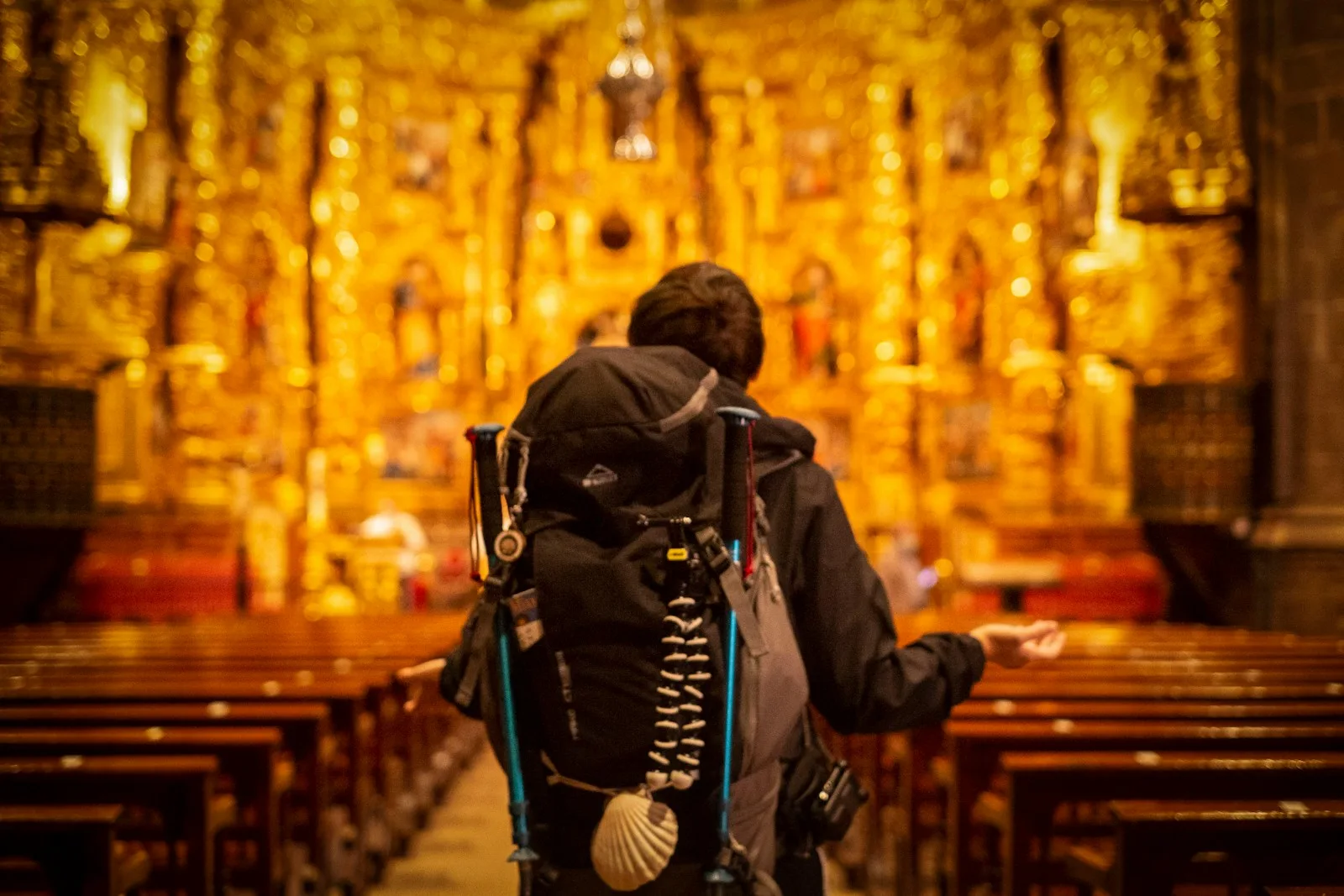
Train with your backpack before you leave.
Start light, then gradually work up to your expected Camino weight. If you plan to carry your full pack, train with it. If you plan to use luggage transport and only carry a daypack, train with that.
The big mistake is waiting until Day 1 to find out your backpack rubs, bounces, squeaks, or slowly turns your shoulders into beef jerky.
What to Carry During Training Walks
Practice with:
- Water
- Rain jacket
- Snacks
- First aid kit
- Phone
- Guidebook or navigation tool
- Extra layer
- Any gear you expect to carry daily
This helps you understand not only the weight, but also how often you need water, where you want snacks, and whether your pack organization makes sense.
The Camino has a way of exposing overpacking. Every unnecessary item becomes a small annoying roommate you carry across Spain.
Train in the Shoes You Will Wear
Your shoes are the most important relationship on the Camino.
Choose poorly, and every step becomes a dramatic breakup.
Whether you wear trail runners, hiking shoes, or lightweight boots, train in the same footwear before you leave. Do not show up with brand-new shoes unless you enjoy blisters, regret, and saying things like, “I think my toenail is becoming a free agent.”
Your training walks should answer these questions:
- Do my shoes feel good after 10 km?
- Do my feet swell after long walks?
- Do I need a larger size?
- Are my socks causing friction?
- Do I get hot spots?
- Are my toes hitting the front on descents?
The Camino does not require fancy footwear, but it does require footwear that works for your feet.
Hill Training for the Camino
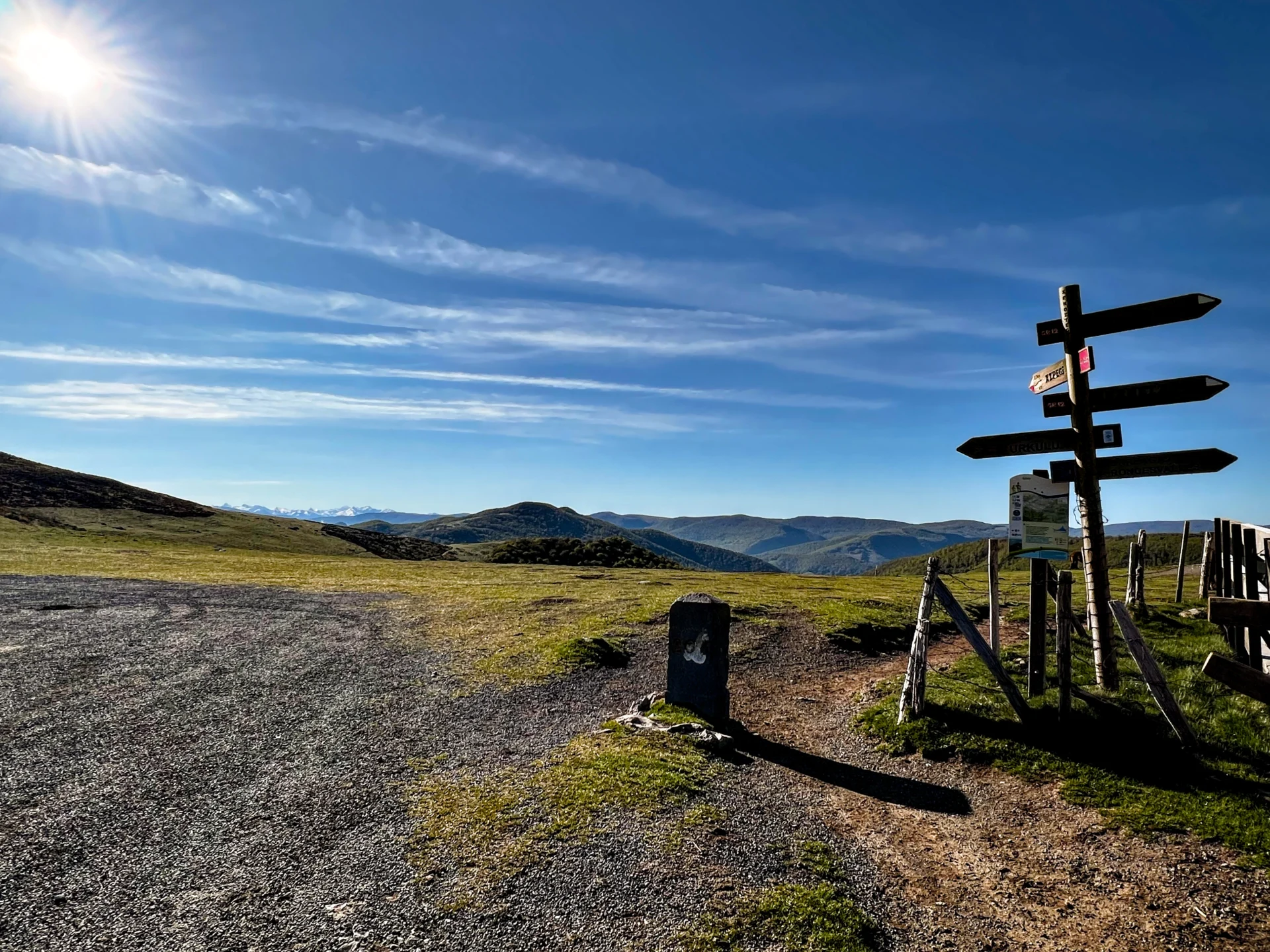
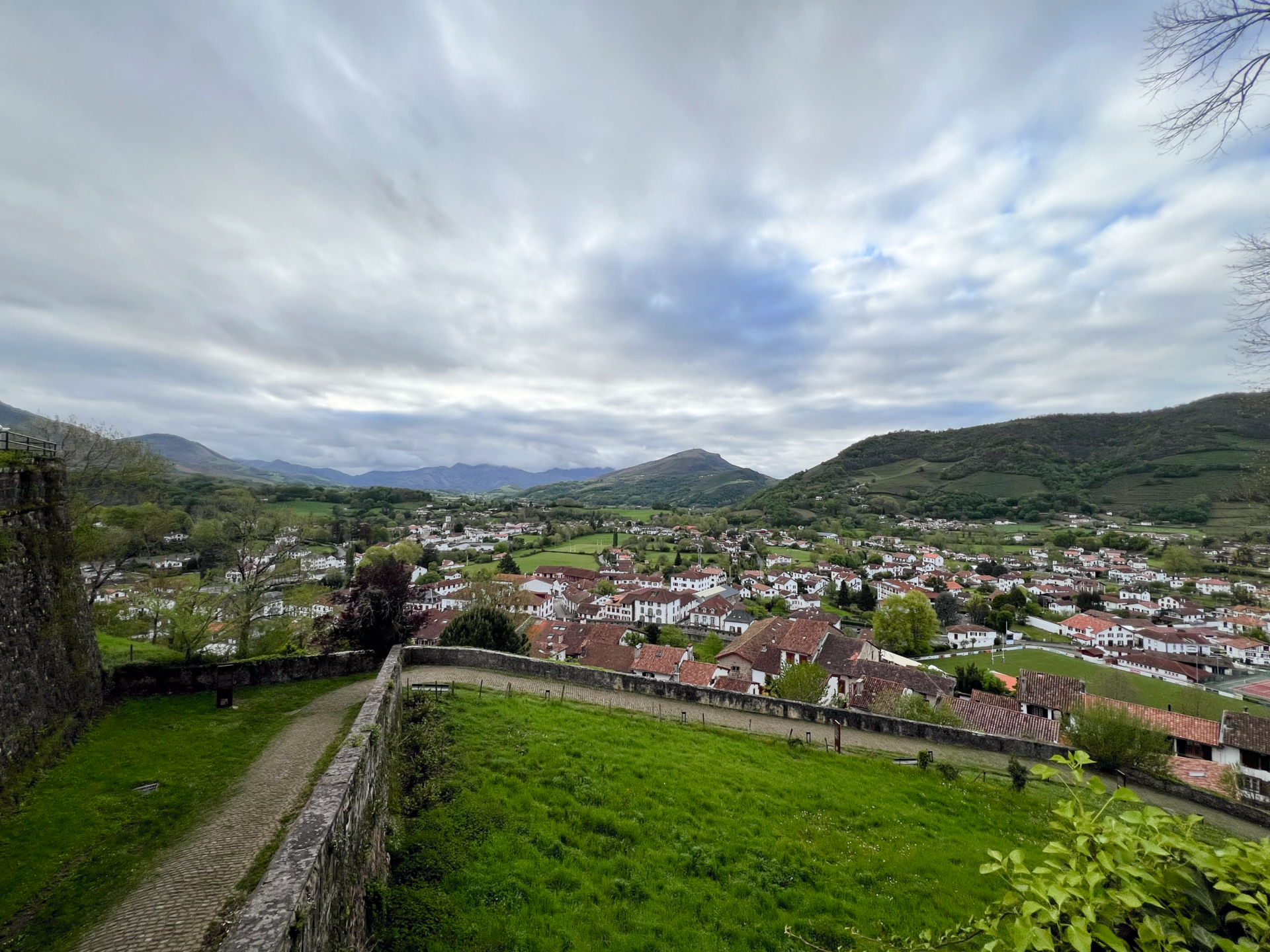
If you are walking the Camino Francés from Saint-Jean-Pied-de-Port, congratulations. The Pyrenees are waiting with a clipboard and a bad attitude.
But even if your route is not mountainous, hill training helps.
Climbs build strength. Descents build control. Both matter.
Downhill walking is especially important because it can hammer your knees, quads, and toes. Many pilgrims worry about climbing, then discover the descent is the real villain.
How to Add Hill Training
Once per week, add one of these:
- Walk a hilly route
- Use stairs
- Walk on a treadmill incline
- Find a local park with elevation
- Practice controlled downhill walking
- Use walking poles if you plan to carry them
If you live somewhere flat, do not panic. Stairs, bridges, parking garages, and treadmill incline sessions can help. It is not romantic, but neither is limping into an albergue muttering at your kneecaps.
Rest Days Are Part of the Plan
Rest is not laziness. Rest is training.
Your body adapts when you recover. If you walk hard every day before the Camino, you might arrive already cooked.
During heavy training weeks, include at least one full rest day. The American College of Sports Medicine notes that during periods of high training volume, 1–2 rest days per week can be useful for recovery.
On rest days, you can stretch, do gentle yoga, take an easy stroll, or do absolutely nothing and call it spiritual preparation.
That last one is underrated.
What If You Only Have One Month to Train?
If your Camino starts in a month, do not panic.
You still have time to improve your walking fitness and test your gear. Just be realistic.
4-Week Camino Training Plan
Week 1
- Walk 4 days
- Long walk: 8–10 km
- Start wearing Camino shoes
- Light strength training twice
Week 2
- Walk 4–5 days
- Long walk: 12–14 km
- Add backpack
- Add hills or stairs once
Week 3
- Walk 5 days
- Long walk: 15–18 km
- Do one back-to-back walking day
- Finalize socks, shoes, and pack setup
Week 4
- Reduce volume
- Take easy walks
- Rest
- Pack
- Do not panic-buy weird gear at midnight
One month is not ideal, but it is enough to avoid showing up completely unprepared.
What If You Are Older, Injured, or Starting From Scratch?
Start slower.
That is not weakness. That is wisdom wearing better shoes.
If you are dealing with knee pain, hip pain, back issues, plantar fasciitis, or other injuries, talk to a medical professional or physical therapist before ramping up your training.
The Camino will still be there.
There is no need to wreck yourself trying to meet someone else’s schedule. A slow Camino is still a Camino. Honestly, it might even be better.
I prefer a Camino pace that gives me time to notice the village, the landscape, the food, the strange roadside shrine, and the emotional ambush waiting somewhere after my second coffee.
How Far Should You Walk Each Day on the Camino?
Many traditional Camino stages are around 20–25 km per day, but that does not mean you need to walk that far every day.
For many pilgrims, especially first-timers, 10–15 km days can be a smarter and more enjoyable pace. Some travel companies even build easier Camino itineraries around 10–15 km walking days for a more relaxed experience.
Your Camino training plan should match the Camino you actually want to walk.
If you plan to walk 25 km days, train for longer distances. If you want a slow travel Camino with shorter stages, train for consistency and recovery.
There is no prize for suffering more than necessary.
Best Time to Train for the Camino
Your training should match your season.
If you are walking in spring, train in layers and practice with rain gear. Spring can bring pleasant temperatures, but northern Spain can still be rainy and unpredictable. Correos notes that May, June, and September can be especially pleasant for the Camino Francés, while winter can bring snow in areas such as the Pyrenees, Foncebadón, and O Cebreiro.
If you are walking in summer, train early in the morning and get used to hydration. July and August are among the busiest Camino months, and heat can become a serious factor.
If you are walking in autumn, practice with layers and rain protection.
If you are walking in winter, your training needs to include cold-weather gear, shorter daylight planning, and realistic route research.
The Camino is not one thing. It changes with the season.
Mental Training for the Camino
Nobody talks enough about this.
Your body walks the Camino, but your mind narrates the whole thing like an overcaffeinated goblin.
Some days, the Camino feels magical. Other days, it feels like a long gravel road designed by someone who hates feet.
Mental training matters.
During your training walks, practice being bored. Practice walking without constant entertainment. Practice listening to your thoughts. Practice not quitting when the weather is annoying. Practice walking when you are not perfectly motivated.
Because on the Camino, motivation comes and goes.
Discipline gets you to the next café.
And sometimes the next café is where the miracle lives.
Common Camino Training Mistakes
Mistake 1: Training Without a Backpack
Walking without a pack is not the same as walking with a pack.
Even a light backpack changes your posture, shoulders, hips, and feet.
Mistake 2: Ignoring Downhill Walking
Climbs get the drama. Descents cause the damage.
Train for both.
Mistake 3: Wearing New Shoes on the Camino
This is how blisters become your travel companions.
Break in your shoes before you go.
Mistake 4: Walking Too Fast
The Camino is not a fitness influencer’s step challenge.
Slow down. Your body has to do this again tomorrow.
Mistake 5: Skipping Strength Training
Your legs may do the walking, but your hips, glutes, core, and back keep the machine from wobbling apart.
Mistake 6: Overtraining Before Departure
Do not arrive exhausted.
You want to start the Camino rested, not pre-destroyed.
Camino Training Plan Weekly Schedule
Here is a simple weekly structure you can adapt.
Monday: Rest or mobility
Tuesday: Short walk, 45–60 minutes
Wednesday: Strength training
Thursday: Medium walk, 8–12 km
Friday: Rest or gentle yoga
Saturday: Long walk, building toward 15–20 km
Sunday: Recovery walk, 5–8 km, or light strength training
This structure works because it trains endurance, strength, recovery, and back-to-back walking without turning your life into a boot camp run by angry socks.
Camino Training Gear Checklist
Use your training walks to test:
- Camino shoes or trail runners
- Hiking socks
- Backpack
- Rain jacket
- Walking poles
- Water bottle or hydration bladder
- Hat
- Sunglasses
- Layers
- First aid kit
- Blister care
- Phone/navigation setup
Training is not just for your body. It is for your gear.
Every training walk is a tiny gear audition. If something annoys you after 8 km at home, it may become a full-blown villain after 25 km on the Camino.
FAQs About Camino Training
Related Camino Guides
If you are planning your Camino, these guides can help you keep the wheels from falling off the wagon:
- Camino de Santiago Guide
- Camino Francés Itinerary
- Camino de Santiago Packing List
- Travel to Saint-Jean-Pied-de-Port
- Camino Francés Planning Guide
Atypical Last Thoughts

A good Camino Training Plan will not remove every ache, blister, hill, or existential crisis from your pilgrimage.
Good.
The Camino is supposed to challenge you a little. That is part of the magic. But training gives you a better shot at enjoying the challenge instead of being swallowed whole by it.
Walk before you go. Test your shoes. Carry your backpack. Strengthen your legs. Take your rest days. Practice hills. Learn what your body needs.
And most importantly, do not wait until the Camino to discover that your feet have unionized.
Train with patience, walk with humility, and let the Camino do what it does best: strip away the noise, one step at a time.
Buen Camino, adventurers.
Meet Carter

I’m Carter, an American traveler living in Portugal and the creator of Atypical Vagabond. After selling my technology business, I traded the conventional path for slow travel, life abroad, and a slightly unreasonable number of long walks across Europe. I share honest Portugal guides, Camino stories, digital nomad advice, and practical lessons to help you explore the world with greater confidence and purpose.
Subscribe
Looking for honest travel inspiration without the polished influencer nonsense?
Join the Atypical Vagabond newsletter for offbeat destination guides, Portugal travel tips, digital nomad lessons, slow travel stories, and the occasional reminder that the ordinary path is wildly overrated.
I share the victories, wrong turns, hidden gems, and real-life chaos that come with building a life around travel. No corporate fluff. No recycled bucket lists. Just useful advice, personal stories, and unconventional adventures designed to help you travel deeper, stay curious, and create your own damn route.
Subscribe and let’s reject the ordinary together.
Donations
Enjoying the stories, guides, videos, and occasional travel disaster here at Atypical Vagabond?
A small donation helps cover the real costs behind the adventures—from transportation and website hosting to camera gear, research, and enough coffee to keep the next guide moving.
There are no giant sponsors pulling the strings and no polished corporate travel machine hiding backstage. Your support helps me continue creating honest travel stories, practical Portugal guides, digital nomad advice, and unconventional adventures for travelers who prefer the road less rehearsed.
Every contribution helps keep Atypical Vagabond independent.
Fuel the next adventure through PayPal—and help me keep rejecting the ordinary.


Leave a Reply