
As you walk around Portugal, you might wonder who built these structures and who the kings of Portugal were then. Portugal’s monarchy brought immense power and wealth to the Iberian Peninsula, making it a superpower for many centuries.
When did the Portuguese Monarchy Exist?

The Portuguese monarchy held power over this territory from 1139 until 1910. All the royal rulers were from four “houses” or dynasties. These were the houses that ruled Portugal:
- The House of Burgundy or Afonsine Dynasty (1139-1383)
- The House of Aviz or Joanine Dynasty (1385-1581)
- The House of Hapsburgs or Philippine Dynasty(1581-1640)
- The House of Braganza or Brigantine Dynasty (1640-1910)
Confusing Parts of the Royal Portuguese History
Here, I will help you with quick views of Portuguese history that might be unclear. However, it is essential to comprehend these parts of Portugal’s monarchy, which will help enrich your understanding of Portuguese history.
Often, you hear about the kings of Portugal. However, two queens, Maria I and Maria II, existed in the 18th and 19th centuries.
As a result, the majority of the monarchy consisted of kings. The confusing part of the monarchy’s history is that there were six kings named Afonso and six called João.
From 1581 to 1640, Portugal was ruled by its neighbor Spain under three kings called Felipe.
What is the Portuguese Monarchy’s History?

BEGINNINGS
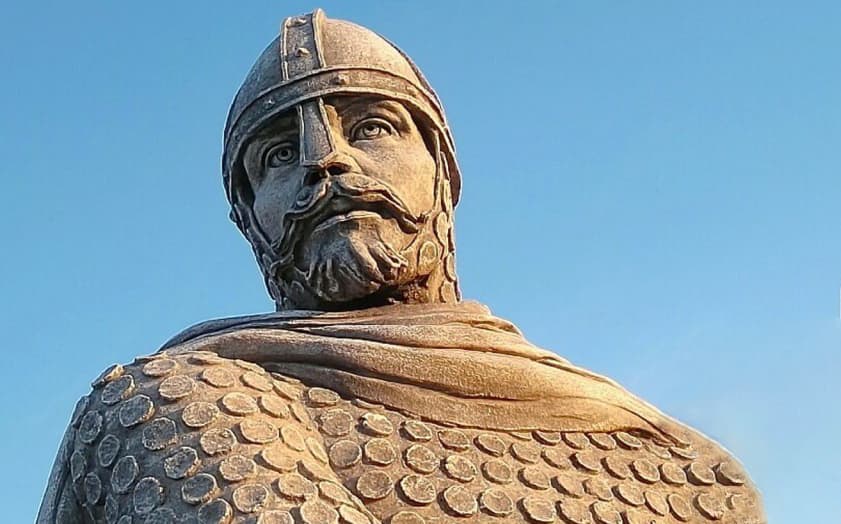
Afonso Henriques founded the kingdom of Portugal from the Condado Portucalense (County of Portugal). The Medieval earldom in the north included the towns of Porto, Coimbra, Viseu, Guimaraes, and Braga.
Portugal’s national identity was forged in this portion of the Iberian Penisula.
Furthermore, Afonso Henriques established Portuguese autonomy from neighboring Galicia and Leon in Spain. He expanded his territory south to retain Lisbon after battles with the Moors. Because of these great battles, the Portuguese remember him as The Founder (O Fundador), The Conqueror (O Conquistador), or The Great (O Grande).
OVERSEAS EXPANSION

Portugal began its rapid expansion of exploration under the succeeding kings of the House of Avis. In particular, this growth occurred during João II (1455-1495) and Manuel I (1469-1521).
Trade and conquest in Africa, Brazil, India, and the Far East brought great wealth back to Europe. Explorers and adventurers facilitated Europeans’ presence in places they had never previously set foot.
Notable Portugese involved in Overseas Expansion:
Therefore, the wealth generated by the spice trade transformed this tiny nation on the fringes of Europe into one of its wealthiest countries. Portugal’s nautical prowess found expression at sea and on land.
RULE BY SPAIN

Hard-won Portuguese independence from Spain’s hegemony came crashing in 1595 when Henry the Chaste, a clergyman, died without an heir.
King Philip II of Spain took the throne and became King Philip I of Portugal. Glimpsing a brief challenge of António I, who “ruled” for several days. However, the restoration of João IV ended 60 years of Spanish rule.
However, the Iberian Union ended formally after the protracted Portuguese Restoration War (1640-1668) and the signing of the Treaty of Lisbon.
RISE & FALL

The influence and prosperity of the Portuguese monarchy attained their zenith during João V. João’s reign in Portugal from 1706 to 1750. He was known as the Portuguese Sun King for his wealth, which resembled that of King Louis XIV of France, and his love of flashy Baroque ceremonies.
Therefore, Brazil’s newly discovered gold and diamonds overflowed the Monarchy’s walls. João spent and built lavish buildings.
He built the Mosteiro Palácio Nacional de Mafra just outside the capital to showcase this great wealth.
However, the decreased wealth coming in from Brazil, the invasion of French armies under Napoleon, the 1755 Lisbon Earthquake, and the subsequent Peninsular War (1807-1814) devastated Portugal.
Therefore, the severely weakened Portuguese monarchy had taken a significant hit as an institution. João VI, the then-Prince Regent, and the increasingly mentally ill Queen Maria I fled to Brazil. Therefore, in 1807, under the protection of a British fleet, they were about to escape the French.
In 1821, the country was in chaos, and João returned. Less than a century later, the Portuguese monarchy would be dismantled.
The assassination of Dom Carlos occurred by Republican activists in 1908. This attack occurred in Terreiro do Paço near Praça do Comércio in Lisbon. He was the first Portuguese king to die violently since Sebastian at the Battle of Alcácer Quibir in Morocco in 1578.
This attack resulted in the death of Carlos’ eldest son. His younger son, Manuel II, became the final king of Portugal. Before being forced into exile, he left the port of Ericeira for England in 1910. He was to die in London in mysterious circumstances while seemingly in good health.
List of All Portugal’s Kings and Queens
- Afonso I
- Sancho I
- Afonso II
- Sancho II
- Afonso III
- Denis I
- Afonso IV
- Peter I
- Ferdinand I
- John I
- Edward
- Afonso V
- John II
- Manuel I
- John III
- Sebastian I
- Henry I
- Anthony I
- Philip I
- Philip II
- Philip III
- John IV
- Afonso VI
- Peter II
- John V
- Joseph I
- Maria I
- Peter III
- John VI
- Peter IV
- Maria II
- Michael
- Ferdinand II
- Peter V
- Louis I
- Carlos I
- Manuel II
Which Kings were in the House of Burgundy?
Portugal’s Monarchy, House of Burgundy( Ruled 1139-1385)

The dates in brackets are each monarchy’s life spans. The names are in Portuguese.
Afonso I (birth 1106 – death 1185) Born in 1106, 1109 or 1111
Sancho I (birth 1154 – death 1211)
Afonso II (birth 1185 – death 1223)
Sancho II (birth 1209 – death 1248)
Afonso III (birth 1210 – death 1279)
Dinis I (birth 1261 – death 1325)
Afonso IV (birth 1291 – death 1357)
Pedro I (birth 1320 – death 1367)
Ferdinand I (birth 1345 – death 1383)
Which Kings were in the House of Aviz?

Portugal’s Monarchy, House of Aviz (Ruled 1385-1581)
The dates in brackets are each monarchy’s life spans. The names are in Portuguese.
João I(1357-1433)
Durate I (1391-1438)
Afonso V (1432-1481)
João II (1455-1495)
Manuel I (1469-1521)
João III (1502-1557)
Sebastian I(1554-1578)
Henrique I (1512-1580)
Antonio I * (1531-1595)
*António claimed king in Santarém. However, if he had power in Portugal, it would have been for a few days before he was defeated at the Battle of Alcântara.
Philip I, ruled Portugal from 1581 to 1598 and was also Philip II of Spain, England’s arch-enemy and the man behind the Spanish Armada.
Furthermore, Manuel, I ruled Portugal from 1495 to 1521, oversaw the Age of Discovery, and gave his name to a style of architecture.
Which Kings were in the House of Habsburg?
Portugal’s Monarchy, House of Hapsburgs (Ruled from 1581-1640)

The dates in brackets are each monarchy’s life spans. The names are in Portuguese.
Philip I * (1527-1598)
Philip II ** (1578-1621)
Philip III *** (1605-1665)
*Also Filipe (Philip) II of Spain
** Also Filipe (Philip) III of Spain
*** Also Filipe (Philip) IV of Spain
João V ruled Portugal from 1706 to 1750 as the Portuguese Sun King. This nickname is because of his resemblance to King Louis XIV of France in wealth and love of Baroque ceremonies.
Therefore, the revolution forced João V to escape to England. He was laid to rest in the Monastery of São Vicente de Fora in Lisbon.
Which Kings were in the House of Braganza?
Portugal’s Monarchy, House of Braganza (1640-1910)

The dates in brackets are each monarchy’s life spans. The names are in Portuguese.
John IV(1604-1656)
Afonso VI (1643-1683)
Pedro II 1648-1706)
João V (1689-1750)
Jose I (1714-1777)
Maria I (1734-1816)
Pedro III (1717-1786)
João VI (1767-1826)
Pedro IV (1798 -1834)
Maria II (1819-1853)
Miguel I (1802-1866)
Ferdinand II (1816-1885)
Pedro V (1837-1861)
Luis I (1838-1889)
Carlos I(1863-1908)
Manuel II (1889-1932)
Manuel II ruled Portugal from 1908 to 1910 and was its last king.
When did the House of Burgundy hold Power in Portugal’s Monarchy?

(1139–1383)
The dates in brackets are each monarchy’s life spans. The names are in Portuguese.
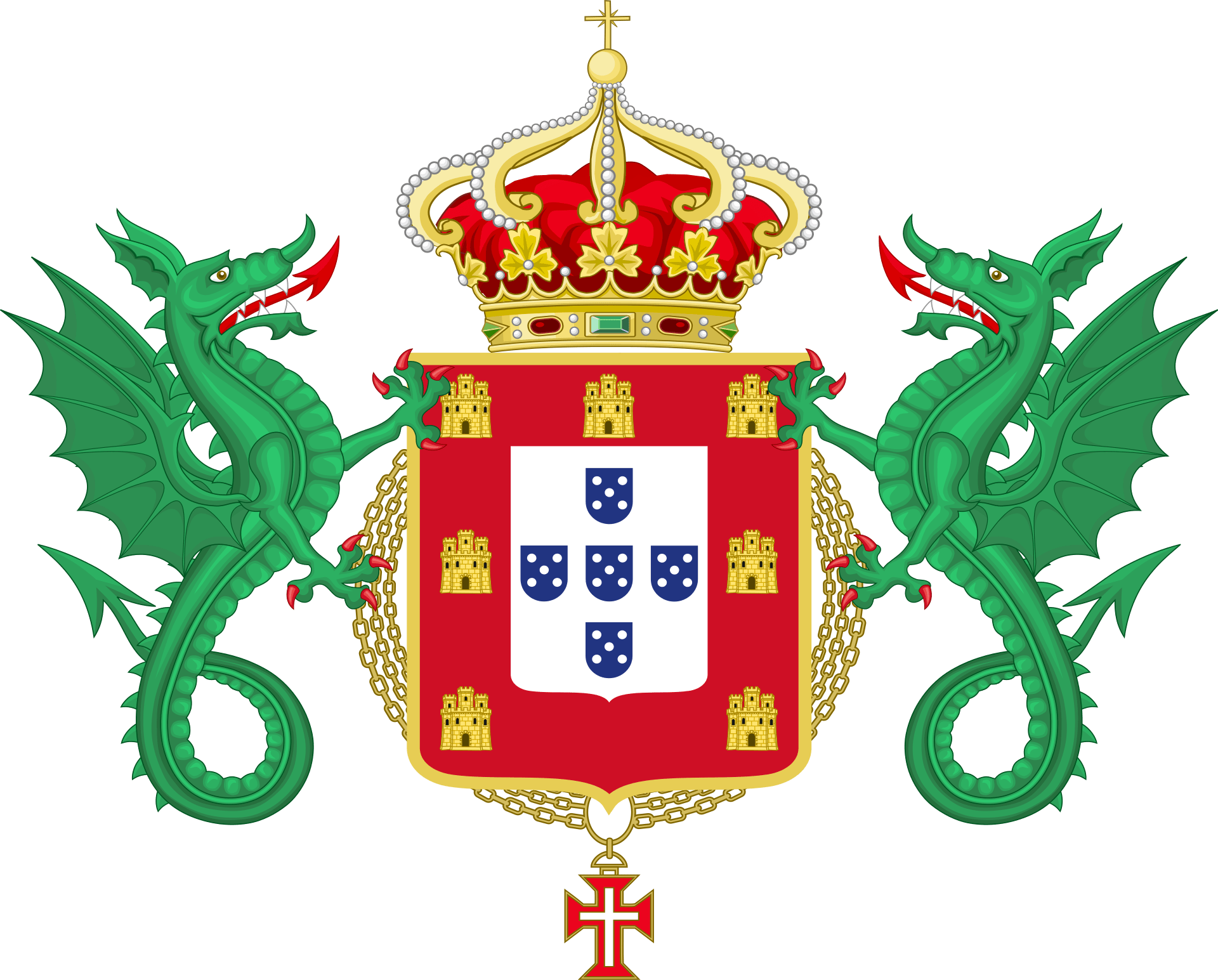
The Portuguese House of Burgundy, aka the Afonsine Dynasty, was the founding house of the Kingdom of Portugal. However, before Portugal’s independence, the house ruled the feudal County of Portugal in the Kingdom of Galicia.
When Afonso I Henriques proclaimed Portugal’s independence, he shifted the family from a comital house to a royal place. Therefore, for over two centuries, the House of Burgundy ruled Portugal.
A succession crisis transpired between 1383 and 1385 when Ferdinand I died. Therefore, Ferdinand’s daughter, Beatrice of Portugal, was declared queen. Subsequently, her husband, John I of Castile, was announced king by the right of his wife. However, there was a dispute about her legitimacy as a monarch.
It is ok if you are like me and get overwhelmed by all these names and dates. The first two Kings, Alfonso I Henriques and Sancho I are the most important names to remember. Therefore, if you remember, the House of Burgundy ruled Portugal from 1139–to 1383; things will begin to click as you travel around Portugal.
When did the House of Aviz hold Power in Portugal’s Monarchy?

(1385–1580)
The dates in brackets are each monarchy’s life spans. The names are in Portuguese.
The House of Aviz succeeded the House of Burgundy. Therefore, Aviz became the Kingdom of Portugal’s reigning house of power. Furthermore, the house was established by João I of Portugal, the Grand Master of the Order of Aviz.
Therefore, the House of Aviz was also called the Joanine Dynasty. Often, these descriptions are interchanged. Hence, histories make them a bit difficult to understand. Remember, the Joanine Dynasty equals the House of Aviz.
When King John II of Portugal passed away, the Portuguese throne went to his cousin, Manuel, Duke of Beja.
When King Sebastian of Portugal parted, the throne was handed to his uncle, Henry of Portugal. However, he may have been called Henry II.
In addition, this is the reason Henry, the Count of Portugal, was the first to rule the County of Portugal. I easily mix these names up. In case you are lost, he is the father of Alphonso I of Portugal.
When Henry II died, a succession crisis occurred, and António, Prior of Crato, was proclaimed António of Portugal.
When did the House of Habsburg hold Power in Portugal’s Monarchy?

(1581–1640)
The House of Habsburg ruled Portugal from 1581 to 1640. The dynasty began with the proclamation of Philip II of Spain as Philip I of Portugal in 1580. So, I know the overlap in Spanish history is highly confusing. The first king named Phillip was Phillip II of Spain.
As a result, sometimes, you might hear the House of Habsburg referenced as the Philippine Dynasty.
Therefore, the Portuguese Cortes of Tomar officially acknowledged Phillip I in 1581. Furthermore, Philip I promised to rule Portugal as a kingdom separate from his Spanish domains under the personal union known as the Iberian Union.
When did the House of Braganza hold Power in Portugal’s Monarchy?

(1640–1910)
The House of Braganza came to governance in 1640. However, you may hear the House of Braganza referenced as the Brigantine Dynasty. Therefore, this dynasty commenced when John II, Duke of Braganza, asserted to be the rightful heir of the defunct House of Aviz as he was the great-great-grandson of King Manuel I.
So, after the Portuguese Restoration War there was a declaration. King João IV took the thrown from the House of Habsburg.
Therefore, the descendants of Queen Maria II and King Ferdinand II came to rule in 1853. However, Ferdinand II was a German prince of the House of Saxe-Coburg and Gotha. Portuguese law and custom treated them as members of the House of Braganza.
However, this has led some to classify these last four monarchs of Portugal as members of a new royal family, the House of Braganza-Saxe-Coburg and Gotha.
The Atypical Last Line
When you see Afonso Henriques written on a Portuguese building, you better understand who they are referencing. Therefore, this new knowledge will enrich the experience of traveling around Portugal.
Our research has provided you a brief history of the Portugal’s monarchy. However, as you learned about some dynasties, we have only scratched the surface. Therefore, if you visit other articles you may realize this when walking around Coimbra, Lisbon, or another part of Portugal a unique part of history.
If you found the history of the Portuguese monarchy interesting, check out the other articles on Portuguese history I’ve written.
Meet Carter

I’m Carter, an American traveler living in Portugal and the creator of Atypical Vagabond. After selling my technology business, I traded the conventional path for slow travel, life abroad, and a slightly unreasonable number of long walks across Europe. I share honest Portugal guides, Camino stories, digital nomad advice, and practical lessons to help you explore the world with greater confidence and purpose.
Subscribe
Looking for honest travel inspiration without the polished influencer nonsense?
Join the Atypical Vagabond newsletter for offbeat destination guides, Portugal travel tips, digital nomad lessons, slow travel stories, and the occasional reminder that the ordinary path is wildly overrated.
I share the victories, wrong turns, hidden gems, and real-life chaos that come with building a life around travel. No corporate fluff. No recycled bucket lists. Just useful advice, personal stories, and unconventional adventures designed to help you travel deeper, stay curious, and create your own damn route.
Subscribe and let’s reject the ordinary together.
Donations
Enjoying the stories, guides, videos, and occasional travel disaster here at Atypical Vagabond?
A small donation helps cover the real costs behind the adventures—from transportation and website hosting to camera gear, research, and enough coffee to keep the next guide moving.
There are no giant sponsors pulling the strings and no polished corporate travel machine hiding backstage. Your support helps me continue creating honest travel stories, practical Portugal guides, digital nomad advice, and unconventional adventures for travelers who prefer the road less rehearsed.
Every contribution helps keep Atypical Vagabond independent.
Fuel the next adventure through PayPal—and help me keep rejecting the ordinary.










Leave a Reply