Hey adventurers, it’s Atypical Vagabond here. Let me share my personal take on this topic:
Paris
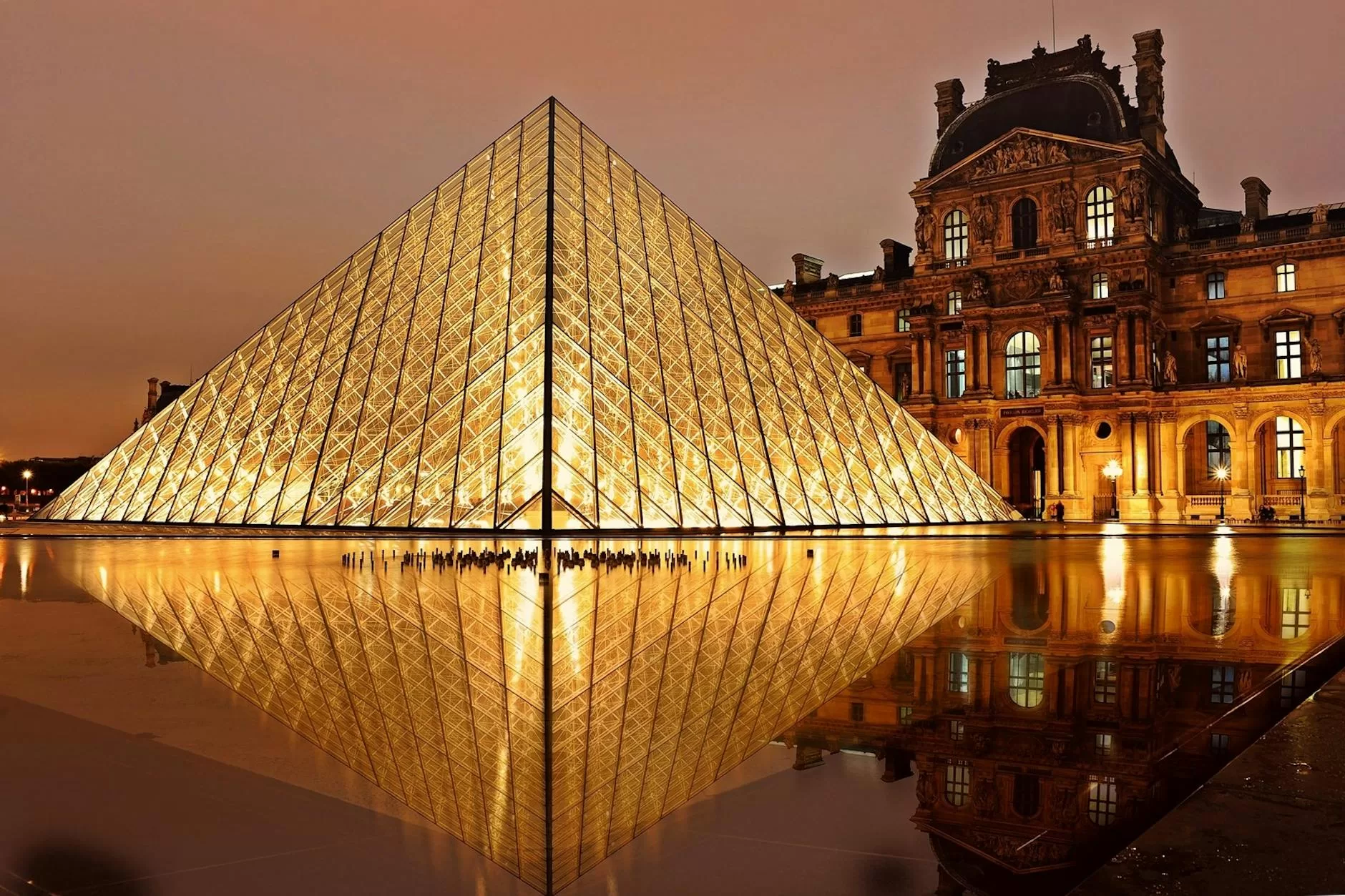
is filled with famous attractions: the Eiffel Tower, the Louvre, Versailles, the catacombs, the Pantheon, the Arc de Triomphe, Sacre-Coeur. The list goes on. There are so many amazing sites here that
you could spend days (heck, even weeks) just seeing the main, most well-known ones
.
But there’s more to Paris than the sites that attract thousands upon thousands of visitors each day.
While I was living in Paris the past few months, I made it my mission to see some of the more unusual, lesser-known (but equally awesome) attractions (that didn’t come with the aggravating crowds that make so many of Paris’ attractions unbearable).
And, while some of the things on the list below might not be “super secret” attractions or activities, they do fall into the category of “overlooked attractions” so I included them.
Here are some of the best off-the-beaten-path things to see and do in Paris:
Table of Contents
1. Musée Édith Piaf
2. Musée Curie
3. Archives Nationales
4. Librairie Galignani
5. Paris Point Zero
6. The Gallery of Paleontology and Comparative Anatomy
7. Petite Ceinture
8. The Salvador Dalí Sundial
9. Le Passe-Muraille
10. Montmartre Cemetery
11. The Museum of Counterfeiting
12. Promenade Planteé (Coulée verte René-Dumont)
13. Canal Saint-Martin
14. Museé de Montmartre
Get Your In-Depth Budget Guide to Paris!
1. Musée Édith Piaf
Édith Piaf is perhaps the most famous French singer from the 1930s to the 1960s, and known around the world for her songs
La vie en rose
and
Non, je ne regrette rien
(which appeared in the movie Inception). She lived in a little apartment in the Ménilmontant district at the start of her career, which has been turned into a tiny museum dedicated to her. You get a glimpse at her life through her gold and platinum records, photographs, clothing, letters from fans, posters, recordings, and sheet music.
Admission is free, but you’ll need to make an appointment.
2. Musée Curie
Marie Curie was the first woman to win the Nobel Prize (and the only woman to win it twice) for her research into radioactivity (a word that she invented). She was the first female professor at the University of Paris as well as the first woman to be entombed in the Panthéon on her own merits. Located in the 5th arrondissement, this museum, in her old laboratory, highlights her radiological research. It’s insightful and eye-opening for anyone unfamiliar with her historic discoveries.
3. Archives Nationales
Opened in 1867, the National Archives houses thousands of historical documents dating back to 625 CE. One of six national archives in the country, the museum sheds light on France’s turbulent past, providing nuanced historical details and context through permanent and temporary exhibitions.
Built by the order of Napoleon I, the building itself (known as the Hôtel de Soubise) is absolutely stunning. It is in the late Baroque style, embracing long columns and lots of statues and sculptures. It features immaculate grounds and gardens as well. They always hold a lot of good exhibitions too.
4. Librairie Galignani
This bookshop claims to be the oldest English bookstore in continental Europe, having opened in Paris in 1801. Prior to that, they were located in Venice and the Galignani name has been associated with publishing books since the 16th century. Age aside, this is a great place to browse as it is absolutely packed with books. You could easily spend a couple hours here hunting through the stacks and shelves. It’s a quiet, quaint shop and the staff are super knowledgeable. If you’re an avid reader like me, don’t miss it!
5. Paris Point Zero
This is the official center of Paris, from which all distances in the city are measured. While it’s just a simple brass star set into the sidewalk near the Notre Dame Cathedral, there are a few popular rituals here that make this a short but fun stop (and since you’ll likely be nearby visiting the Cathedral, you might as well stop here). Some people treat the star as a wishing well, tossing a coin and making a wish (which is why there are usually a handful of coins on the star). Others, however, insist that if you stand on the star with your loved one and kiss, your love will last forever.
6. The Gallery of Paleontology and Comparative Anatomy
Opened in 1898, this gallery is a part of the French National Museum of Natural History. Taking up the ground floor of the building, it’s home to over 1,000 animal skeletons from around the world, including complete skeletons of elephants, large cats, and even dinosaurs. It’s as interesting as it is unsettling: all the animals are facing the same way, making it look like you’re in the midst of some undead stampede!
Planning a trip to Europe?
Get all my best travel tips along with these guides:
Travel Planning 101
61 Savvy Travel Tips
The Best Hostels in Europe
My Favorite Travel Companies
How to Get Free Flights to Europe
Enter your info below to get your
FREE
guides sent to you today!
Get the free guide
7. Petite Ceinture
In use from 1862 through 1964, the railway circling Paris was abandoned when the city expanded beyond its limits. It’s mostly hidden behind buildings and covered in wild plants and grass now, though some sections are now officially open to the public. You’ll find all sorts of flowers and street art along the tracks.
While some sections are illegal to visit, near Parc Georges Brassens you’ll find a section of the tracks known as the ‘Passage de la Petite Ceinture’ that is both free and legal to visit. It’s located in the 15e arrondissement.
8. The Salvador Dalí Sundial
This surrealist sundial was created by world-renowned artist Salvador Dalí. Located on Rue Saint-Jacques, it’s a mix of a human face and a scallop shell (the symbol of the Camino to Santiago, since the street is named after the saint). While the sundial doesn’t actually work, it’s nevertheless an easy way to see a piece of artwork by one of the most famous artists in the world.
9. Le Passe-Muraille
This iconic bronze sculpture is located near Montmartre, making it an easy stop on your itinerary. It’s based on a character from
The Man Who Walked Through Walls
(Le Passe-Muraille), a short story by Parisian Marcel Aymé published in 1941. In the story, a man gains the ability to pass through walls and he uses the skill to get up to no good. At the end of the book, though, his power fades just as he is passing through a wall…and he gets stuck. If you get up close to the sculpture, you’ll see that the hands of the statue are extra smooth, thanks to countless people taking photos of themselves trying to pull the man free.
10. Montmartre Cemetery
While the Père Lachaise Cemetery is the largest and most popular in Paris, for a more secluded stroll, check out the Montmartre Cemetery. Plenty of people visit the top of Montmartre for Sacré-Coeur and the view, but few take the time to wander this cemetery sitting at the foot of the district. It opened in 1825 and is home to many cobwebbed mausoleums, as well as a handful of stray cats. You won’t see many people here, so you can explore in peace.
11. The Museum of Counterfeiting
Opened in 1972, this museum is home to counterfeit items that have been collected by France’s customs agents and police (as well as donated items from brands and consumers alike). There are over 500 items in the museum, ranging from counterfeit art and luxury goods to more mundane items, like cleaning supplies. While some knockoffs are impressive in their duplicity, it’s also funny to see just how bad some counterfeiters were!
12. Promenade Planteé (Coulée verte René-Dumont)
This tree-lined walkway is a greenbelt that extends almost 5km along the old Vincennes railway line. The railway line ceased functioning in 1969, with the park being inaugurated a few decades afterward. Until New York built their High Line, it was the only elevated park in the entire world. (And, honestly, this is way nicer than the NYC High Line).
You’ll find lots of trees, flowers, ponds, and places to sit along this long path that stretches from Bastille to the edge of Paris. It’s a long, easy, and beautiful walk. You won’t find many people here. Even on a nice day, it’s rather empty. It quickly became one of my favorite things to do in Paris and I can’t recommend coming here enough!
13. Canal Saint-Martin
Stretching 4.5km, the Canal Saint-Martin is a man-made waterway commissioned by Napoleon. Construction finished in 1825, connecting the Canal de l’Ourcq to the Seine via both above-ground locks and underground tunnels. While not any secret spot (on a nice day, you’ll find the canal lined with people), it’s mostly a spot for locals who want to have a picnic and relax. So, say no to the Seine, and come have your outdoor picnic along the canal. It’s more relaxing and there will be fewer people!
14. Museé de Montmartre
Founded in 1960, this museum is located throughout two buildings that date back to the 17th century. Over the years, the buildings were home to many famous writers and painters. The gardens of the museum were actually renovated to look more like the gardens in Renoir’s paintings (there is also a vineyard nearby that dates back to the Middle Ages but it makes horrible wine). The museum’s permanent collection includes a wide variety of paintings, posters, and drawings.
While the main sights in
Paris
are always worth checking out, if you want to be more than a tourist and develop a greater appreciation for the City of Light’s unique and complex history, visit these unconventional and unusual attractions in Paris.
Get Your In-Depth Budget Guide to Paris!
For more in-depth information, check out my guidebook to Paris written for budget travelers like you! It cuts out the fluff found in other guides and gets straight to the practical information you need to travel around Paris. You’ll find suggested itineraries, budgets, ways to save money, on- and off-the-beaten-path things to see and do, non-touristy restaurants, markets, bars, transportation and safety tips, and much more!
Click here to learn more and get your copy today!
Plan your trip to Europe like a pro
Get all my best Europe travel tips as well as free planning guides sent straight to you and see more of the country for less!
Get your guides here!
Book Your Trip to Paris: Logistical Tips and Tricks
Book Your Flight
Use
Skyscanner
. They are my favorite search engine because they search websites and airlines around the globe so you always know no stone is left unturned.
Book Your Accommodation
You can book your hostel with
Hostelworld
as they have the biggest inventory and best deals. If you want to stay somewhere other than a hostel, use
Booking.com
as they consistently return the cheapest rates for guesthouses and cheap hotels.
For suggested hostels,
here is a list of my favorite hostels in Paris
.
If you prefer to stay in a hotel,
these are my favorite hotels
.
And if you’re wondering what part of town to stay in,
here’s my neighborhood breakdown of Paris
!
Don’t Forget Travel Insurance
Travel insurance will protect you against illness, injury, theft, and cancellations. It’s comprehensive protection in case anything goes wrong. I never go on a trip without it as I’ve had to use it many times in the past. My favorite companies that offer the best service and value are:
Safety Wing
(for budget travelers)
World Nomads
(for mid-range travelers)
Insure My Trip
(for those over 70)
Medjet
(for additional repatriation coverage)
Looking for the Best Companies to Save Money With?
Check out my
resource page
for the best companies to use when you travel. I list all the ones I use to save money when I’m on the road. They will save you money when you travel too.
Need a Guide?
Paris has some really interesting tours. My favorite company is
Take Walks
. They have expert guides and can get you behind the scenes at the city’s best attractions. They’re my go-to walking tour company in the city.
Want More Information on Paris?
Be sure to visit my
robust destination guide to Paris
for even more blogging tips!