Most people think the Camino Francés begins in St. Jean Pied de Port.
They’re wrong.
The Camino begins the moment you decide to go.
For Sage and me, that meant leaving our home in Coimbra, Portugal, and embarking on a journey that felt like a pilgrimage before we had even taken a single step on the trail.
As with most great adventures, everything started with coffee.
How to get to St. Jean Pied de Port?

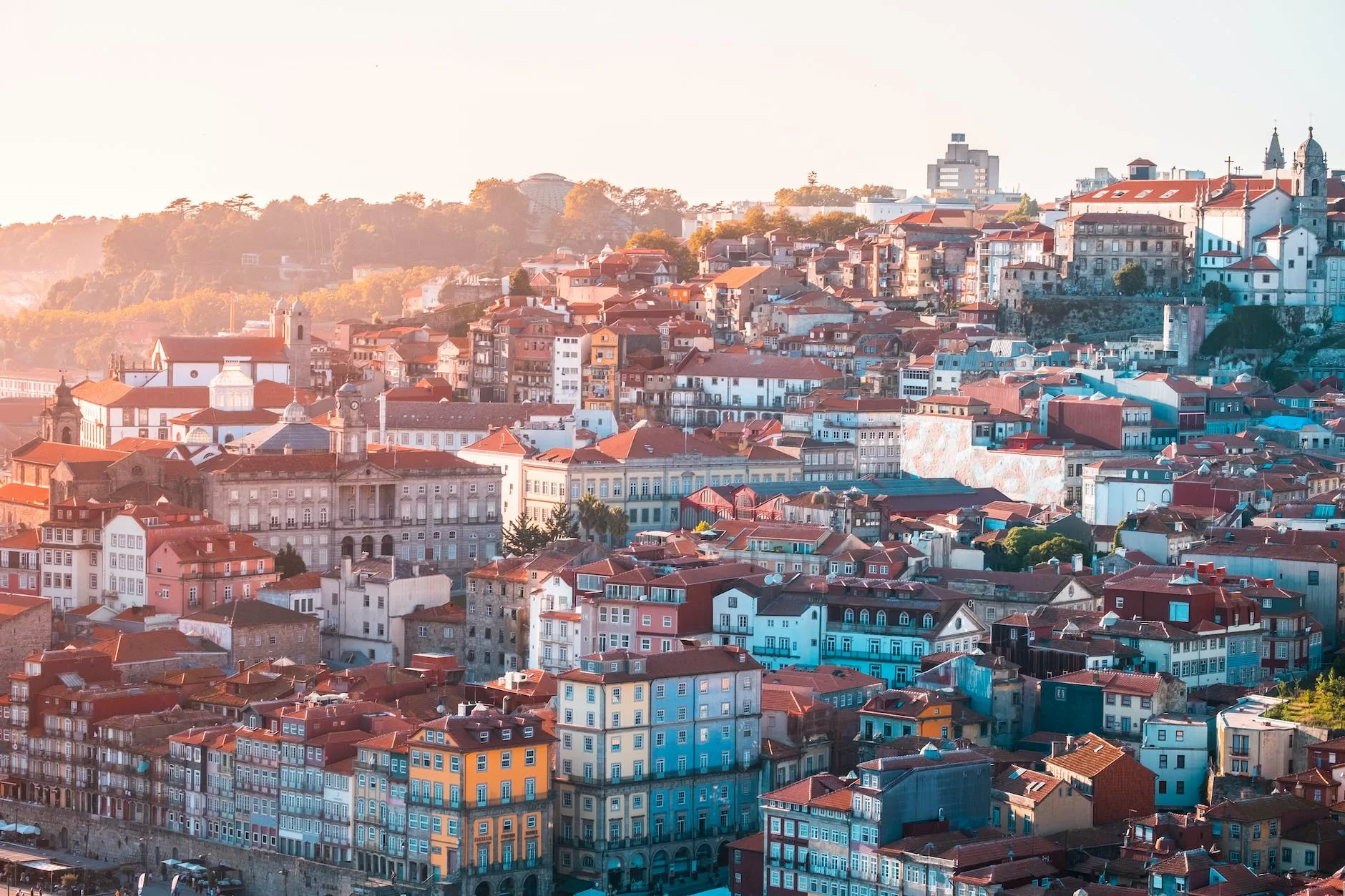
We loaded up our packs, double-checked our gear, and headed to the bus station. The plan looked simple enough on paper: Coimbra to Porto, Porto to Bayonne. Then take a train from Bayonne to St. Jean Pied de Port.
Simple.
The transportation gods, however, had other ideas.
Every Camino story has to start somewhere, and ours started with a 19-hour FlixBus ride to Bayonne.
Sage and I boarded the first bus with cautious optimism. Our first stop was Porto, and honestly, the bus was surprisingly comfortable. I settled in thinking, “Hey, maybe this won’t be so bad. Nineteen hours on the road? I might even get some sleep.”
Sage, ever the wise sidekick, probably knew better.
And of course, Sage was right.
Once we transferred buses in Porto, the dream of a smooth overnight journey disappeared pretty quickly. The second bus was rough, uncomfortable, and determined to make sure nobody got anything close to restful sleep. By the time we finally rolled into Bayonne, we were running on fumes, stiff legs, and whatever tiny scraps of patience remained.
How to find the Bayonne Train Station?
From Bayonne, the plan was simple: find the train station.
It should have been an easy five-minute walk. But when you are sleep-deprived and carrying your life on your back, even five minutes can turn into a small expedition. Somehow, we made it longer than necessary, wandering just past the bridge and around before realizing we had taken the scenic tired-person route.
Along the way, a guy called out, “Hey, how you doing?”
I answered, “Doing well, and you?”
“Doing great!”
So naturally, I asked him if he knew where the train station was. Thankfully, he pointed us in the right direction, and off we went. Once we found the station, we got our tickets and rewarded ourselves properly: breakfast, coffee, and then another coffee. Because after a night like that, one coffee is just a warm-up.
Eventually, the train arrived and carried us through the beautiful countryside toward St. Jean Pied de Port, the official starting point for many pilgrims walking the Camino Frances.
By the time we reached our connections, I felt less like a traveler and more like luggage that had somehow become self-aware.
Still, there was excitement in the air.
For years I had thought about walking the Camino Francés. After completing the Camino Português, I knew I wanted to return to the pilgrimage life. This route, however, was different. Longer. More iconic. More challenging.
And now it was finally happening.
As we crossed northern Spain and eventually made our way toward the French border, the landscape began to change. Rolling hills replaced city streets. Small villages appeared in the distance. The Pyrenees rose along the horizon like a wall separating ordinary life from whatever adventure awaited on the other side.
Arriving at St. Jean Pied de Port

When we finally arrived in St. Jean Pied de Port, exhaustion hit immediately.
The town was everything I had imagined.
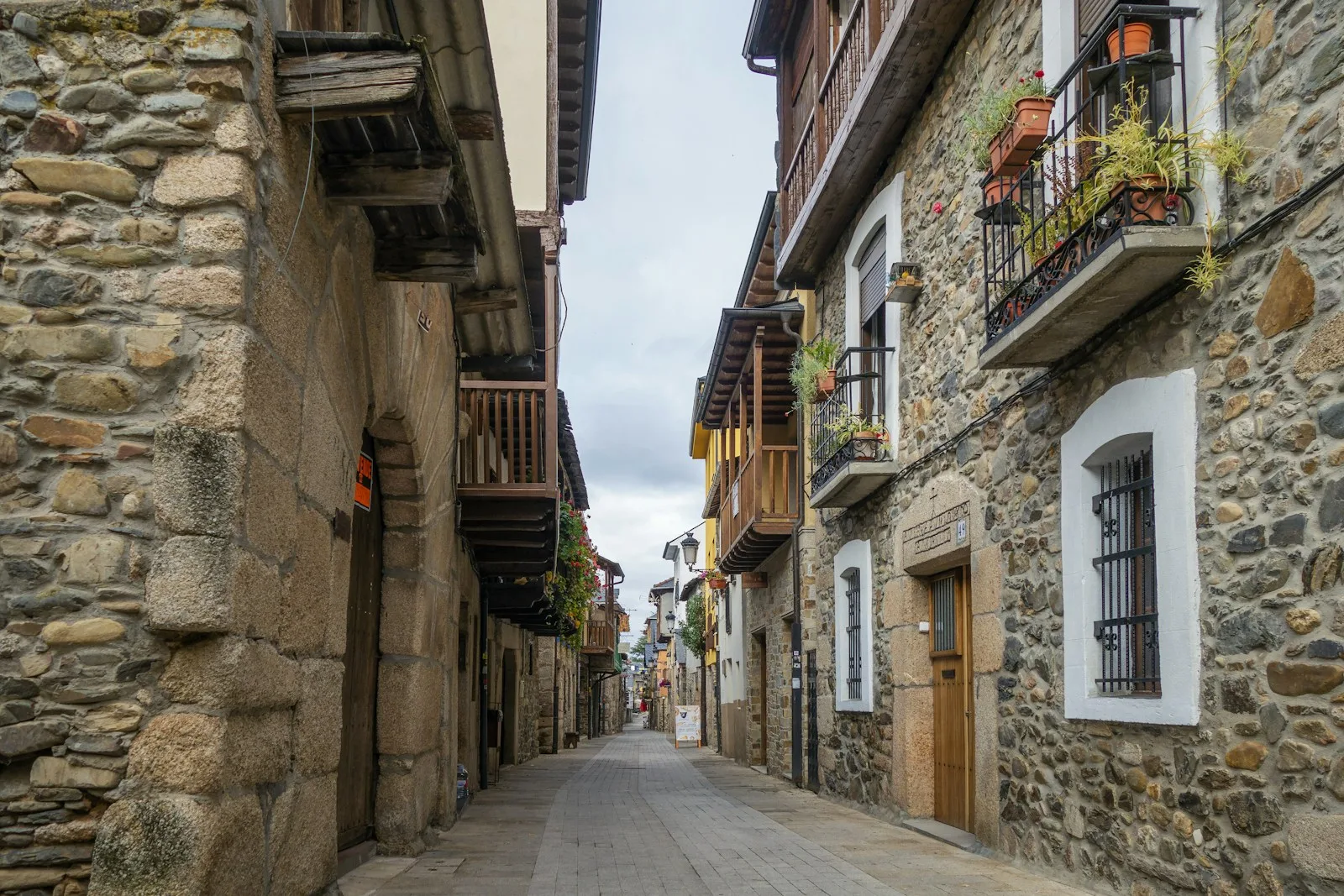
Stone buildings lined narrow streets. Pilgrims wandered about carrying backpacks covered in shells. Restaurants buzzed with nervous excitement. Some people were celebrating the start of their journey. Others looked like they were questioning every life decision that had led them here.
Honestly, I felt a little bit of both.
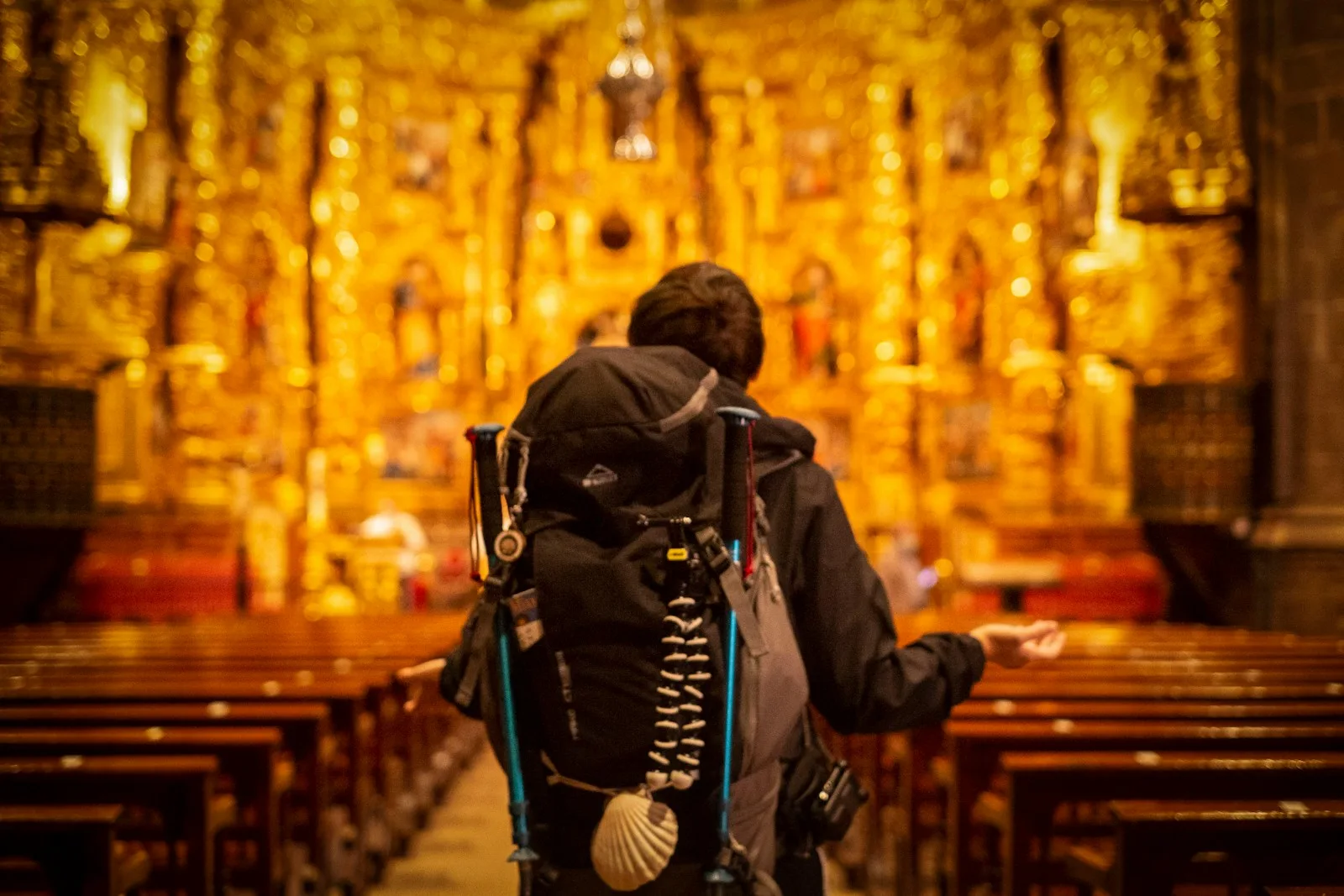
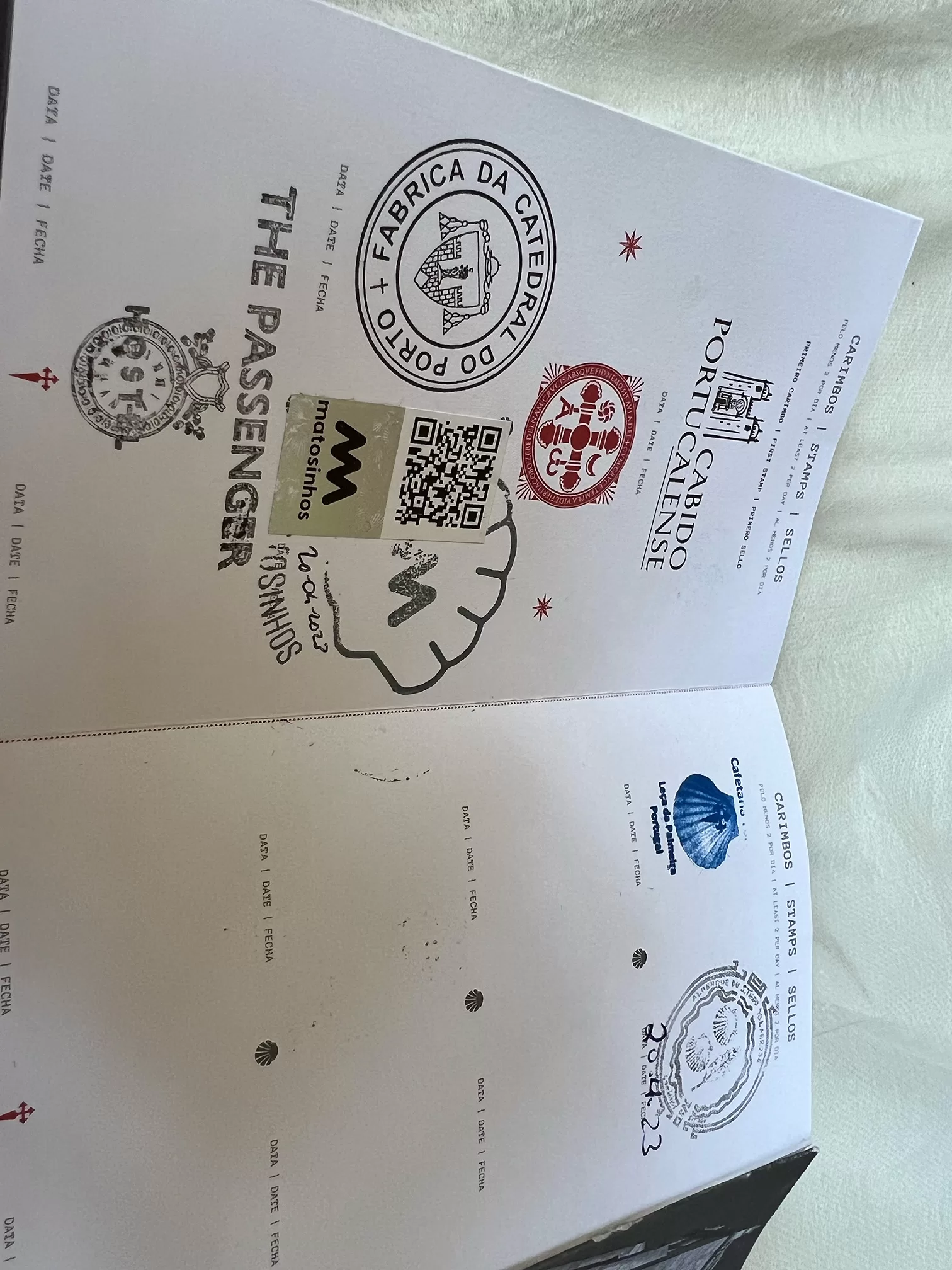
Once we arrived, we made our way to the Pilgrims Office to pick up our pilgrim packets, get our credentials for stamps, and grab the little ziplock pouch to protect them. There were scallop shells set out for a donation, so Sage and I each got one. After all, nothing says “we are really doing this” quite like tying a shell to your pack and pretending you are fully prepared.
The first order of business was checking into our albergue.
From there, we found our albergue for the night. A shower later, we felt slightly human again. Not fully restored, but at least less like two people who had been folded into bus seats for most of a day. We headed out in search of food and landed on a bocadillo with fresh presunto and cheese. The filling was great. The baguette, however, had clearly been training for combat. It was hard as a rock.
Tomorrow we would start walking.
Dinner that evening was exactly what we needed. Nothing fancy. Just food and enough calories to convince our bodies that the upcoming mountain climb was a reasonable idea.
After all the travel, even a simple meal felt incredible. Still, food is food, and we were grateful.
After that, we returned to the albergue hoping for one thing: a good night’s sleep.
St. Jean Pied de Port – Albergue Life

If you’ve never stayed in an albergue before, imagine a summer camp designed by people who think privacy is an unnecessary luxury. Bunk beds. Shared bathrooms. Dozens of strangers. Snoring potential in every direction.
Perfect.
Still, food is food, and we were grateful.
After that, we returned to the albergue hoping for one thing: a good night’s sleep.
Unfortunately, some of our fellow pilgrims had other plans.
For reasons known only to them and perhaps the Camino gods, a few pilgrims placed their shoes right beside my bed and plugged their phones into the outlet next to me. Why? I have no idea. But based on the smell of the shoes, I can only imagine the phones came away worse for the experience.
The next morning, we woke up to mud everywhere. Shoes, floors, bathrooms — it was already becoming clear that the Camino was not going to be a tidy little stroll through postcard villages. The bathrooms were especially memorable, and by memorable I mean horrifying. There was “water” on the floor. At least, we are choosing to call it water because some mysteries are better left unsolved.
Atypical Last Thoughts

So there we were: sleep-deprived, coffee-powered, freshly introduced to pilgrim life, and slightly concerned about what we had gotten ourselves into.
But the shells were on our packs, Sage was by my side, and St. Jean Pied de Port had officially welcomed us in the most Camino way possible: with beauty, exhaustion, questionable smells, and the promise of many stories still to come.
It wasn’t going to be luxury accommodations, pristine facilities, and postcard moments every hour of every day.
It was going to be real.
There would be muddy boots, sore muscles, crowded dormitories, unexpected challenges, and probably a few more questionable bathroom encounters along the way.
And honestly? That’s exactly why people keep coming back.
The Camino strips away comfort and routine. It replaces them with uncertainty, simplicity, and the occasional lesson disguised as inconvenience. As Sage and I packed our bags that morning, shells hanging from our packs and anticipation building with every passing minute, we couldn’t help but wonder what awaited us beyond the town gates.
The Pyrenees stood ahead.
The first yellow arrows were waiting.
And our Camino was finally about to begin.
Follow along as Sage and I make our way across Spain, one step, one stamp, one coffee, and one questionable albergue bathroom at a time.
Subscribe
Looking for honest travel inspiration without the polished influencer nonsense?
Join the Atypical Vagabond newsletter for offbeat destination guides, Portugal travel tips, digital nomad lessons, slow travel stories, and the occasional reminder that the ordinary path is wildly overrated.
I share the victories, wrong turns, hidden gems, and real-life chaos that come with building a life around travel. No corporate fluff. No recycled bucket lists. Just useful advice, personal stories, and unconventional adventures designed to help you travel deeper, stay curious, and create your own damn route.
Subscribe and let’s reject the ordinary together.
Donations
Enjoying the stories, guides, videos, and occasional travel disaster here at Atypical Vagabond?
A small donation helps cover the real costs behind the adventures—from transportation and website hosting to camera gear, research, and enough coffee to keep the next guide moving.
There are no giant sponsors pulling the strings and no polished corporate travel machine hiding backstage. Your support helps me continue creating honest travel stories, practical Portugal guides, digital nomad advice, and unconventional adventures for travelers who prefer the road less rehearsed.
Every contribution helps keep Atypical Vagabond independent.
Fuel the next adventure through PayPal—and help me keep rejecting the ordinary.
Leave a Reply