
Zubiri to Larrasoaña The Town Everyone Walks Past
At only about 5.5 kilometers, Day 5 was intentionally short—and became one of my best early reminders that progress on the Camino is not measured only by distance.
Some Camino stages test your knees, your lungs, and your willingness to keep pretending that one more hill will be “the last one.”
The walk from Zubiri to Larrasoaña was not one of those days.
At roughly 5.5 kilometers, this was a deliberately short stage.
After the pounding my legs had taken during the earlier descents through Navarra, I was ready for a day that felt less like an endurance contest and more like a civilized stroll beside the Río Arga.
Most pilgrims continue from Zubiri toward Pamplona.
We stopped early.
I am glad we did.
Larrasoaña is the sort of Camino village guidebooks mention briefly before shoving you toward somewhere supposedly more important.
That is precisely why it became one of my favorite early stops.
Sometimes the best way to experience the Camino is to stop treating it like a race across Spain.
Camino Francés · Stage 05
Zubiri to Larrasoaña at a Glance
| Stage detail | Information |
|---|---|
| Route | Zubiri → Río Arga → Larrasoaña |
| Region | Navarra, Spain |
| Distance | Approximately 5.5 km / 3.4 mi |
| Walking time | Approximately 1–1.5 hours without long stops |
| Difficulty | Easy to moderate |
| Terrain | Riverside paths, rural tracks, and some paved sections |
| Main feature | Río Arga scenery and the Puente de los Bandidos |
| Accommodation | Municipal Albergue de Larrasoaña |
| Food highlight | An unexpectedly excellent steak dinner |
| Sleep quality | Somewhere between rubbish and an acoustic hostage situation |
| Stage purpose | Recovery without taking a complete rest day |
| Next destination | Pamplona |
Why so short? The point was not to rack up mileage. After several difficult opening stages, we wanted our bodies to recover while remaining inside the daily Camino rhythm.
Day 4 brought us from Bizkarreta to Zubiri .
Day 5 deliberately stopped in Larrasoaña. The following morning we would continue toward Pamplona on Day 6 .
Watch Camino Francés Day 5
Episode 4 continues through these early Navarra stages and includes the transition from Zubiri toward Larrasoaña as Sage and I deliberately slow the Camino down before reaching Pamplona.
Leaving Zubiri for Larrasoaña
The route out of Zubiri follows the broader Camino stage toward Pamplona, much of it staying close to the Río Arga.
Our short walk to Larrasoaña removed most of the day’s potential drama.
That was exactly the point.
After several days of carrying a backpack over Navarra’s hills, a short Camino stage can feel almost suspicious.
You leave town.
Settle into your rhythm.
Then suddenly realize the destination is already nearby.
No heroic suffering.
No final-boss climb.
No dramatic farewell letter
to my quadriceps.

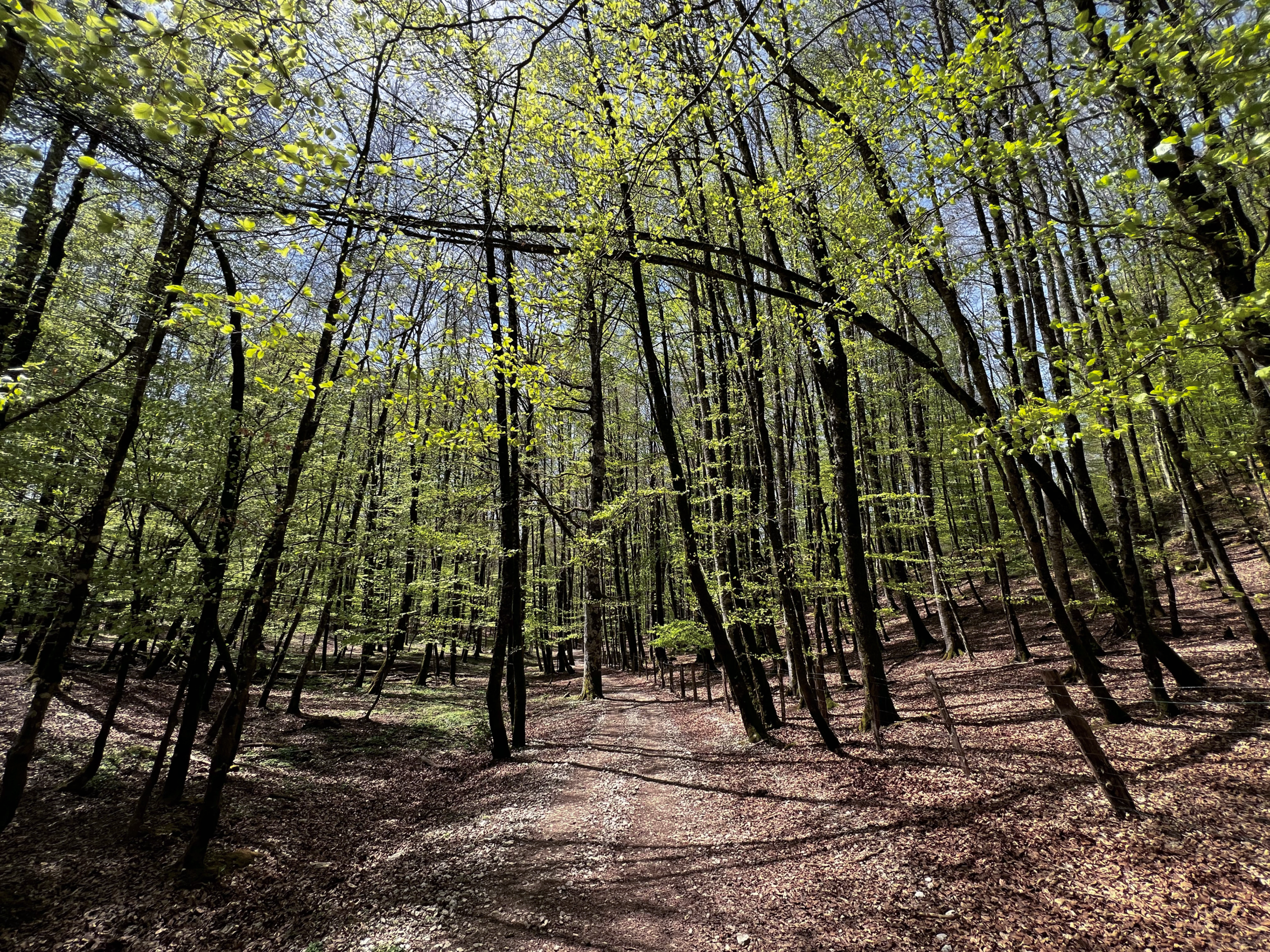
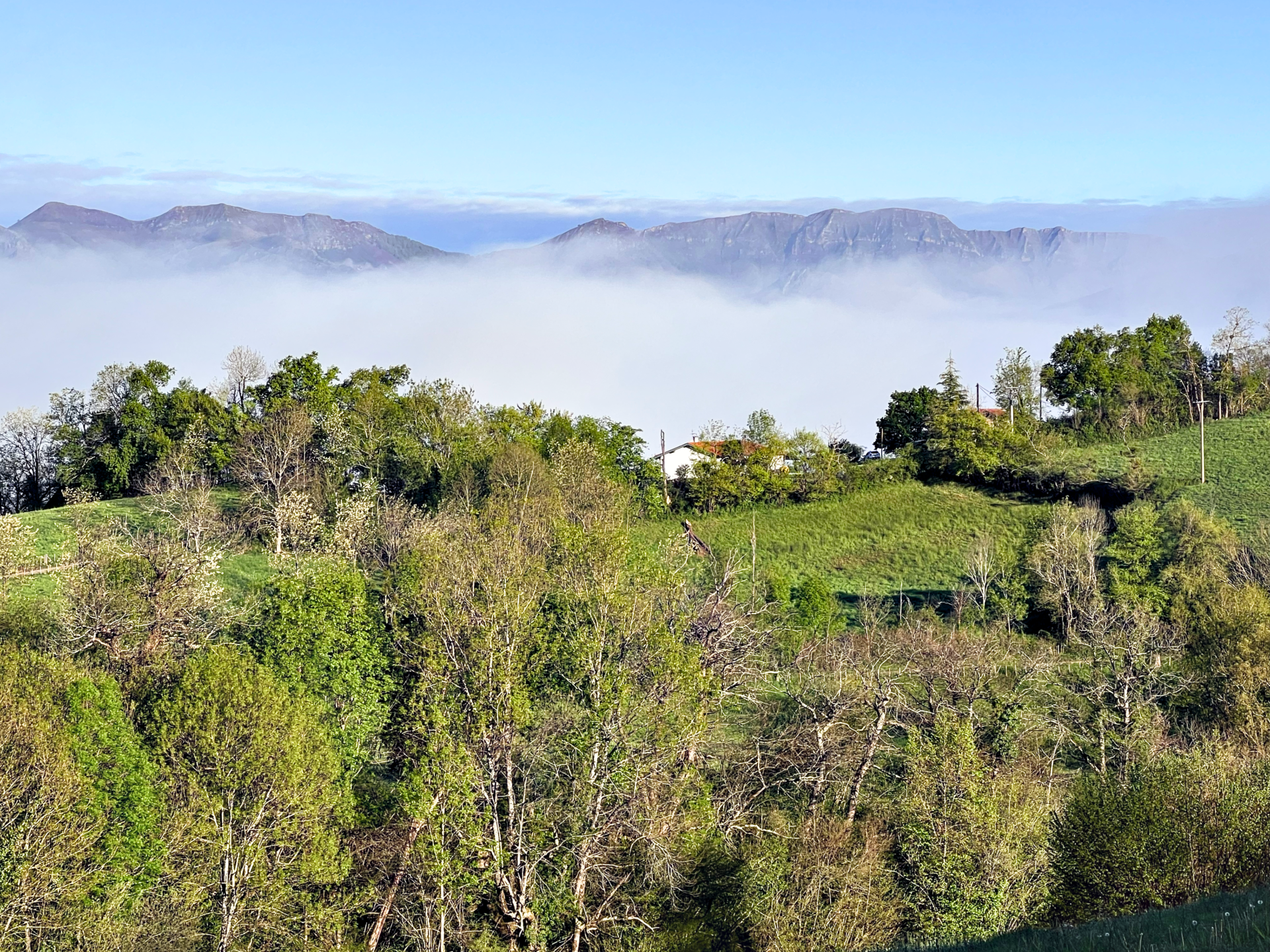
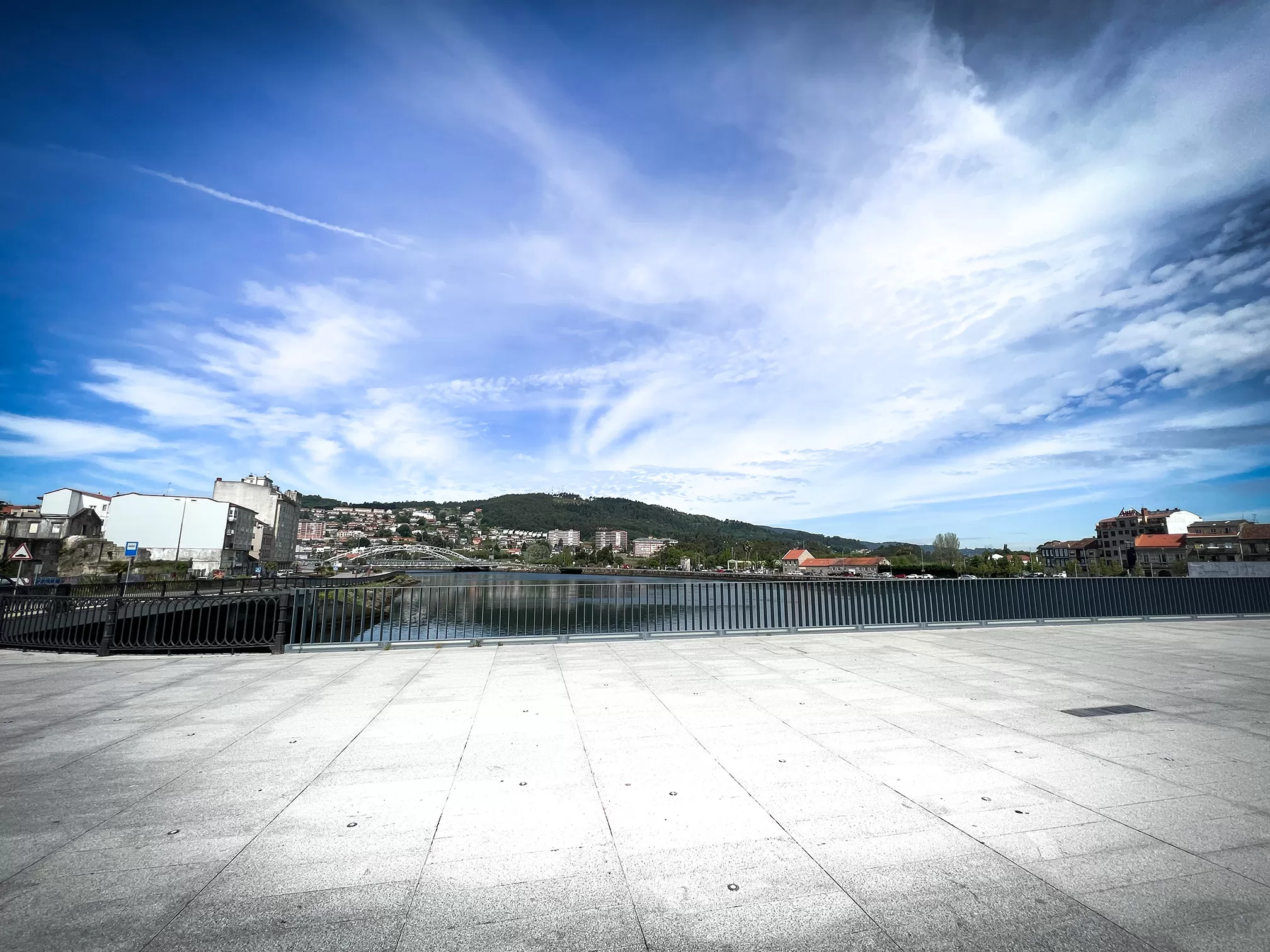
The trail moved through green countryside beside the river, with the sound of water occasionally breaking through the quieter sections.
It was the kind of morning that let me pay attention to where I was instead of staring at my boots and wondering which blister was planning a coup.
Why We Chose a 5.5 km Camino Stage
Stopping after only 5.5 kilometers might look strange to anyone following a standard Camino Francés itinerary.
Many schedules divide the route around larger towns and longer distances.
Our Camino was never built around somebody else’s stage plan.
Sage and I were walking slowly, giving our bodies time to adapt and leaving room to experience the villages between the famous destinations.
There is no prize for reaching Pamplona with wrecked feet, inflamed knees, and the emotional stability of a shopping cart with one broken wheel.
A short day gave us recovery time without taking a complete rest day.
That mattered.
Rest is not quitting.
Sometimes knowing when to stop
is its own kind of
forward movement.
Crossing the Bridge of Bandits
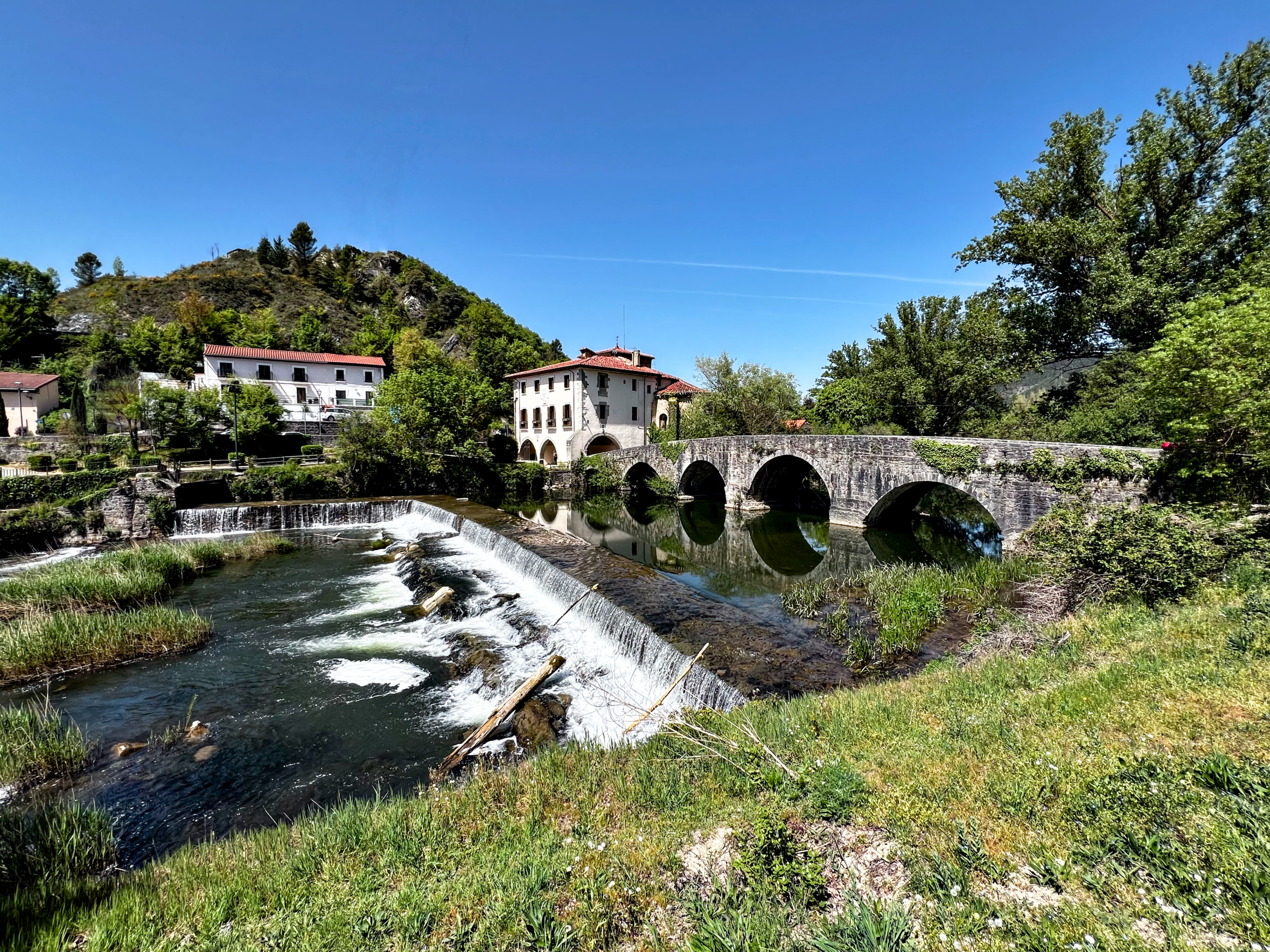
The most memorable entrance into Larrasoaña comes across its medieval stone bridge over the Río Arga.
It is commonly called the Puente de los Bandidos— the Bridge of Bandits.
Local tradition says thieves once waited near the crossing and robbed travelers, sometimes while disguised as pilgrims.
It is an excellent name for a bridge.
“Bridge of Mild Administrative Inconvenience” would not have carried the same punk-rock energy.
Today, the danger is considerably lower.
The greatest threat is probably stopping for too many photographs while another peregrino tries to squeeze past with trekking poles.
Crossing the bridge felt like entering a place separated from the faster rhythm of the Camino.
Most walkers pass through quickly.
Some barely enter the village before continuing toward Pamplona.
We had nowhere else to be.
What Is a Peregrino?
You hear the word constantly on the Camino, so it deserves an explanation.
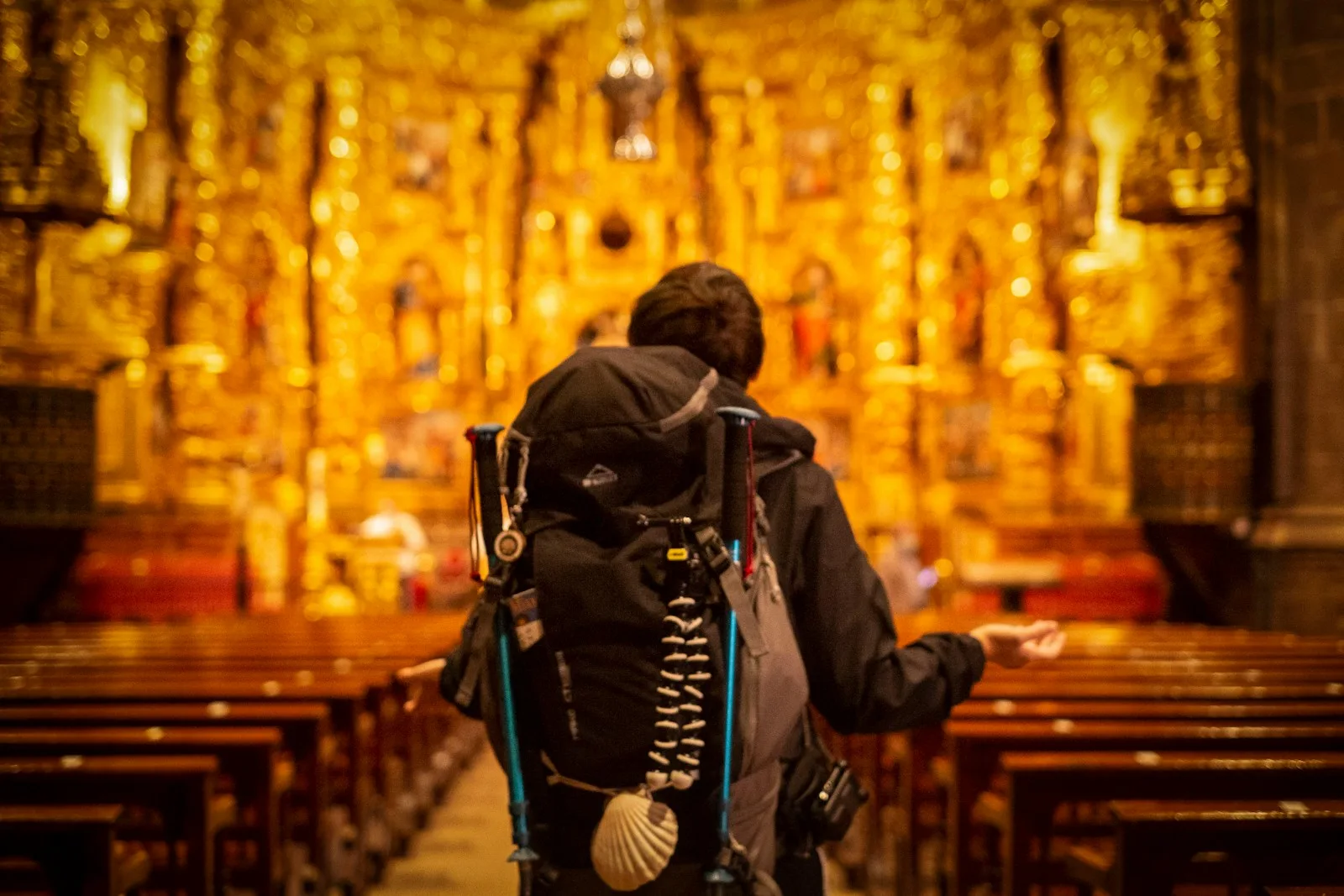
A peregrino is a pilgrim— someone traveling the Camino de Santiago.
The feminine form is peregrina.
The word carries more weight than the simple translation suggests.

It does not matter whether someone is walking because of faith, grief, curiosity, fitness, a major life change, or a reason they cannot yet explain.
Once the backpack is strapped on and the pilgrim credential starts collecting stamps, social rank becomes remarkably useless.
Executives.
Retirees.
Students.
Skeptics.
Believers.
Recovering wanderers.
People attempting to outrun questionable life decisions.
Eventually everybody becomes a tired human walking west.
I love that.
We arrived before the municipal albergue allowed check-in, so Sage and I parked ourselves at the bar for coffee.
Other peregrinos gradually appeared, and conversation unfolded in the effortless way it often does on the Camino.
There was no résumé exchange.
No tedious networking dance.
We talked about the trail, our feet, where we had started, and where we hoped to stop.
The Camino has a habit of removing the usual layers of social nonsense.
Larrasoaña Was Much Nicer Than Expected
Once we could abandon our backpacks, Sage and I wandered around Larrasoaña.
The village surprised me.
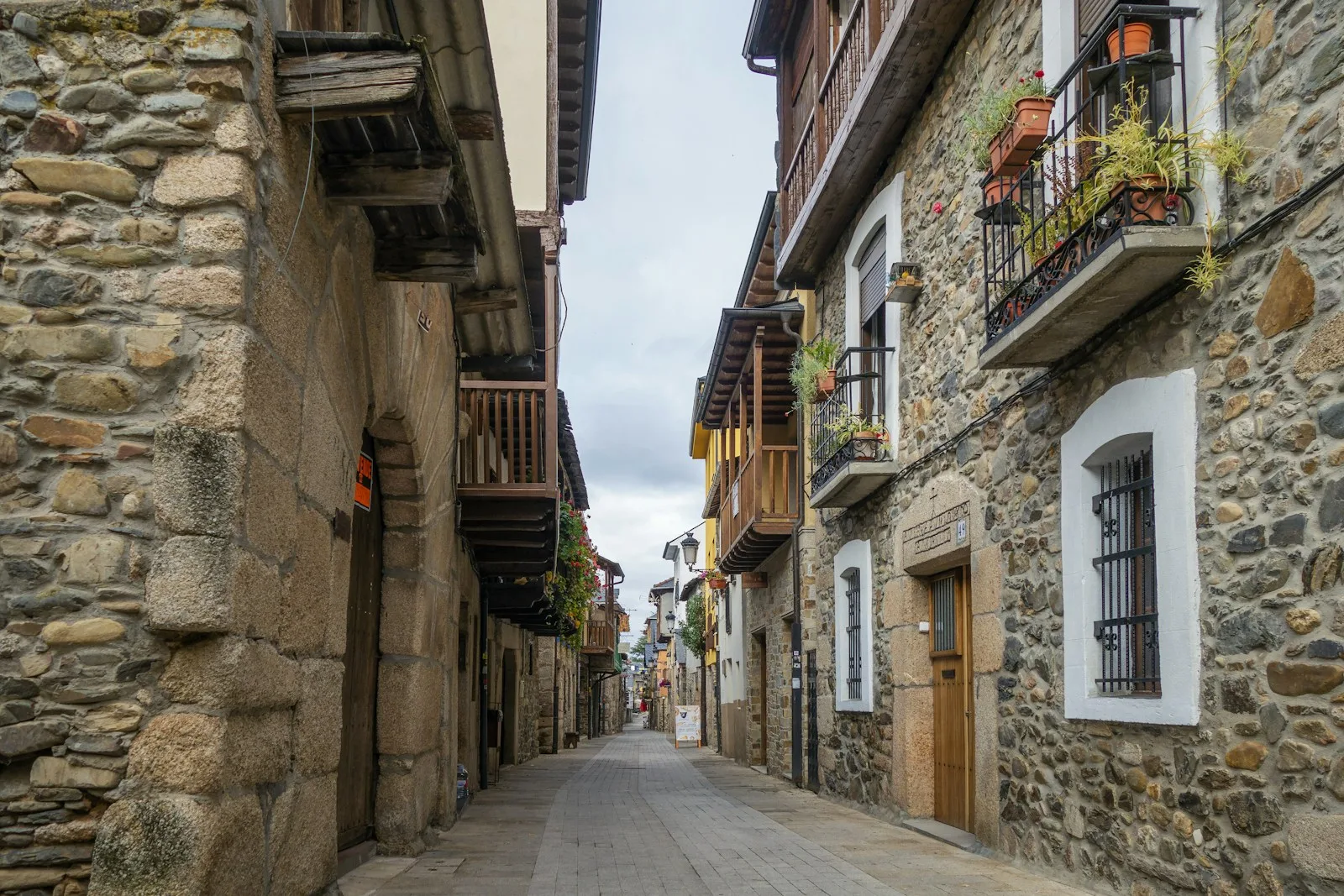
It was quiet, tidy, and considerably more polished than I expected.
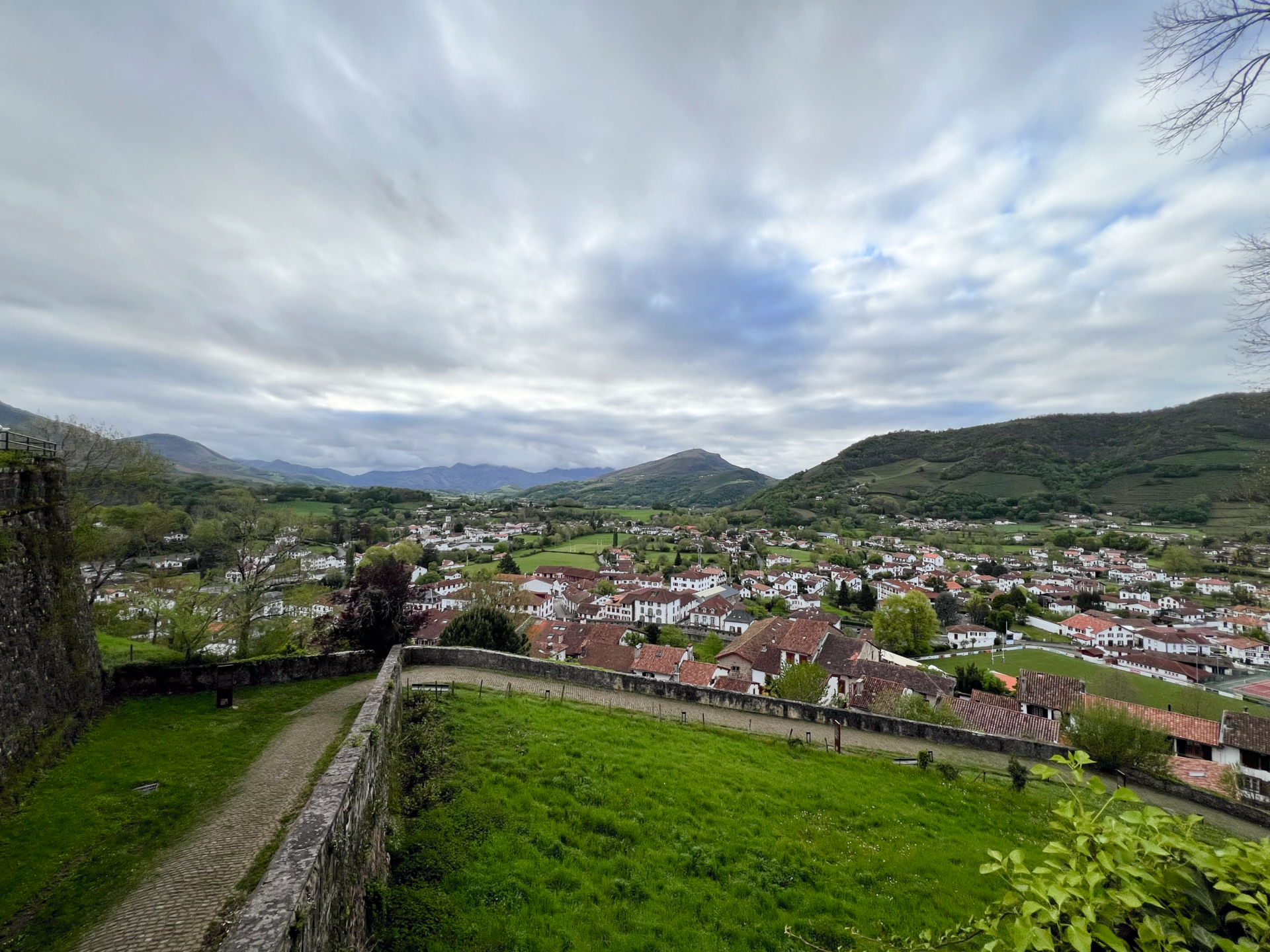
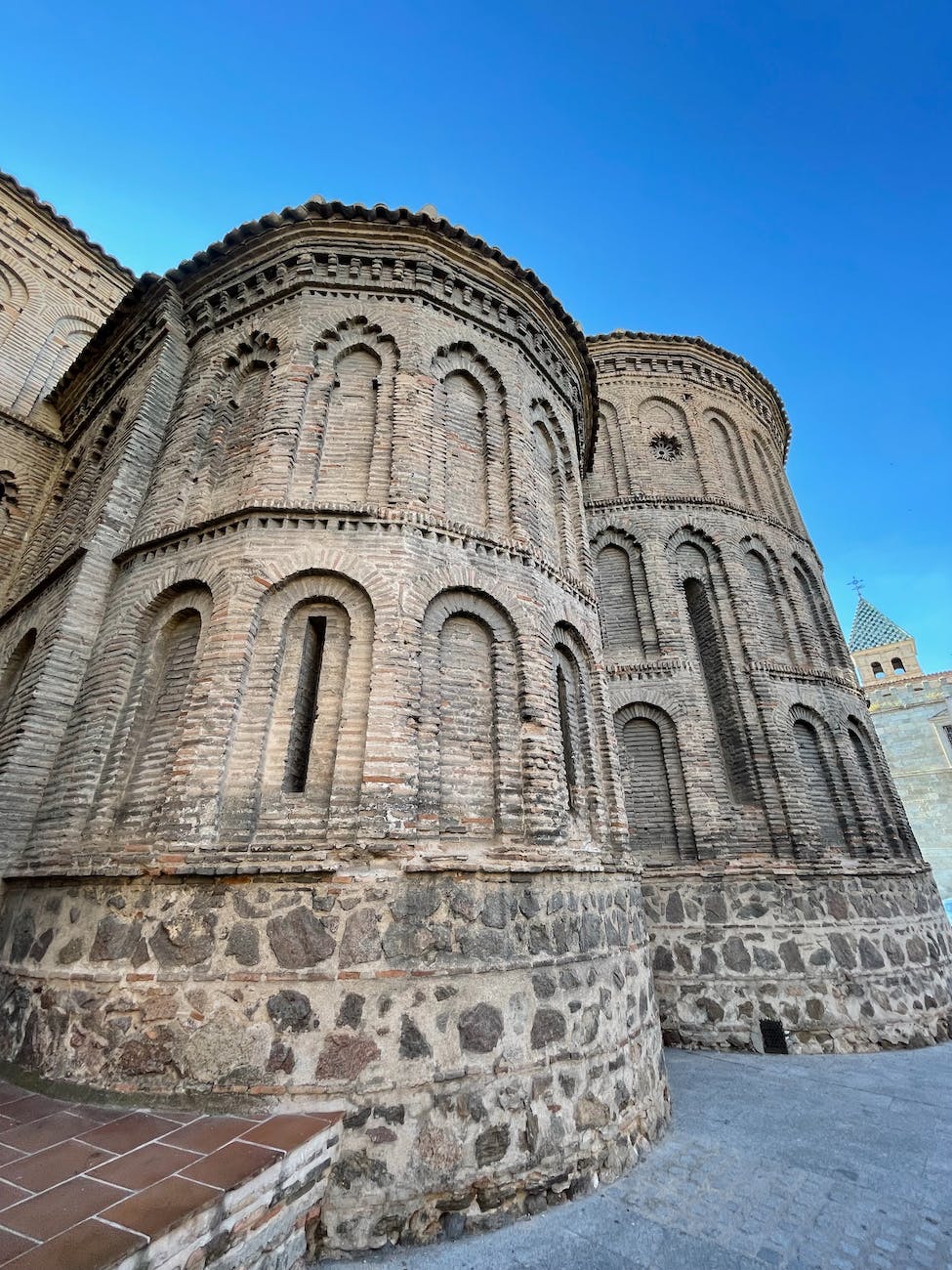
Historic stone buildings sat beside well-kept homes, and the entire place seemed comfortably removed from the stampede toward Pamplona.
Larrasoaña has a long relationship with the Camino and historically served pilgrims traveling through the Esteribar Valley.
Yet many modern walkers treat it as little more than a waypoint.
People walk hundreds of kilometers to slow down— then charge through a beautiful village because an app says the “proper” endpoint is farther away.
The good stuff is frequently hiding in the place everyone else is rushing past.
Things to See in Larrasoaña
Larrasoaña is not packed with major attractions.
That is part of its appeal.
You can explore it comfortably without turning your recovery day into another expedition.

A Steak Dinner Worth Stopping For
That evening, Sage and I found a steak dinner that had no business being as good as it was.
After several days of Camino meals, a proper dinner begins to feel ceremonial.
You sit down.
Remove your boots.
Briefly return to civilization.
Someone brings food that has not spent six hours compressed inside a backpack pocket.

The steak arrived and immediately justified our decision to stay.
Pilgrim hunger is a powerful seasoning, of course.
After walking every day, nearly anything warm can taste like it deserves a Michelin star.
Still, this meal stood out.
Day 5’s Argument for Walking Less
Coffee.
Conversation.
A quiet village.
A medieval bridge.
And an excellent steak dinner.
Staying at the Municipal Albergue de Larrasoaña
We stayed at the Municipal Albergue de Larrasoaña .
The accommodation did not share the restaurant’s commitment to excellence.
That night delivered one of those classic Camino albergue experiences where the bunk, room temperature, snorers, and building acoustics form a temporary experimental-noise collective.
Every cough traveled.
Every zipper sounded like industrial machinery.
Somewhere in the darkness, one pilgrim appeared to be sawing down an entire forest using only his nasal passages.
I lay awake negotiating with the ceiling.
The Camino gives you medieval bridges,
meaningful conversations,
riverside trails,
and excellent steak.
Then it gives you
a garbage night of sleep
to prevent spiritual arrogance.
You cannot win them all.
Accepting that is part of the Camino.
Expecting every day to be transformative, photogenic, and sprinkled with inspirational quotes is a fast route to disappointment.
Sometimes the profound lesson is simply that your earplugs should never be buried at the bottom of your backpack.
The Esteribar municipality currently lists the Municipal Albergue de Larrasoaña among the village’s pilgrim accommodations. Opening dates and services can change, so check current information before your Camino.
There Was Time to Look Around
A five-and-a-half-kilometer Camino day leaves room for things that longer stages often squeeze to the margins.
There was no pressure to chase the clock.
No need to keep calculating the kilometers ahead.
We could simply notice what was around us.

Planning the Walk from Zubiri to Larrasoaña
The route is straightforward, but a few practical decisions can make the short stage easier.
Distance
Approximately 5.5 km / 3.4 mi.
Difficulty
Generally easy compared with the earlier descents into Zubiri.
Trekking poles
Not essential for most walkers, though useful when trails are wet.
Services
Larrasoaña is small, so verify food and accommodation availability close to your walking date.
Accommodation
Booking ahead can make sense during busy periods, particularly if you want a specific property.
What I would carry
Water, a snack, rain protection, and earplugs with diplomatic immunity.
Zubiri to Larrasoaña or Zubiri to Pamplona?
Neither option is universally better.
For us, stopping in Larrasoaña transformed what could have been a brief waypoint into a genuine Camino memory.
The “best” stage is the one that works for your Camino.
What Camino Francés Day 5 Taught Me
A short Camino stage is not a wasted day.
Walking fewer kilometers gave us time to recover, speak with other pilgrims, explore Larrasoaña, and experience a village most people barely notice.
Progress is not measured only by distance.
Sometimes the smartest move is stopping before your body begins filing legal paperwork.
Rest is not quitting.
Knowing when to stop
is its own kind
of forward movement.
Zubiri to Larrasoaña: Quick Answers
How far is Zubiri to Larrasoaña?
Approximately 5.5 kilometers, or about 3.4 miles.
How long does the walk take?
Most walkers can cover the short stage in roughly one to one-and-a-half hours, depending on pace and stops.
Is Larrasoaña worth staying in?
I think so, particularly if you enjoy quieter villages, need a recovery day, or want an early start toward Pamplona the next morning.
What is the Bridge of Bandits?
Puente de los Bandidos is Larrasoaña’s medieval bridge. Local legend says bandits once waited near the crossing to rob travelers.
What does peregrino mean?
Peregrino is Spanish for a male pilgrim, while peregrina refers to a female pilgrim.
Where did you stay in Larrasoaña?
Sage and I stayed at the Municipal Albergue de Larrasoaña .
Can you walk from Zubiri to Pamplona in one day?
Yes. Many pilgrims do. We intentionally stopped early because we were walking a slower Camino.
What comes after Larrasoaña?
Day 6 continues from Larrasoaña to Pamplona, where we planned an extra day to rest.
Build a Camino at Your Own Pace
The journal tells you what happened to me. These guides can help you build a Camino that works for you.
Atypical Last Thoughts
Day 5 was officially in the bank.
Zubiri to Larrasoaña.
A new peregrino or two met.
A medieval bridge crossed.
An excellent steak demolished.
And one atrocious night of sleep added permanently to the Camino archives.
Larrasoaña will never compete with Pamplona for fame, restaurants, or people dressed in white running away from angry livestock.
It does not need to.
Its charm comes partly from being the town everyone walks past.
We stopped— and discovered exactly what they were missing.
The next morning, I pointed myself toward Pamplona, where we planned to stay an extra day.
My feet had submitted a formal complaint about the mileage, and for once I intended to listen.
Rest is not quitting.
On the Camino, knowing when to stop is its own kind of forward movement.
Buen Camino.
Would you rather push on to the famous destination, or stop somewhere quieter that everyone else walks past?



Leave a Reply